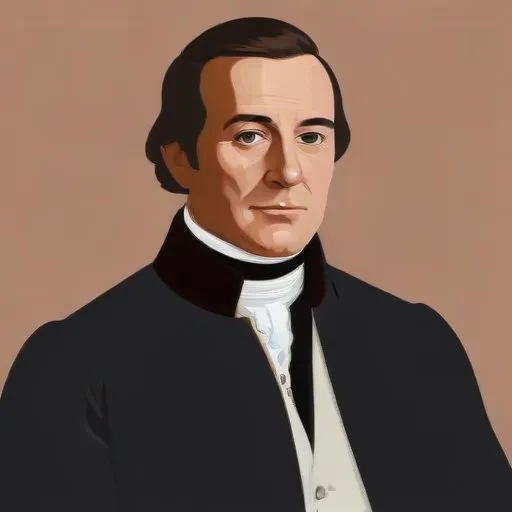
Sir Francis Bernard, 1st Baronet: The Controversial Governor of Colonial America
A Divisive Figure in American History
Sir Francis Bernard, 1st Baronet, is perhaps best known for his tumultuous tenure as governor of the provinces of New Jersey and Massachusetts Bay in the mid-18th century. His uncompromising policies and harsh tactics in Massachusetts played a significant role in fueling the flames of opposition against the British government, ultimately contributing to the American Revolution.
Early Life and Education
Born on July 12, 1712, in BrightwellcumSotwell, then in Berkshire, England, Bernard was christened to the Rev. Francis and Margery Winslowe Bernard. Following his father's death in 1715, his mother remarried, only to pass away three years later due to smallpox. Bernard's early years were marked by instability, with his stepfather's failed courtship leading to his exile in Holland. He was eventually raised by an aunt and later his stepfather, Anthony Alsop, who returned to Berkshire.
A Governorship Marked by Controversy
In 1758, Bernard was appointed governor of New Jersey, where he oversaw the province's participation in the French and Indian War. Although his relationship with the legislature was relatively positive, his tenure was not without controversy. Bernard's early actions as governor of Massachusetts, which he assumed in 1760, quickly turned the colony's populists against him. His responses to protests against Parliament's attempts to tax the colonies further deepened divisions.
Confrontation and Recall
In 1768, following protests against the Townshend Acts, Bernard sought to station British Army troops in Boston to maintain control over the colonists. This move sparked widespread outrage, and his recall was eventually secured after the publication of private letters in which he criticized the colony.
Late Life and Legacy
After returning to England, Bernard continued to advise the British government on colonial matters, advocating for hardline responses to the ongoing difficulties in Massachusetts. His opinions contributed to the escalation of tensions, culminating in the 1773 Boston Tea Party. Bernard suffered a stroke in 1771 and passed away on June 16, 1779, leaving behind a large family.
Impact on American History
Bernard's legacy is complex and multifaceted. While his actions were instrumental in fueling the flames of American resistance, they also highlight the deeper issues of colonial governance and taxation that ultimately led to the American Revolution. As a historical figure, Bernard serves as a reminder of the complexities and nuances of the colonial era, inviting us to reexamine the events that shaped the course of American history.
Personal Milestones and Key Life Events
- 1712: Born in BrightwellcumSotwell, England
- 1715: Father dies
- 1718: Mother dies of smallpox
- 1758: Appointed governor of New Jersey
- 1760: Appointed governor of Massachusetts
- 1768: Recalled as governor of Massachusetts
- 1771: Suffers a stroke
- 1779: Dies on June 16
FAQ
What was Sir Francis Bernards role in colonial governance?
Sir Francis Bernard played a significant role in colonial governance, serving as the governor of New Jersey and Massachusetts Bay. He implemented several reforms, including the creation of a colonial militia and the establishment of a postal system.
How did Sir Francis Bernards policies impact the colonies?
Sir Francis Bernards policies had a profound impact on the colonies, shaping their development and growth. He encouraged trade and commerce, and his policies helped to establish a stable and prosperous colonial economy.
What were Sir Francis Bernards achievements as a colonial leader?
Sir Francis Bernards achievements as a colonial leader include the establishment of a stable government, the promotion of economic growth, and the defense of the colonies against Native American attacks.
How is Sir Francis Bernard remembered in colonial history?
Sir Francis Bernard is remembered as a capable and effective colonial leader who played a significant role in shaping the development of New Jersey and Massachusetts Bay. His policies and achievements continue to be studied by historians today.
What were Sir Francis Bernards views on colonial politics?
Sir Francis Bernard held moderate views on colonial politics, believing in the importance of colonial autonomy while also supporting the authority of the British Crown. He worked to maintain good relations between the colonies and Great Britain.