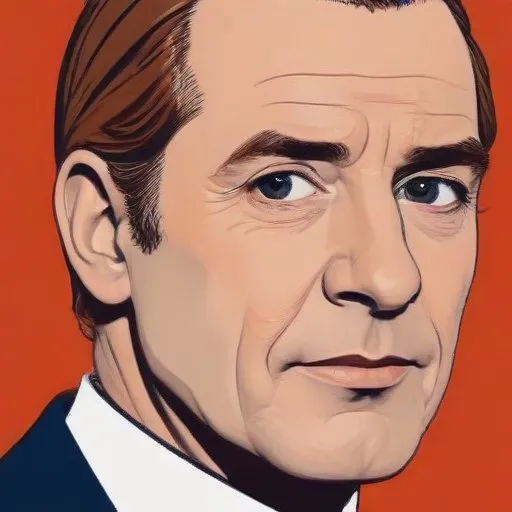
Sir Robert Munro, 6th Baronet

Sir Robert Munro, 6th Baronet

Sir Robert Munro, 6th Baronet was born on August 24th, 1684

Full Name: Sir Robert Munro, 6th Baronet
Occupation: British politician
Nationality: British
Birthplace: Scotland
Born: 1684
Death: 1746
Notable Title: 6th Baronet of Foulis
Famous for: Supporting British government

A Scottish politician who served as a Member of Parliament and held various government positions, known for his advocacy of Scottish interests and reform.

Written by: Carlos Hernandez Carlos Hernandez

Sir Robert Munro, 6th Baronet: The Scottish Military Officer and Politician

A Champion of the Revolution Settlement and the House of Hanover

Sir Robert Munro, 6th Baronet, is renowned for his unwavering support of the Revolution Settlement and the House of Hanover, as well as his opposition to the Jacobite risings that sought to restore the House of Stuart to the throne. Throughout his life, Munro demonstrated his commitment to the Protestant succession, fighting in various battles and serving as a politician to uphold the principles of the Revolution Settlement.

Early Life and Career

Born on August 24, 1684, Munro was the child of Sir Robert Munro, 5th Baronet, and was part of the Highland Clan Munro. His family had a long history of serving in the military, with his paternal grandfather, Sir John Munro, 4th Baronet, and his uncle Andrew, a captain, paving the way for his own military career. Munro's earliest surviving letter, dated October 1706, reveals his plans to secure a commission, possibly through the influence of John Campbell, 2nd Duke of Argyll.

In 1710, Munro became a Captain in the Royal Scots, serving under George Hamilton, 1st Earl of Orkney, in the Hague, Holland. He spent seven years in Flanders, earning a great reputation for himself, before finding himself out of employment when the War of the Spanish Succession ended in 1712.

Military and Political Career

Munro's military career spanned several decades, during which he fought in various battles, including the Battle of Falkirk Muir, where he ultimately met his demise on January 17, 1746. Throughout his life, he remained a steadfast supporter of the House of Hanover, actively working against the Jacobite risings. As a politician, Munro played a significant role in maintaining the stability of the British monarchy.

  • 1684: Born on August 24th
  • 1706: Wrote his earliest surviving letter, detailing plans to secure a commission
  • 1710: Became a Captain in the Royal Scots
  • 1712: Found himself out of employment after the War of the Spanish Succession ended
  • 1746: Killed in the Battle of Falkirk Muir on January 17th

Legacy and Impact on Modern Society

Sir Robert Munro, 6th Baronet, left an indelible mark on British history, having played a crucial role in maintaining the stability of the monarchy and upholding the principles of the Revolution Settlement. His unwavering commitment to the House of Hanover and his opposition to the Jacobite risings continue to inspire admiration and respect. Munro's legacy serves as a testament to the importance of loyalty, duty, and dedication to one's principles.
Timeline
1684
Birth of Sir Robert Munro
Sir Robert Munro was born in Scotland and would go on to become a British politician.
1707
Becomes MP for Roxburghshire
Sir Robert Munro becomes a Member of Parliament for Roxburghshire, serving in the British House of Commons.
1710
Becomes Lord Lieutenant
Sir Robert Munro becomes Lord Lieutenant of Roxburghshire, serving as a key representative of the British crown.
1729
Created Baronet
Sir Robert Munro is created a baronet, a hereditary title in the British peerage.
1746
Death of Sir Robert Munro
Sir Robert Munro passes away, leaving behind a legacy as a prominent figure in British politics.
Sir Robert Munro, 6th Baronet

Sir Robert Munro, 6th Baronet Quiz

What was Sir Robert Munro, 6th Baronet known for advocating?

Score: 0/5
FAQ
What was Sir Robert Munros role in British politics?
Sir Robert Munro, 6th Baronet, held several prominent positions in British politics, including Member of Parliament for Inverness-shire.
What was Sir Robert Munros contribution to the study of Scottish history?
Sir Robert Munro made significant contributions to the study of Scottish history, publishing several works on the subject and promoting the preservation of historical records.
How did Sir Robert Munros politics reflect his views on Scotland?
Sir Robert Munros politics reflected his strong sense of Scottish identity and his commitment to promoting the countrys interests.
What were Sir Robert Munros other notable achievements?
Sir Robert Munro achieved recognition for his military service, serving in the British Army and participating in several notable campaigns.
What is Sir Robert Munros legacy?
Sir Robert Munros legacy is that of a dedicated politician, historian, and soldier, who left a lasting impact on Scottish and British history.

Related People:

Winston Churchill

Born in 1871

Prolific writer of historical novels and adventure stories, also a talented landscape painter.

Clement Attlee

Born in 1883

Led the Labour Party to a landslide victory in 1945, implementing significant social and economic reforms, including the creation of the National Health Service. He played a crucial role in shaping post-war Britain.

Anthony Eden

Born in 1897

A British politician who served as Prime Minister from 1955 to 1957, known for his role in the Suez Crisis and his diplomatic efforts during the Cold War.

Harold Macmillan

Born in 1894

A British politician who served as Prime Minister from 1957 to 1963, known for leading the country through a period of economic prosperity and decolonization.

Alec Douglas-Home

Born in 1903

A British aristocrat who served as Prime Minister from 1963 to 1964, known for his brief tenure and aristocratic background.

Edward Heath

Born in 1916

The Prime Minister who led the UK into the European Economic Community (EEC) and navigated the country through a period of economic and industrial turmoil. He's also known for his diplomatic efforts, particularly in regards to the Cold War.

James Callaghan

Born in 1912

A British politician who served as Prime Minister from 1976 to 1979, known for his efforts to stabilize the economy and navigate the country through a period of industrial unrest.

Margaret Thatcher

Born in 1925

The first female Prime Minister of the United Kingdom, serving from 1979 to 1990, known for her conservative policies and leadership during the Falklands War.