


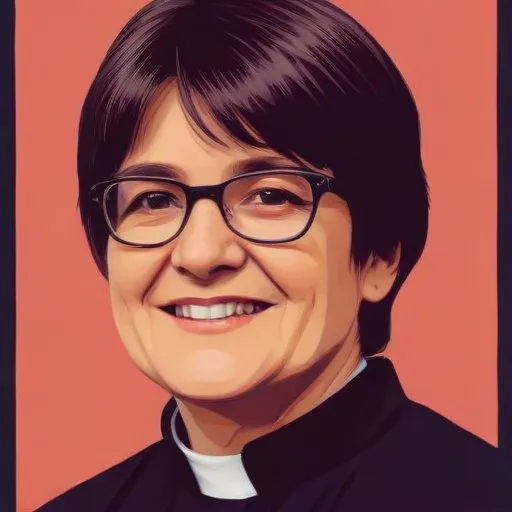
A Catholic nun who has dedicated her life to campaigning against the death penalty, writing books and advising on films that highlight the injustices of capital punishment.
Sister Helen Prejean is an American Roman Catholic nun, activist, and author, best known for her tireless crusade against the death penalty and her work with death row inmates. Her pioneering efforts have shed light on the injustices of capital punishment, capturing the hearts of millions and inspiring a new generation of advocates.
Born on April 21, 1939, in Baton Rouge, Louisiana, Prejean was raised in a devout Catholic family. She joined the Sisters of St. Joseph of Medaille at the age of 21, feeling an inner calling to dedicate her life to serving others. Her early years as a nun were marked by traditional charitable work, but her life took a dramatic turn when she began corresponding with a death row inmate, Elmo Patrick Sonnier, in 1982.
This unlikely friendship sparked Prejean's passion for social justice and ignited her campaign against the death penalty. She soon became a vocal critic of capital punishment, arguing that it is morally and ethically wrong. Her 1993 memoir, Dead Man Walking: An Eyewitness Account of the Death Penalty in the United States, chronicled her experiences with Sonnier and another inmate, Robert Willie, and exposed the harsh realities of the death penalty system.
Sister Prejean's work has contributed significantly to the national debate on capital punishment, inspiring a growing movement against the death penalty. Her advocacy has influenced policymakers, lawyers, and everyday citizens, sparking a shift in public opinion. Her story has also inspired numerous artistic works, including a film adaptation of her book, starring Susan Sarandon as Prejean, and a play by Tim Robbins.
At the heart of Prejean's philosophy lies a deep commitment to human dignity and compassion. She believes that the death penalty is a violation of this dignity, perpetuating a cycle of violence and undermining the possibility of redemption. Her work embodies the Catholic mantra of "restorative justice," seeking to heal and rebuild communities rather than perpetuate harm.
Sister Prejean continues to work with organizations such as the Death Penalty Discourse Network, the National Coalition to Abolish the Death Penalty, and the Louisiana Coalition for Alternatives to the Death Penalty. Her tireless efforts have helped to establish programs that support death row inmates, their families, and victims' families, promoting healing and reconciliation.
Sister Helen Prejean's unwavering dedication to social justice has left an indelible mark on American society. Her work has humanized the death penalty debate, elevating the conversation from mere politics to a deeply personal and moral level. As a champion of compassion and mercy, she continues to inspire generations to work towards a more just and equitable world.
Born in 1920
Leader of the Catholic Church from 1978 to 2005, known for helping to end communism in Poland and being a charismatic advocate for human rights and social justice.
Born in 1910
A selfless Albanian-Indian nun dedicated her life to caring for the poor, sick, and marginalized, earning her a Nobel Peace Prize and sainthood. Her tireless charity work inspires millions worldwide.
Born in 1918
A South African lawyer and politician who fought against apartheid, becoming the country's first black president and a symbol of racial reconciliation, earning a Nobel Peace Prize. He's a beacon of hope and freedom.
97 Years Old
A prominent leader in the civil rights movement, advocating for racial equality and social justice through nonviolent means, leaving a lasting impact on American history.
Born in 1897
A pioneering social activist and journalist who advocated for pacifism, women's rights, and the poor, founding the Catholic Worker Movement to promote social justice and nonviolence.
Born in 1915
A Trappist monk and writer who explored spirituality and social justice through his poetry and essays, leaving a lasting impact on Christian mysticism and contemplative thought.
Born in 1913
Refused to give up her seat on a Montgomery, Alabama bus to a white person, sparking the Montgomery Bus Boycott, a pivotal event in the Civil Rights Movement.
