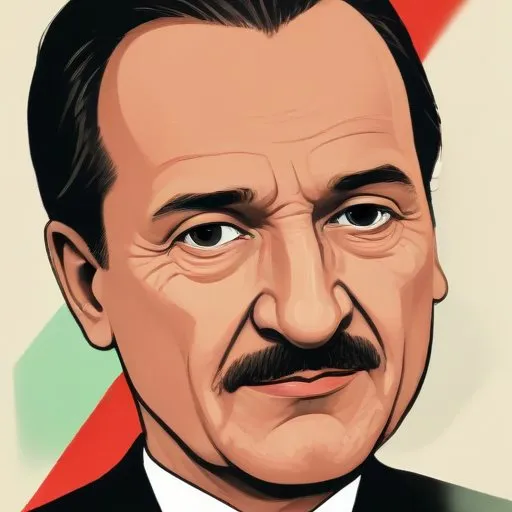
Sndor Festetics: The Hungarian Nobleman Turned Nazi Advocate
A Life of Contrasts: From Cabinet Minister to Nazi Sympathizer
Sndor Festetics, Count of Tolna, is notorious for his drastic shift from a respected cabinet minister in Hungary to a passionate advocate of Nazism. Born on May 31, 1882, Festetics' life was marked by a series of contradictions, as he transitioned from a champion of parliamentary politics to a fervent supporter of the Nazi ideology.
Early Life and Political Beginnings
Festetics was born into one of Hungary's most prominent families. His father, Andor Festetics, was a well-respected figure in Hungarian society. This privileged upbringing paved the way for Festetics' entry into politics, where he served as Minister of Defence in the cabinet of Mihly Krolyi in 1918.
The Rise and Fall of a Parliamentary Politician
Despite the cabinet's ill-fated tenure, Festetics remained committed to parliamentary politics, becoming a staunch supporter of Istvn Bethlen. However, his political fortunes began to wane, and he was forced to take a break from politics.
The Embrace of Nazism
In 1933, Festetics experienced a dramatic ideological shift, embracing Nazism and taking charge of the Hungarian National Socialist Peoples Party. He utilized his inherited fortune from his uncle, Prince Taszil, to expand the party's influence. This party was essentially a carbon copy of the Nazi Party, adopting most of its 25-point program.
A Turbulent Alliance and Expulsion
Festetics formed an alliance with Zoltn Mesk and Fidl Plffy in 1934, but his commitment to anti-Semitism was deemed insufficient, as he continued to employ Jews on his estates. This led to his expulsion from the party, and he subsequently became associated with minor movements led by Istvn Balogh and Klmn Hubay.
A Complex Relationship with Zionism
In a surprising twist, Festetics advocated for Zionism as a solution to the "Jewish problem" in Europe. In a 1934 parliamentary session, he encouraged Zionists, stating that all people, including Jews, had the right to live in their own land. He even permitted a Zionist organization to use his land for an agricultural training program for Jewish youths preparing to migrate to Palestine.
Retirement and Legacy
Festetics retired from politics in 1939, bringing an end to his tumultuous political career. His legacy is marked by contradictions, as he transitioned from a respected politician to a passionate advocate of Nazism. Despite his brief flirtation with Zionism, Festetics' overall impact on Hungarian politics remains shrouded in controversy.
Personal Milestones and Key Life Events
- May 31, 1882: Born in Tolna, Hungary
- 1918: Appointed Minister of Defence in the cabinet of Mihly Krolyi
- 1933: Became leader of the Hungarian National Socialist Peoples Party
- 1934: Formed an alliance with Zoltn Mesk and Fidl Plffy
- 1934: Expelled from the party due to his perceived weakness on anti-Semitism
- 1935-1939: Served in parliament under various labels
- September 12, 1956: Passed away
Festetics' life serves as a cautionary tale, highlighting the dangers of ideological extremism and the complexities of human nature. His story serves as a reminder of the importance of critical thinking and the need to confront the darker aspects of human history.
FAQ
What was Sándor Festeticss role in Hungarian politics?
Sándor Festetics played a significant role in Hungarian politics, serving as the Hungarian Minister of War and later as a member of the Hungarian Parliament. He was a strong advocate for Hungarian independence and modernization.
How did Sándor Festeticss military background influence his politics?
Sándor Festeticss military background shaped his political views and approach. He brought a sense of discipline and strategic thinking to his political career, often taking a pragmatic and Lösungsorientiert approach to complex issues.
What were Sándor Festeticss views on nationalism and identity?
Sándor Festetics was a strong proponent of Hungarian nationalism and identity. He believed in the importance of preserving Hungarian culture and autonomy, while also engaging with the broader European community.
How did Sándor Festeticss policies impact the Hungarian economy?
Sándor Festeticss policies aimed to modernize and strengthen the Hungarian economy. He advocated for infrastructure development, industrial growth, and trade liberalization, laying the groundwork for Hungarys future economic prosperity.
What legacy did Sándor Festetics leave behind in Hungarian history?
Sándor Festeticss legacy is that of a dedicated public servant who worked tirelessly to promote Hungarian interests and development. His contributions to politics, the military, and the economy continue to be celebrated and studied in Hungary today.