


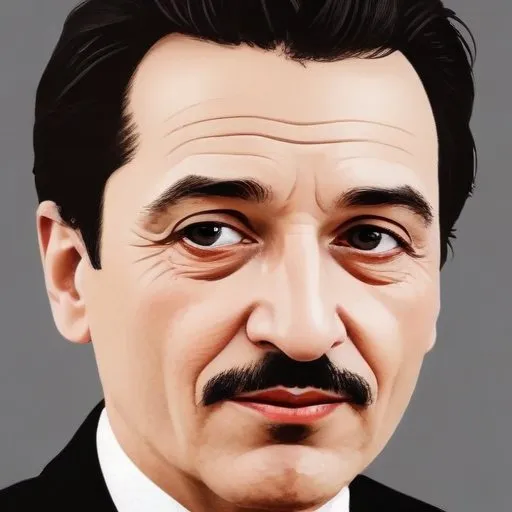
A Hungarian journalist and author, known for his lyrical and introspective novels that explore the decline of the Austro-Hungarian Empire and the rise of fascism. His works are celebrated for their poetic prose and nuanced character studies.
Sándor Márai, born Alexander Mrai, was a Hungarian writer, poet, and journalist who left an indelible mark on the literary world with his poignant and nostalgic works. He is best known for his novel "Embers", a poignant tribute to the bygone era of the Austro-Hungarian Empire, which has been adapted into a stage play and continues to captivate audiences to this day.
Márai was born on April 11, 1900, in Kassa, Hungary (now Košice, Slovakia) to a family with noble roots. His early life was marked by a passion for literature and a strong sense of social justice, which led him to support the Hungarian Soviet Republic in 1919. During this time, he worked as a journalist and founded the Activist and Anti-National Group of Communist Writers.
After the fall of the Hungarian Soviet Republic, Márai's family found it necessary to leave the country, and he continued his studies in Leipzig. He later traveled to Frankfurt, Berlin, and Paris, where he briefly considered writing in German, but ultimately decided to focus on his native Hungarian language. This decision would prove pivotal in shaping his literary style and themes.
Márai's writing often explored the complexities of national identity, language, and culture. In his work "Egy polgár vallomásai" ("Confessions of a Citizen"), he famously stated that the mother tongue is inextricably linked to the concept of the nation itself. This idea would continue to influence his writing throughout his career.
Márai's writing career spanned over five decades, during which he authored an impressive 46 books. His precise and clear realist style, evident in works like "Embers", earned him critical acclaim and recognition as one of Hungary's most prominent writers.
"Embers", published in 1942, is a nostalgic and poignant tribute to the multi-ethnic, multicultural society of the Austro-Hungarian Empire. Reminiscent of the works of Joseph Roth, it expresses a deep longing for a bygone era, while also serving as a scathing critique of the Nazi regime.
Márai's work has had a profound impact on Hungarian literature and culture. His writing continues to be celebrated for its nuanced exploration of national identity, language, and culture. His influence can be seen in the works of subsequent Hungarian writers, who have drawn inspiration from his unique style and themes.
In 2006, an adaptation of "Embers" for the stage, written by Christopher Hampton, premiered in London, introducing Márai's work to a new generation of readers and theatre enthusiasts.
Sándor Márai's legacy is a testament to the power of literature to capture the essence of a bygone era, while also speaking to the universal human experiences that transcend time and place.
Márai's work continues to be widely read and studied in Hungary and beyond. His unique perspective on national identity, language, and culture has made him a beloved figure in Hungarian literature, and his influence can be seen in the works of subsequent writers.
In 2019, to commemorate the 120th anniversary of his birth, a series of cultural events and exhibitions were held in Hungary, celebrating Márai's life and legacy.
Sándor Márai's contribution to Hungarian literature and culture is immeasurable. His work continues to captivate audiences, inspiring new generations of readers and writers alike.
Born in 1885
A Hungarian literary mastermind, celebrated for his innovative, psychologically nuanced novels and poetry that probed the human condition, often with a touch of irony and humor.
Born in 1887
A Hungarian literary giant, known for his witty, satirical writings and pioneering the concept of "six degrees of separation" in his 1929 short story "Chains".
Born in 1901
A Hungarian dentist who wrote plays and books, known for his literary works that explored themes of social justice and morality. His writings often critiqued the social norms of his time.
Born in 1905
A Hungarian poet and educator, known for his powerful and expressive works that explored themes of social justice, love, and the human condition. His poetry is celebrated for its lyricism and depth.
