


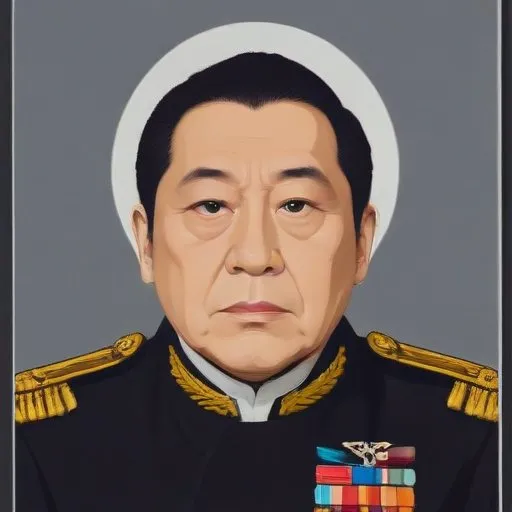
A Japanese naval leader who played a crucial role in the Imperial Japanese Navy's operations during World War II, including the attack on Pearl Harbor. He was a key strategist and commander who oversaw several major battles.
Soemu Toyoda, a renowned admiral in the Imperial Japanese Navy, left an indelible mark on World War II. Born on May 22, 1885, in what is now part of Kitsuki city, Oita Prefecture, Japan, Toyoda's illustrious career spanned over four decades, earning him recognition as one of the most influential military leaders of his time.
Toyoda graduated from the 33rd class of the Imperial Japanese Navy Academy in 1905, ranked 26th out of 176 cadets. He served his midshipman duty aboard the cruisers Hashidate and Nisshin, demonstrating his potential for excellence from an early age.
Aided by his exceptional academic prowess, Toyoda returned to school, becoming a torpedo and naval artillery expert. He graduated from the Naval War College Japan with honors in 1915, solidifying his position as a brilliant tactician and strategist.
Toyoda's exceptional skills and dedication propelled him through the ranks, earning him rapid promotions and key appointments. He served as aide-de-camp to Admiral Motaro Yoshimatsu from 1917 to 1919 and was sent as naval attaché to the United Kingdom, where he was promoted to commander on December 1, 1921.
After his return to Japan, Toyoda held various staff positions, was promoted to captain on December 1, 1925, and received his first command, the cruiser Yura, in 1926. He subsequently commanded the battleship Hyuga in December 1930, further enhancing his reputation as a skilled naval officer.
On December 1, 1931, Toyoda was promoted to rear admiral, marking the beginning of a series of influential leadership roles. He served as chief of the Second Section of the Imperial Japanese Navy General Staff from December 1931 to February 1933 and later became Director of the Bureau of Naval Affairs from 1935 to 1937.
Toyoda's most notable appointments include Commander-in-Chief of the IJN 4th Fleet (1937-1938) and Commander-in-Chief of the IJN 2nd Fleet (1938-1941). These positions placed him at the forefront of Japan's naval operations, allowing him to shape the course of the war.
Soemu Toyoda's remarkable career and leadership played a significant role in shaping the course of World War II. His exceptional strategic thinking, tactical prowess, and ability to inspire his troops earned him recognition as one of Japan's most respected admirals.
Despite Japan's eventual defeat, Toyoda's legacy extends beyond the war. His commitment to his country and his dedication to excellence serve as a testament to the power of hard work, perseverance, and leadership.
Soemu Toyoda's extraordinary life and career serve as a testament to the power of dedication, hard work, and strategic thinking. His legacy continues to inspire generations, offering valuable insights into the complexities of war, leadership, and human endeavor.
Born in 1885
A Japanese general who led the invasion of Malaya and the Philippines during World War II, known for his brutal tactics and war crimes. He was later tried and executed for his atrocities.
