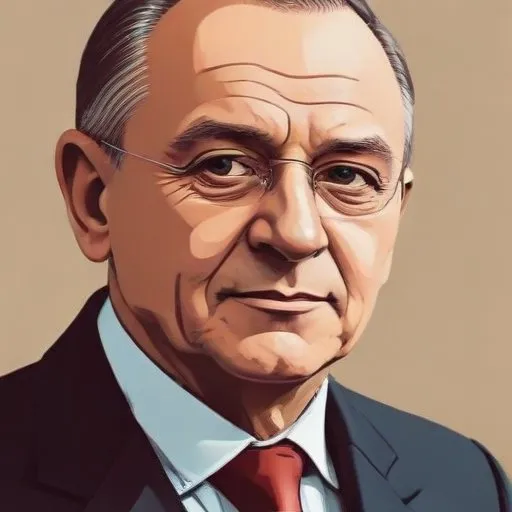
Stanisław Grabski: The Polish Economist and Politician Who Shaped the Future of Eastern Europe
A Life of Politics and Diplomacy
Stanisław Grabski is best known for his instrumental role in shaping the fate of Poland and the Soviet Union during the Peace of Riga talks in 1921. As the top Polish negotiator, Grabski's diplomatic prowess greatly influenced the future of Eastern Europe, leaving a lasting legacy in the world of politics and economics.
Early Life and Political Activism
Born on April 5, 1871, Grabski was part of a family deeply involved in politics. His brother, Władysław Grabski, was a prominent economist and politician who served as prime minister, while his sister, Zofia Kirkor-Kiedroniowa, was a political activist. Grabski himself became a political activist early in his life, editing
Gazeta Robotnicza (The Workers' Gazette) in Berlin in 1890. In 1892, he co-founded the Polish Socialist Party (PPS), but later detached himself from the movement to join Roman Dmowski's nationalist camp, which would eventually become the National Democracy party.
World War I and the Polish National Committee
During World War I, Grabski, like Dmowski, supported the idea that Poles should ally with Russia. He later joined Dmowski's Polish National Committee in Paris, where he played a key role in shaping Poland's future.
The Peace of Riga and Its Lasting Impact
Grabski's most significant contribution came during the negotiations of the Peace of Riga in 1921. As the most influential Polish negotiator, he was largely responsible for the outcome of the treaty, which resulted in the partitioning of Ukraine and Belarus between Poland and the Soviet Union. While peace with Soviet Russia had been accomplished, the treaty also had far-reaching consequences for Eastern Europe, shaping the region's politics and geography for decades to come.
Later Life and Legacy
From 1919 to 1925, Grabski served as a deputy to the Sejm, the Polish parliament, representing the right-wing Popular National Union (Związek Ludowo-Narodowy). He remained an influential figure in Polish politics until his death on May 6, 1949. Today, Grabski is remembered as a skilled diplomat and economist who played a crucial role in shaping Poland's future and the fate of Eastern Europe.
Personal Milestones and Key Life Events
- 1890: Edited Gazeta Robotnicza (The Workers' Gazette) in Berlin
- 1892: Co-founded the Polish Socialist Party (PPS)
- 1901: Detached himself from the PPS and joined Roman Dmowski's nationalist camp
- 1905: Became a member of the National League
- 1907: Joined Dmowski's National Democratic Party
- 1919-1925: Served as a deputy to the Sejm, the Polish parliament
- 1921: Led the Polish delegation during the Peace of Riga talks
- May 6, 1949: Passed away
Historical Context and Legacy
Grabski's life and work are a testament to the complex and often tumultuous history of Eastern Europe in the early 20th century. His diplomatic efforts during the Peace of Riga talks had far-reaching consequences, shaping the region's politics and geography for generations to come. Today, Grabski is remembered as a skilled and influential figure in Polish politics, whose legacy continues to have an impact on the region's development.
FAQ
What was Stanisław Grabskis role in Polish politics?
Stanisław Grabski was a Polish economist and politician who played a key role in shaping Polands economic policy in the early 20th century.
What were Stanisław Grabskis economic theories?
Stanisław Grabski was an advocate for economic nationalism and protectionism, and believed in the importance of state intervention in the economy.
What was Stanisław Grabskis role in the Polish government?
Stanisław Grabski served in several roles in the Polish government, including as Minister of Trade and Industry and Minister of Agriculture.
What was Stanisław Grabskis relationship with Józef Piłsudski?
Stanisław Grabski was a close ally and advisor to Józef Piłsudski, the Polish leader.
What were Stanisław Grabskis achievements in academia?
Stanisław Grabski was a prominent academic and published several influential works on economics and politics.