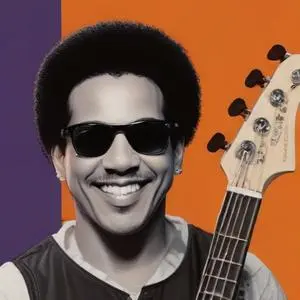
Stanley Clarke: The Revolutionary Jazz Fusion Bassist
A Pioneer in Jazz Fusion
Stanley Clarke is widely regarded as one of the most influential bassists in jazz fusion, a genre that blends jazz with elements of rock, funk, and electronic music. With his innovative and virtuosic playing style, Clarke has not only redefined the role of the bass guitar in jazz but has also inspired generations of musicians across various genres.
Early Life and Career
Born on June 30, 1951, in Philadelphia, Pennsylvania, Clarke's early life was filled with music. His mother, a talented opera singer, encouraged him to study music from a young age. Clarke began playing the accordion, then violin, before finally settling on the double bass at the age of 12. He went on to study classical bass at the Settlement Music School in Philadelphia under the tutelage of Eligio Rossi.
The Rise to Fame
Clarke's professional career took off in the early 1970s, when he moved to New York City and began performing with some of the biggest names in jazz. His recording debut was with Curtis Fuller, followed by stints with
Joe Henderson,
Pharoah Sanders, and
Tony Williams' Lifetime Experience. In 1972, Clarke co-founded the legendary jazz fusion band Return to Forever, along with keyboardist
Chick Corea and drummer Lenny White.
Awards and Accolades
Throughout his illustrious career, Clarke has won numerous awards and accolades, including five Grammy Awards and 15 nominations. He has also been honored with a National Endowment for the Arts Jazz Masters Fellowship in 2022. Additionally, an electric bass guitar played by Clarke is permanently on display at the National Museum of African American History and Culture in Washington, D.C.
Legacy and Influence
Clarke's impact on jazz fusion and beyond cannot be overstated. He has been a major influence on a wide range of musicians, from jazz legends like
Jaco Pastorius and
Marcus Miller to rock icons like
Paul McCartney and The Rolling Stones. His innovative approach to the bass guitar has also inspired a generation of bassists, including Flea from the Red Hot Chili Peppers and
Geezer Butler from Black Sabbath.
Major Works and Collaborations
Some of Clarke's most notable works include his debut solo album "Stanley Clarke" (1974), "School Days" (1976), and "Rocks, Pebbles and Sand" (1980). He has also collaborated with a variety of artists, including
George Duke,
Jean-Luc Ponty, and Al Di Meola.
Philosophy and Quotes
Clarke's philosophy on music is deeply rooted in the concept of fusion. He believes that music should be a fusion of different styles and genres, bringing people together through the power of rhythm and melody. As he once said, "Music is the universal language, and the bass is the foundation of that language."
Personal Life and Charitable Work
In addition to his musical pursuits, Clarke is also dedicated to giving back to his community. He has worked with various charitable organizations, including the Music for Life Foundation, which provides music education to underprivileged children.
Timeline of Milestones
- 1951: Born on June 30th in Philadelphia, Pennsylvania
- 1971: Moves to New York City and begins performing with top jazz musicians
- 1972: Co-founds Return to Forever with Chick Corea and Lenny White
- 1974: Releases debut solo album "Stanley Clarke"
- 1976: Releases "School Days", which becomes a jazz fusion classic
- 1980: Releases "Rocks, Pebbles and Sand", which features the hit single "Stories to Tell"
- 2002: Receives a Grammy nomination for Best Contemporary Jazz Album
- 2022: Is selected as a National Endowment for the Arts Jazz Masters Fellow
Conclusion
Stanley Clarke is a true legend in the world of jazz fusion. With his innovative playing style, trailblazing spirit, and commitment to charitable work, he has left an indelible mark on the music world. As a bassist, composer, and educator, Clarke continues to inspire new generations of musicians, ensuring that his legacy will live on for years to come.
FAQ
What is Stanley Clarkes role in the development of jazz fusion?
Stanley Clarke is a pioneer of jazz fusion, renowned for his virtuosic bass playing and innovative compositions that blended jazz, rock, and funk. His iconic album School Days is a prime example of this genre-bending style.
What are some of Stanley Clarkes most famous collaborations?
Stanley Clarke has collaborated with numerous legendary musicians, including Chick Corea, Lenny White, and Jean-Luc Ponty. He has also worked with famous artists such as Paul Simon, Stan Getz, and Aretha Franklin.
What awards has Stanley Clarke won for his music?
Stanley Clarke has won multiple Grammy Awards, including Best Jazz Instrumental Performance for his album Journey to Love and Best New Age Performance for his album Eastbourne Performance. He has also received numerous nominations for his work.
How has Stanley Clarke influenced other bass players?
Stanley Clarkes innovative playing style and techniques have influenced a generation of bass players, including Jaco Pastorius, Geddy Lee, and Flea. His impact on the development of jazz and rock music is immeasurable.
What is Stanley Clarkes most popular song?
Stanley Clarkes most popular song is School Days, which has become an iconic jazz-fusion anthem. The songs catchy bassline and energetic solo have made it a staple of jazz and rock music.