


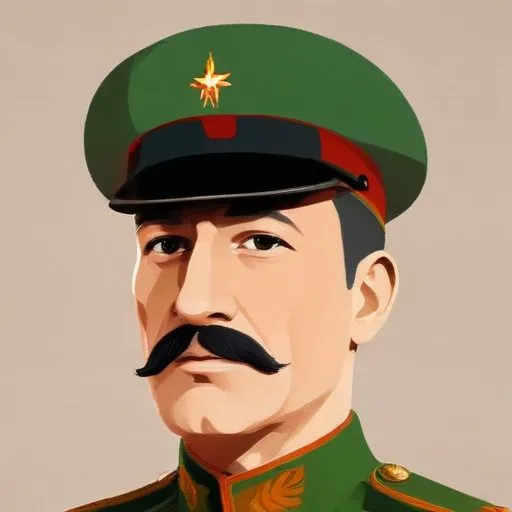
A Bulgarian military officer who played a key role in the country's liberation from Ottoman rule in the late 19th century, leading several rebellions and uprisings.
Stefan Dunjov, a Bulgarian military figure and revolutionary, is renowned for his exceptional bravery and contributions to the Hungarian Revolution of 1848 and the Italian unification, known as the Risorgimento. He holds the distinguished title of being the first ethnic Bulgarian Colonel, making him a legendary figure in the history of both Hungary and Italy.
Born on July 28, 1815, in Vinga, Kingdom of Hungary (present-day Romania), Dunjov hails from a Roman Catholic Bulgarian farming family. He pursued higher education in law and began his career as a lawyer in Arad.
Influenced by the ideas of Hungarian revolutionaries Lajos Kossuth and Sándor Petőfi, Dunjov joined the 1848 insurrectionist forces and was elected a member of the regional and city committee in Arad. He subsequently served as a private in the Hungarian Army and a military judge, participating in numerous battles in defense of the revolution.
His exceptional leadership skills and bravery earned him promotions to the ranks of Captain and eventually Colonel. Unfortunately, the revolution ultimately ended in defeat, and Dunjov was captured by the Austrian authorities, who sentenced him to death.
However, Dunjov's sentence was later commuted to ten years in prison. He was finally released in 1857 and placed under internment in Pest.
With the outbreak of the Second Italian War of Independence in 1859, Dunjov joined the Italian Army and participated in the Expedition of the Thousand, led by Giuseppe Garibaldi. He commanded a regiment comprising Hungarians and Banat Bulgarians, distinguishing himself in the crucial Battle of the Volturno.
Unfortunately, Dunjov suffered a severe leg injury during the battle. Despite this, he was personally congratulated by Garibaldi and awarded the highest Italian military and civil decorations for his bravery and leadership.
After the war, Dunjov settled in united Italy, where he engaged in scientific, journalistic, and translation activities until his death on August 29, 1889. His remarkable life and achievements have left an indelible mark on the histories of both Hungary and Italy.
Stefan Dunjov's life serves as a testament to the power of courage, determination, and leadership. His contributions to the Hungarian and Italian independence movements have inspired generations, cementing his place as a legendary figure in European history.
