


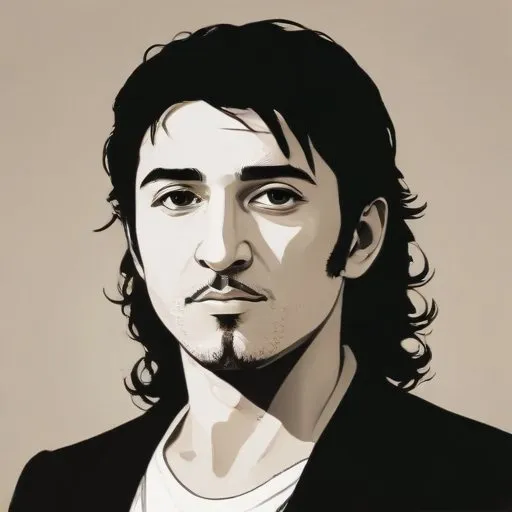
A renowned Greek singer-songwriter celebrated for his iconic laika and entechno laika music, blending traditional and modern styles. He's a cultural icon in Greece, with a legacy spanning decades.
Known as "To Geraki tis Pistas" or "The Hawk of the Stage," Stratos Dionysiou was a renowned Greek singer, composer, and lyricist who left an indelible mark on the country's music scene. With a career spanning over three decades, Dionysiou's powerful voice and emotive delivery earned him a loyal following and critical acclaim.
Born on November 8, 1935, in Nigrita, Serres, Stratos Dionysiou was the son of Angelos and Stasa Dionysiou, refugees from Ayvali in Asia Minor. After his father's untimely death in 1948, Dionysiou moved to Eptalofos of Ampelokipi, Thessaloniki, where he developed a passion for music. He began singing in local nightclubs, eventually making his professional debut at the Farida nightclub in Thessaloniki.
In the late 1950s, Dionysiou's talent was discovered by established artists who encouraged him to pursue a career in Athens. He recorded his first song, "Parages kai PalatIa" (Shacks and Palaces), in 1958, followed by "Ego den eimai enoxos" (I Am Not Guilty) in 1959. The latter's success was largely due to its release coinciding with the execution of Caryl Chessman, drawing parallels between the song's lyrics and Chessman's death sentence.
Dionysiou's breakthrough came in the late 1960s, when he signed with Columbia Records and began collaborating with prominent composers and lyricists, such as Xristos Kolokotronis, Babis Bakalis, and Kostas Virvos. He also rerecorded classic rebetiko songs from the pre-war and WWII era, breathing new life into the genre. Some of his most notable works include "Ta Kavourakia" (The Little Crabs), "Ola Se Thymizoun" (Everything Reminds Me), and "Ehoume Ti Dinami" (We Have the Power).
Stratos Dionysiou's contributions to Greek music and culture are immeasurable. He played a significant role in popularizing rebetiko and laika music, paving the way for future generations of Greek artists. His music addressed themes of love, social justice, and national identity, resonating with audiences across the country.
Throughout his career, Dionysiou received numerous awards and accolades, including the prestigious "Golden Cross of the Order of King Paul" in 1987. He was also honored with a commemorative plaque by the Municipality of Thessaloniki in 1990, a testament to his enduring legacy.
Stratos Dionysiou was married to Georgia Laveni, with whom he had four children. He was an avid fan of PAOK, a Greek football club. Dionysiou passed away on May 11, 1990, leaving behind a rich cultural heritage and a nation that cherished his music.
In conclusion, Stratos Dionysiou's life and career are a testament to the power of music to bring people together and transcend generations. His legacy continues to inspire and influence Greek music, solidifying his place as one of the country's most beloved and revered artists.
75 Years Old
A renowned Greek singer-songwriter, celebrated for her powerful, soulful voice and eclectic blend of traditional and contemporary music styles. She's a cultural icon in Greece, inspiring generations of musicians.
92 Years Old
A renowned Greek singer with a distinctive, soothing voice, known for her vast repertoire of multilingual songs and iconic 1960s-70s hits. She also served as a Member of the European Parliament.
Born in 1920
A Greek triple threat who dazzled audiences with her fiery spirit and captivating performances, while also championing cultural preservation and education as a government minister.
Born in 1920
A renowned Greek singer-songwriter and bouzouki virtuoso, celebrated for his iconic compositions and mastery of the traditional bouzouki instrument, blending folk and laika styles.
95 Years Old
A legendary Greek singer and guitarist renowned for his powerful, emotive voice and iconic laika songs that captivated audiences for decades. His music remains a staple of Greek culture.
