


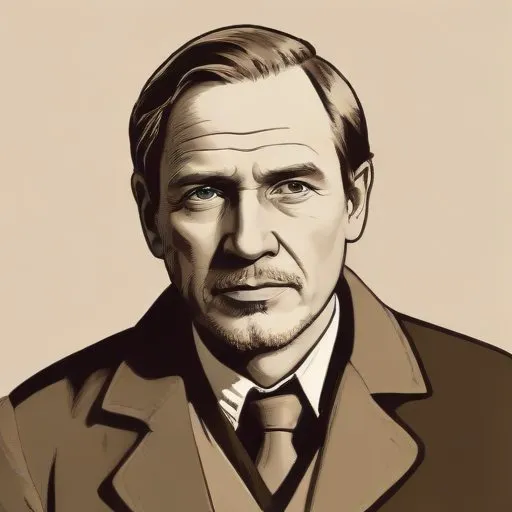
American archaeologist and scholar who deciphered Mayan hieroglyphics, uncovering the secrets of this ancient civilization.
Sylvanus Morley, a renowned American archaeologist and epigrapher, is best known for his groundbreaking work on the pre-Columbian Maya civilization in the early 20th century. His extensive excavations at the Maya site of Chichen Itza, sponsored by the Carnegie Institution, led to numerous publications on Maya hieroglyphic writing, making him one of the leading Mesoamerican archaeologists of his time.
Born on June 7, 1883, in Chester, Pennsylvania, Morley was the eldest of six children. His father, Colonel Benjamin F. Morley, was a professor of chemistry, mathematics, and tactics at Pennsylvania Military College, where Morley's maternal grandfather, Felix de Lannoy, had also taught Modern Languages. This academic environment likely influenced Morley's early interest in archaeology and ancient cultures.
In the early 1900s, Morley embarked on his first expeditions to Mexico and Central America, where he became fascinated with the Maya civilization. He began to study Maya hieroglyphic writing, which led to his groundbreaking publications on the subject. Morley's work at Chichen Itza, a major Maya site in Mexico, uncovered valuable insights into the civilization's calendar systems, astronomy, and architecture.
Less well-known is Morley's role as a spy for the United States during World War I. His archaeological fieldwork in Mexico provided the perfect cover for his clandestine activities with the Office of Naval Intelligence, where he investigated German and anti-American activities in the region. This espionage work remained classified until after his death.
Morley's contributions to Maya research are still widely recognized today. His publications on calendric inscriptions remain essential reading for scholars in the field. As director of various projects sponsored by the Carnegie Institution, Morley also mentored and inspired a new generation of archaeologists, many of whom went on to establish notable careers in their own right.
Morley's achievements were recognized with several honors, including the Loubat Prize (1923) and the Hispanic Society of America's Medal of Honor (1941).
Morley's passion for Maya studies inspired generations of scholars and enthusiasts alike. His commitment to the field helped secure funding for numerous projects, which ultimately revealed much about the ancient Maya civilization. Morley's legacy continues to shape our understanding of this fascinating culture, ensuring his place as one of the most important figures in Mesoamerican archaeology.
Sylvanus Morley passed away on September 2, 1948, leaving behind a rich body of work that continues to inspire and educate us today.
Born in 1805
American archaeologist and explorer who uncovered the ancient Mayan civilization, revealing its sophisticated cities and hieroglyphics to the world.
Born in 1799
A British artist, architect, and explorer who traveled to Central America and the Yucatan Peninsula, documenting ancient Mayan ruins through his detailed drawings and paintings. His work helped to spark a wider interest in Mesoamerican archaeology.
43 Years Old
Stand-up comedian and Saturday Night Live co-anchor, known for his sharp commentary on race and politics. 62
Born in 1923
A British adventurer who explored Mesoamerica, uncovering ancient Mayan cities and deciphering their hieroglyphics, greatly advancing our understanding of this ancient civilization.
