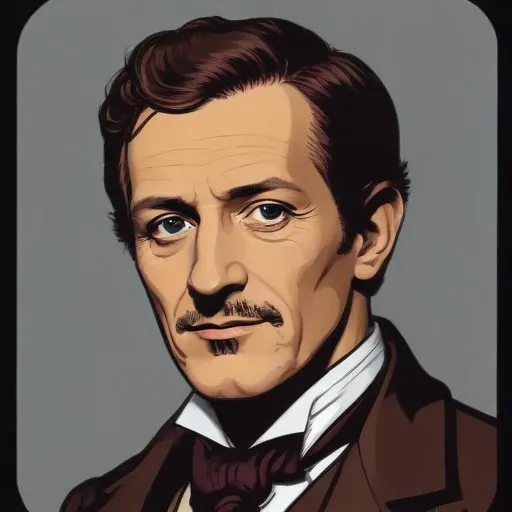
Frederick Catherwood: The Pioneering Artist and Explorer of the Ancient Maya
Rediscovering the Lost Civilization of Mesoamerica
Frederick Catherwood, a British artist, architect, and explorer, is renowned for his meticulously detailed drawings of the ruins of the Maya civilization. Alongside writer
John Lloyd Stephens, Catherwood embarked on a journey to Mesoamerica in the mid-19th century, producing best-selling books that introduced the Western world to the ancient Maya culture.
Early Life and Mediterranean Travels
Born on February 27, 1799, Catherwood's fascination with ancient cultures began during his numerous trips to the Mediterranean between 1824 and 1832. He drew the monuments of the Egyptians, Carthaginians, and Phoenicians, laying the foundation for his later work in Mesoamerica.
Architectural Insights and Contrasts
Catherwood's Mediterranean travels led him to conclude that the architectural styles of the Old World bore no resemblance to those found in the Americas. This realization underscored the significance of his later discoveries in Mesoamerica, which were likely created by the native people of the region.
The Central American Expedition and Collaboration with John Lloyd Stephens
In 1836, Catherwood met John Lloyd Stephens, a travel writer, in London. Inspired by Juan Galindo's account of the ruins of Copán, they decided to venture into Central America, aiming to produce a more detailed and better-illustrated record of the ancient civilization.
Rediscovering the Maya Civilization
Between 1839 and 1840, Catherwood and Stephens explored dozens of ruins, resulting in the detailed description of 44 sites, many for the first time. Their work, documented in the books
Incidents of Travel in Central America, Chiapas and Yucatán and
Incidents of Travel in Yucatán, introduced the Western world to the majesty of the Maya civilization.
Award and Honors
In 1837, Catherwood was elected an Honorary member of the National Academy of Design, recognizing his outstanding contributions to the field of art and architecture.
Legacy and Impact
Catherwood's meticulous drawings and writings have had a lasting impact on our understanding of the Maya civilization. His work has inspired generations of archaeologists, anthropologists, and historians, shaping our understanding of Mesoamerican history and culture.
Influence on Modern Society
Catherwood's groundbreaking work has extended beyond the realm of academia, influencing popular culture, film, and literature. His drawings have inspired countless artists, designers, and architects, perpetuating the allure of the ancient Maya.
Personal Milestones and Key Life Events
- February 27, 1799: Born in England
- 1824-1832: Mediterranean travels
- 1836: Met John Lloyd Stephens in London
- 1837: Elected Honorary member of the National Academy of Design
- 1839-1840: Central American expedition with John Lloyd Stephens
- September 27, 1854: Passed away
Trivia and Fun Facts
- Catherwood was probably the first Westerner to make a detailed survey of the Dome of the Rock in Jerusalem during a six-week period in 1833.
- He perfected a drawing technique using the camera lucida.
- Catherwood supplied drawings for the panoramas of Jerusalem and Thebes shown by Robert Burford in Leicester Square.
Conclusion
Frederick Catherwood's remarkable journey and contributions have left an indelible mark on our understanding of the ancient Maya civilization. His work continues to inspire and captivate audiences, cementing his place as a pioneering artist, architect, and explorer.
FAQ
What were Frederick Catherwoods most notable expeditions?
Frederick Catherwood is renowned for his expeditions to the Middle East, particularly his journey to Egypt and Syria in 1835. He also explored the ruins of Palenque in Mexico, where he created detailed drawings of the ancient city.
What was Frederick Catherwoods architectural style?
Frederick Catherwoods architectural style was heavily influenced by his experiences in the Middle East and Mexico. He incorporated elements of Moorish and Gothic Revival architecture in his designs, which were characterized by grandeur, ornateness, and eclecticism.
What role did Frederick Catherwood play in the exploration of Mayan ruins?
Frederick Catherwood was one of the first Europeans to explore and document the Mayan ruins in Mexico. His expeditions and drawings provided valuable insights into Mayan architecture, culture, and history, and his work remains an important reference for archaeologists and historians today.
How did Frederick Catherwoods art influence his architectural designs?
Frederick Catherwoods artistic skills were instrumental in shaping his architectural designs. His drawings and paintings of ancient cities and landscapes informed his understanding of spatial relationships, proportion, and composition, which he applied to his architectural projects.
What legacy did Frederick Catherwood leave in the field of architecture?
Frederick Catherwoods legacy in architecture lies in his innovative approach to design, which blended historical references with modern sensibilities. His work inspired a generation of architects to explore new styles and forms, and his contributions continue to influence architectural education and practice today.