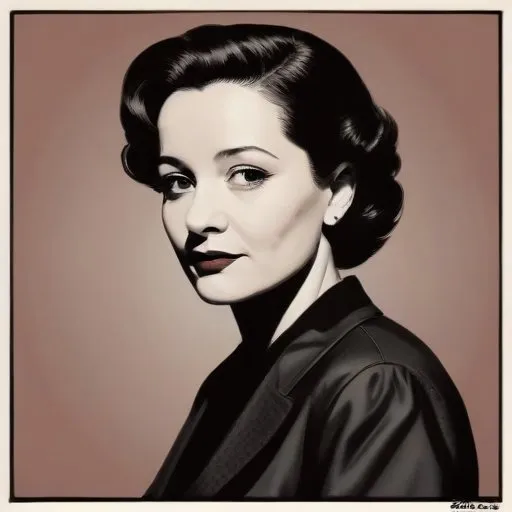
Sylvia Sidney: A Pioneering Actress of Stage and Screen
A Legendary Career Spanning Seven Decades
Sylvia Sidney was a revered American actress whose illustrious career traversed an impressive 70 years, gracing both stage and screen with her luminescent presence. She rose to prominence in the 1930s, captivating audiences with her versatility and range in numerous leading roles, subsequently earning a reputation as one of the most talented actresses of her generation.
Early Life and Adoption
Born Sophia Kosow on August 8, 1910, in the Bronx, New York, Sidney's early life was marked by parental divorce and adoption. Her mother, Rebecca (née Saperstein), a Romanian Jew, and father, Victor Kosow, a Russian Jewish immigrant, parted ways by 1915. She was subsequently adopted by her stepfather, Sigmund Sidney, a dentist, and assumed the surname Sidney. This transformative event would have a profound impact on her life, as she began her acting career at the tender age of 15 to overcome her shyness.
Career Highlights and Major Works
Sidney's early foray into acting led to her enrollment in the Theater Guild's School for Acting, where she received critical acclaim for her performances. Her film debut came in 1926, as an extra in D.W. Griffith's
The Sorrows of Satan. The 1930s saw her starring in a string of films, often portraying working-class heroines or the girlfriend/sister of a gangster. Some notable films from this period include:
- An American Tragedy (1931)
- City Streets (1931)
- Street Scene (1931)
- Sabotage (1936)
- Fury (1936)
- You Only Live Once (1937)
- Dead End (1937)
- The Trail of the Lonesome Pine (1936), an early three-strip Technicolor film
Awards and Honors
Sidney's remarkable talent earned her a nomination for the Academy Award for Best Supporting Actress for her poignant performance in
Summer Wishes, Winter Dreams (1973). Her iconic role as Juno, a case worker in the afterlife, in
Tim Burton's
Beetlejuice (1988) won her a Saturn Award for Best Supporting Actress.
Philosophical Contributions and Beliefs
Sidney's illustrious career was not without its challenges. During the Depression, she occasionally played roles that reinforced societal stereotypes, perpetuating the "damsel in distress" trope. However, her later work in films like
Beetlejuice, which explored themes of mortality and the afterlife, showcased her willingness to challenge conventional norms and push the boundaries of storytelling.
Personal Life and Relationships
Sidney's personal life was marked by her marriage to
Bennett Cerf, a renowned publisher, in 1935. The couple divorced in 1936, but remained on amicable terms. Her stepfather, Sigmund Sidney, played a significant role in her adoption and early life.
Legacy and Historical Context
Sylvia Sidney's remarkable career serves as a testament to her dedication to her craft, her ability to adapt to changing times, and her influence on the film industry as a whole. Her legacy extends beyond her own accomplishments, inspiring subsequent generations of actresses to pursue careers in film and theater.
Trivia and Fun Facts
- Sidney was one of the highest-paid actresses in the industry during the 1930s, earning $10,000 per week.
- She developed a reputation for being "difficult to work with" during her early career.
Influence on Modern Society
Sidney's remarkable career has left an indelible mark on the film industry, paving the way for future generations of actresses. Her contributions to the world of cinema, both on and off screen, continue to inspire and captivate audiences to this day.
Conclusion
Sylvia Sidney's remarkable life and career serve as a shining testament to her talent, perseverance, and dedication to her craft. As a pioneering actress of stage and screen, her legacy continues to inspire and captivate audiences, ensuring her place as one of the most beloved and enduring actresses of the 20th century.