


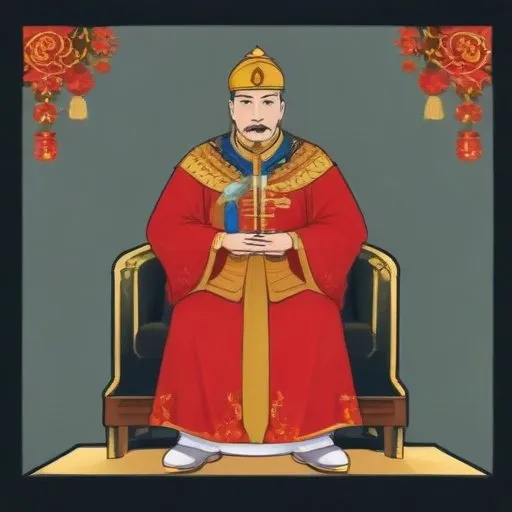
The short-lived emperor who sparked a brief but significant cultural and artistic renaissance in the late Ming dynasty, marked by a flourishing of literature, art, and architecture.
The Taichang Emperor, born Zhu Changluo, is infamous for having the shortest reign in Ming dynasty history, a mere 29 days. His era name, Taichang, translates to "Grand Prosperity," a stark contrast to the turmoil that surrounded his life and reign.
Zhu Changluo was born in 1582 to the Wanli Emperor and Lady Wang, a servant of the emperor's mother. Despite being the eldest son, he was largely ignored by his father, who favored Lady Zheng's son, Zhu Changxun. This led to a decades-long succession crisis, with the Wanli Emperor ultimately appointing Zhu Changluo as crown prince in 1601.
In 1615, a bizarre incident shook the Forbidden City when a man named Zhang Chai broke into the Crown Prince's palace, armed with a wooden staff. While initially deemed insane, further investigation hinted at the involvement of two eunuchs close to Lady Zheng. The eunuchs were swiftly executed, fueling speculation about the true extent of the conspiracy.
Zhu Changluo's reign began on August 28, 1620, following the death of his father. However, his time on the throne was short-lived, as he died on September 26, 1620, due to a bout of diarrhea. He was succeeded by his son, Zhu Youjiao, who became the Tianqi Emperor.
The Taichang Emperor's life and reign serve as a testament to the complex web of royal intrigue that often plagued the Ming dynasty. Despite his short time on the throne, his legacy continues to fascinate historians and aficionados of Chinese history alike.
The Taichang Emperor's brief reign serves as a poignant reminder of the fragility of power and the complexities of royal succession in imperial China. His life and legacy continue to captivate historians, offering a unique glimpse into the intricate workings of the Ming dynasty.
Born in 1491
Ruling China from 1505 to 1521, he's remembered for his eunuch-dominated government, lavish spending, and military campaigns that expanded the empire's borders. His reign was marked by extravagance and external conflicts.
Born in 1476
A high-ranking official during the Ming Dynasty, known for his role in suppressing the Mongol invasion and implementing key administrative reforms.
