


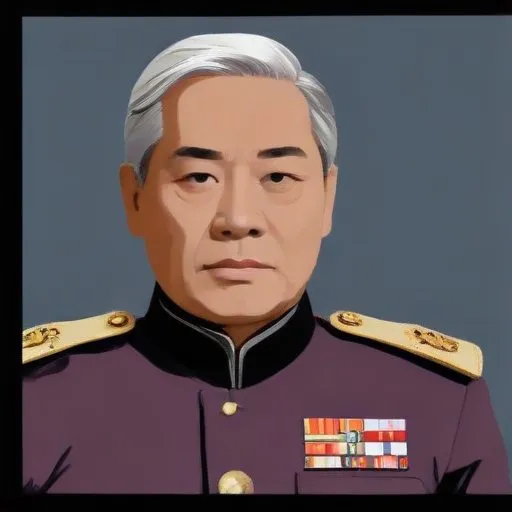
Governor of Hong Kong during World War II, known for his role in the Japanese occupation and surrender. He was tried and convicted of war crimes after the war.
Takashi Sakai, a Japanese army officer, is infamously known for his role as the Governor of Hong Kong under Japanese occupation during World War II. This notorious position, which he held from 1941 to 1942, has become synonymous with his name, overshadowing his earlier military career and other achievements.
Sakai was born on October 18, 1887, in Kamo District, Hiroshima, Japan. He pursued a military career from an early age, graduating from the Imperial Japanese Army Academy in 1908. He further honed his skills by attending the Army Staff College, from which he graduated in 1923.
Sakai's military career took him to China, where he was stationed in Jinan, Shandong Province, during the Jinan Incident in 1928. He was later transferred to the Tianjin Garrison, serving from 1929 to 1932. During this period, he was involved in various military operations, including the orchestration of armed conflicts that led to the He-Umezu Agreement, which effectively gave Japan control of Hebei Province.
Sakai's military prowess earned him promotions, and he became a colonel in 1932. He served as the Chief of Staff of the Japanese China Garrison Army from 1934 to 1935 and commander of the IJA 23rd Infantry Regiment in 1936. His rise to prominence continued, with promotions to major general in 1937 and lieutenant general in 1939.
Sakai's tenure as Governor of Hong Kong, from 1941 to 1942, was marked by controversy and brutality. He was responsible for implementing the Japanese occupation's policies, including the forced relocation of civilians, exploitation of resources, and suppression of dissent. His regime was notorious for its brutality, earning him a reputation as a ruthless and feared leader.
Sakai's legacy is marred by his actions during World War II, particularly his role in the occupation of Hong Kong. He was arrested and tried for war crimes after Japan's surrender in 1945. Sakai died on September 30, 1946, while awaiting trial.
Takashi Sakai's life and career serve as a cautionary tale about the dangers of unchecked power and the importance of accountability. His legacy continues to be felt, serving as a reminder of the devastating consequences of war and the importance of promoting peace and justice.
Born in 1848
A Japanese admiral who led the Imperial Japanese Navy to several victories during the Russo-Japanese War, including the Battle of Tsushima, which cemented Japan's rise as a naval power. He's known for his innovative tactics and strategies that revolutionized naval warfare.
