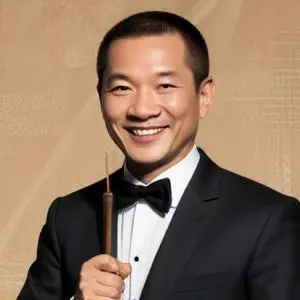
Tan Dun: The Boundary-Pushing Composer and Conductor
A Symphony of Cultural Fusion
Tan Dun, a Chinese-born American composer and conductor, is renowned for his genre-bending music that seamlessly blends Western and Chinese influences. With a repertoire that spans operas, orchestral, vocal, chamber, solo, and film scores, Tan has established himself as a leading figure in contemporary classical music.
Early Life and Inspiration
Born in 1957 in a small village in Hunan, China, Tan grew up during the tumultuous years of the Cultural Revolution. As a child, he was fascinated by the rituals and ceremonies of the village shaman, which inspired his fascination with music made from natural objects like rocks and water. Despite being discouraged from pursuing music due to the Cultural Revolution's strict policies, Tan joined an ensemble of commune residents and learned to play traditional Chinese string instruments.
Rise to Prominence
Tan's talent and perseverance eventually earned him a spot at the Central Conservatory of Music, where he received his musical education. His early influences included both Chinese music and 20th-century classical music, laying the foundation for his unique style. After receiving his DMA from Columbia University in 1993, Tan based himself in New York City, where he began to make a name for himself in the music world.
Awards and Accolades
Tan's impressive body of work has garnered him numerous awards and accolades, including:
- A Grawemeyer Award for his opera Marco Polo (1996)
- An Academy Award and Grammy Award for his film score in Ang Lee's Crouching Tiger, Hidden Dragon (2000)
Philosophical Contributions and Beliefs
Tan's music often incorporates audiovisual elements, using instruments constructed from organic materials like paper, water, and stone. His compositions are inspired by traditional Chinese theatrical and ritual performance, reflecting his fascination with the intersection of music and visual art. As a UNESCO Goodwill Ambassador (2013), Tan has emphasized the importance of cultural exchange and understanding through music.
Influence on Modern Society
Tan's work has not only pushed the boundaries of classical music but has also contributed to the global cultural landscape. His music has been performed by leading orchestras worldwide, introducing audiences to the richness of Chinese culture. By blending East and West, Tan has created a unique sonic identity that resonates with listeners from diverse backgrounds.
Personal Milestones and Key Life Events
Tan's life journey has been marked by significant milestones, including:
- Surviving the Cultural Revolution and pursuing music despite the odds
- Moving to New York City and establishing himself as a composer and conductor
- Becoming a UNESCO Goodwill Ambassador and advocating for cultural exchange
Legacy and Impact
Tan Dun's innovative approach to music has left an indelible mark on the world of classical music. His compositions continue to inspire new generations of musicians and composers, ensuring that his legacy will endure for years to come. As a true pioneer, Tan has proven that music can be a powerful tool for cultural understanding and exchange.
FAQ
What is Tan Duns educational background?
Tan Dun studied at the Central Conservatory of Music in Beijing and later at Columbia University in New York City. He holds a doctoral degree in music composition from Columbia University.
What are some of Tan Duns famous compositions?
Tan Dun is known for his iconic scores for films such as Crouching Tiger, Hidden Dragon, Hero, and The Banquet. He has also composed music for orchestras, operas, and ballets.
What awards has Tan Dun won?
Tan Dun has won numerous awards, including an Academy Award, a Grammy Award, and a Bach Award. He has also been nominated for several other awards, including a Golden Globe Award.
What is Tan Duns style of music?
Tan Duns music style is known for blending traditional Chinese instruments and melodies with modern Western orchestral techniques. He is also known for his use of natural sounds and instruments in his compositions.
What is Tan Duns role in the music industry?
Tan Dun is a renowned composer, conductor, and pianist. He has worked with several orchestras and opera companies around the world and has also taught at several institutions, including the Juilliard School.