


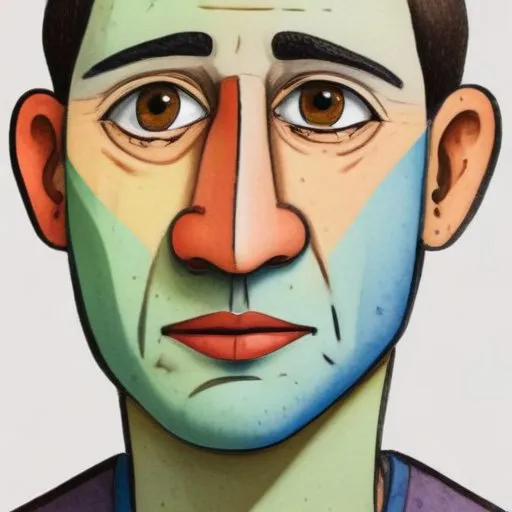
A Spanish-Ecuadorian sculptor blending expressionist and representational styles to create emotive, thought-provoking pieces that explore the human condition. His works often feature distorted forms and exaggerated features to convey intense emotions.
Teddy Cobea is a renowned figurative expressionist sculptor, celebrated for his surrealist components and mastery of combining patinas to create a kaleidoscope of colors in his bronze sculptures. Born in Portoviejo in 1973, Cobea's artistic journey is a testament to his unique blend of medical and artistic backgrounds, culminating in a distinctive style that has captivated art enthusiasts worldwide.
Cobea's fascination with anatomy began at an early age, influenced by a biography of Leonardo da Vinci in his family's bookcase. This curiosity led him to pursue medicine, studying in Guayaquil and later in Barcelona, where he concurrently honed his skills in sculpture at the esteemed Massana School and Florence Academy of Art.
Cobea's work is characterized by its figurative expressionism, initially influenced by French sculptor Jean-Baptista Carpeaux. However, it is the surrealist component, reminiscent of Salvador Dali's work, that sets his sculptures apart. His innovative approach to patina combination yields a range of vibrant colors, adding an extra layer of emotion and depth to his creations.
Cobea's work has been showcased in various prestigious exhibitions, including:
One of his most notable pieces, "The Dreams," is proudly displayed at the Palazzo Panciatichi in Florence, Italy, as part of the Tuscany government's museum collection since 2013.
Teddy Cobea's innovative style and unique blend of artistic and medical backgrounds have left an indelible mark on the world of sculpture. His work continues to inspire and captivate audiences, pushing the boundaries of figurative expressionism and surrealist art.
As a testament to his influence, Cobea's concept of "sensorrealism" has been adopted in various art platforms and exhibitions, solidifying his position as a trailblazer in the world of contemporary art.
Born in 1840
A French sculptor and illustrator famous for creating iconic, emotionally charged figures that capture the human experience, including the iconic symbol of intellectualism, The Thinker.
Born in 1864
French illustrator and sculptor renowned for her pioneering work in Rodin's studio and her own expressive, emotional sculptures that explored the human form. Her tragic life and tumultuous relationship with Rodin have become legendary.
Born in 1861
A pioneering artist who blended classical and modern styles, creating iconic sculptures and paintings that explored the human form and emotions.
Born in 1861
French sculptor and painter renowned for elegant, curvaceous female forms that blend classical and modernist styles, capturing the essence of femininity and sensuality.
Born in 1869
A pioneering artist who revolutionized modern art with bold, expressive, and colorful works that blurred the lines between painting and sculpture, creating a new language of form and color.
Born in 1881
A pioneering artist who transformed modern art with pioneering Cubist works, creating a new visual language that continues to inspire and influence art, design, and culture.
Born in 1904
A renowned surrealist master of bizarre, dream-like paintings and sculptures that blur reality and fantasy, known for iconic works like "The Persistence of Memory" and "The Elephants".
Born in 1893
A renowned Spanish artist, famous for his vibrant, dreamlike paintings and sculptures that blended abstraction and surrealism, creating a unique visual language. His works often featured bold colors, biomorphic forms, and a sense of playfulness.
