


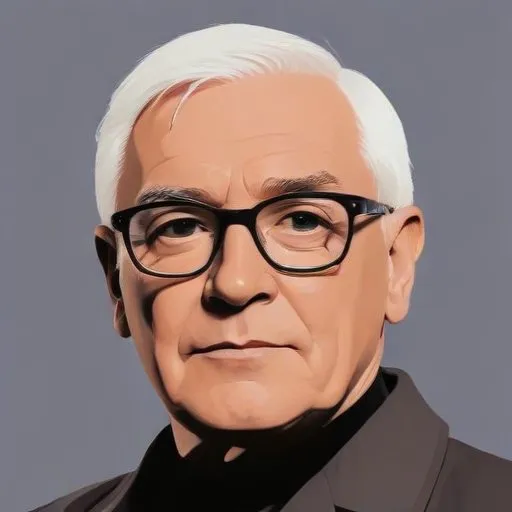
A renowned filmmaker celebrated for his poignant, visually stunning, and deeply personal cinematic works, often exploring themes of memory, identity, and British culture. 18
Terence Davies, the renowned British screenwriter, film director, and novelist, is best known for his autobiographical films that mesmerize audiences with their poetic and introspective storytelling. His cinematic masterpieces, such as Distant Voices, Still Lives (1988), The Long Day Closes (1992), and Of Time and the City (2008), have cemented his reputation as one of the great British directors of his time.
Born on November 10, 1945, in Kensington, Liverpool, Davies was the youngest of ten children to working-class Catholic parents. His early life was marked by the loss of his father at the age of seven, an event that would later shape his cinematic narrative. Davies' rejection of religion and embracing of atheism at 22 added a layer of complexity to his persona.
After leaving school at 16, Davies worked as a shipping office clerk and unqualified accountant for 10 years before leaving Liverpool in 1971 to attend Coventry Drama School. This marked the beginning of his journey into the world of cinema. At Coventry, Davies wrote the screenplay for his first autobiographical short, Children (1976), filmed under the auspices of the BFI Production Board.
Davies' early short films formed a trilogy of self-discovery, with Madonna and Child (1980) and Death and Transfiguration (1983) completing the story of his alter ego, Robert Tucker. These films not only showcased Davies' mastery of storytelling but also laid the foundation for his future cinematic endeavors.
Davies' literary adaptations, such as The Neon Bible (1995), The House of Mirth (2000), The Deep Blue Sea (2011), and Sunset Song (2015), demonstrated his remarkable ability to translate complex literary works into cinematic masterpieces. His final two feature films, A Quiet Passion (2016) and Benediction (2021), centered around influential literary figures, Emily Dickinson and Siegfried Sassoon, further solidifying his reputation as a master of literary adaptations.
Davies' cinematic excellence has been recognized with several awards and nominations, including the FIPRESCI Prize at the 1988 Cannes Film Festival for Distant Voices, Still Lives. His contributions to British cinema have also been acknowledged with a BAFTA nomination for Best British Film of the Year for The Long Day Closes.
Terence Davies' cinematic legacy is a testament to his poetic vision and storytelling prowess. His films are a reflection of his life, experiences, and passions, woven together with a deep understanding of human emotions. As one of the great British directors of his time, Davies' work continues to inspire and influence generations of filmmakers and audiences alike.
Terence Davies' remarkable journey, both on and off screen, serves as a testament to the power of passion, creativity, and dedication. His cinematic legacy continues to captivate audiences, inspiring a new generation of filmmakers to follow in his footsteps.
Born in 1926
A renowned actor and director, he brought complex characters to life on screen, earning numerous awards and nominations, including an Academy Award for Best Director. 42
90 Years Old
A renowned filmmaker acclaimed for crafting gritty, socially conscious dramas that often spotlight the struggles of the working class. His films frequently spark controversy and ignite important conversations.
Born in 1923
A pioneering figure in British Free Cinema, known for directing provocative, socially conscious films that critique the establishment, such as "If...." and "O Lucky Man!".
98 Years Old
Acclaimed director and producer of provocative, socially conscious films that often explored themes of class, identity, and morality, earning numerous awards and nominations.
Born in 1926
A Czech-English director and producer who made significant contributions to the British Free Cinema movement, known for his gritty and realistic filmmaking style. He directed films like "Saturday Night and Sunday Morning" and "The French Lieutenant's Woman".
Born in 1905
A pioneering filmmaker behind iconic movies like "Peeping Tom" and "The Red Shoes", known for his bold, visually stunning, and often controversial storytelling style.
Born in 1902
A Hungarian-English filmmaker behind iconic British movies, blending fantasy and reality, with a unique visual style and clever storytelling. He's most known for his work on classic films like "The Red Shoes" and "Black Narcissus".
Born in 1908
Acclaimed filmmaker behind epic, visually stunning movies like "Lawrence of Arabia" and "Doctor Zhivago", known for his meticulous attention to detail and sweeping cinematography.
