


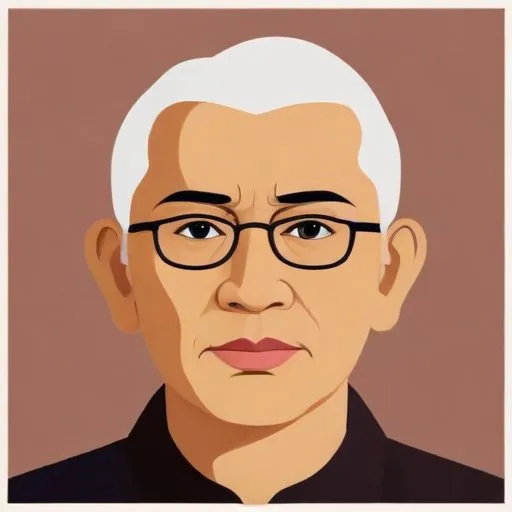
A renowned Burmese writer and playwright, celebrated for his influential works that explored themes of love, social justice, and national identity. His writings continue to inspire generations of Burmese readers and writers.
Theippan Maung Wa was a renowned Burmese writer, literary critic, and playwright who pioneered the Hkit San literary movement in the early 20th century. As one of the movement's leading figures, he played a crucial role in shaping the country's literary scene, introducing new styles and themes that continue to influence Burmese literature to this day.
Born on June 5, 1899, Theippan Maung Wa, whose real name was Sein Tin, grew up in a cultural hub that valued education and literature. He excelled in school, earning top honors in Burmese and Pali literature from Maha Buddhaghosa High School in 1919.
In 1920, he enrolled in Rangoon College, but his studies were interrupted by the country's first university student strike, which protested the colonial education system. Undeterred, he joined the National Schools movement, teaching until 1923. Later, he resumed his studies, graduating with a B.A. Hons. in Burmese in 1927, becoming the first student in Burmese history to achieve this feat.
Theippan Maung Wa's writing career began while he was still in high school, using the pen name Waziya Tint for newspaper articles. He later adopted the name Theippan Maung Wa, under which he wrote literary critiques, plays, and short stories.
In the 1930s, he co-founded the Hkit San movement, a literary revolution that sought to modernize Burmese literature. Through his work, he introduced new styles, themes, and techniques, inspiring a generation of writers, including Zawgyi and Min Thu Wun.
His notable works include Hkit san ponbyin (Experimental Tales), published in 1934 and 1938, which showcased his innovative approach to storytelling. He also wrote plays under the pseudonym Tint Tint, exploring themes of rural life and social issues.
In 1929, Theippan Maung Wa traveled to Christ Church, Oxford University, to study for the Indian Civil Service exam. After completing his studies, he returned to Burma and served as a district officer in rural areas, observing and documenting the lives of ordinary people.
During this period, he wrote a series of sketches based on his rural experiences, providing a window into the lives of Burmese villagers. These works remain an important part of Burma's literary heritage, offering valuable insights into the country's history and culture.
Theippan Maung Wa's contributions to Burmese literature are immeasurable. Through his pioneering work, he paved the way for future generations of writers, inspiring them to explore new themes, styles, and techniques.
His legacy extends beyond literature, too. As a civil servant, he worked tirelessly to improve the lives of rural communities, using his writing to raise awareness about social issues and promote positive change.
Today, Theippan Maung Wa is remembered as a trailblazer, a visionary who helped shape the course of Burmese literature and culture. His work continues to inspire, influencing writers, artists, and social activists around the world.
Born in 1903
A renowned writer of dystopian classics, such as "1984" and "Animal Farm", who warned of totalitarianism's dangers through allegorical fiction.
Born in 1865
A renowned author and poet, best known for his imaginative and vivid stories, particularly "The Jungle Book", which have captivated readers of all ages with their timeless themes and memorable characters.
Born in 1874
A renowned British writer of plays, novels, and short stories, known for his witty, insightful, and often provocative works that explored human nature and morality.
Born in 1879
This celebrated author crafted novels and plays that probed the human condition, exploring themes of social class, morality, and personal relationships, with a distinctive wit and insight. Their works continue to captivate audiences with their nuanced portrayals of English society during the early 20th century.
Born in 1857
A Polish-born British novelist who wrote thought-provoking and psychologically complex stories that explored the human condition, often set against the backdrop of colonialism and the sea.
Born in 1873
A pioneering modernist writer, credited with influencing 20th-century literature through experimental novels and poetry that explored the human condition. Known for his impressionistic style and complex characters.
Born in 1866
A visionary writer who pioneered the science fiction genre, crafting timeless classics like "The Time Machine" and "War of the Worlds" that continue to inspire and captivate audiences today.
73 Years Old
A Canadian actor who appeared in over 150 films and TV shows, often playing Native American and First Nations characters, and was a pioneer for Indigenous representation in media.
