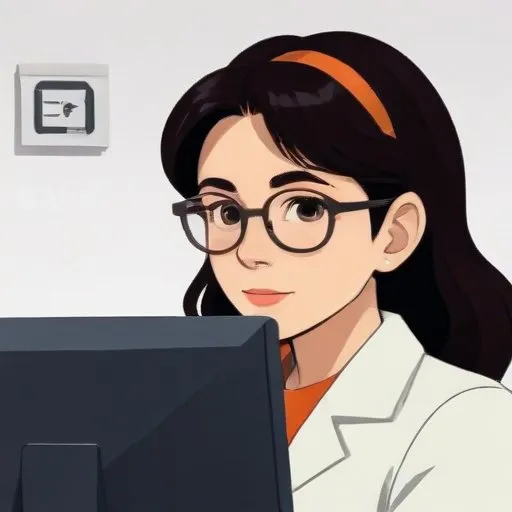
Thelma Estrin: A Trailblazing Computer Scientist and Engineer
Pioneering Contributions to Expert Systems and Biomedical Engineering
Thelma Estrin, an American computer scientist and engineer, made groundbreaking contributions to the fields of expert systems and biomedical engineering, leaving an indelible mark on the world of technology. With a career spanning over six decades, Estrin's innovative work transformed the healthcare and medical research industries, making her one of the most celebrated figures in the history of computer science.
Early Life and Education
Born on February 21, 1924, in New York City, Estrin's early aptitude for mathematics led her to pursue higher education at City College of New York (CCNY) in 1941. During her time at CCNY, she met her future husband, Gerald Estrin, and began her journey in engineering with a three-month engineering assistant course at Stevens Institute of Technology in 1942.
A Pioneering Engineer
Estrin's early career was marked by her work at Radio Receptor Company, where she developed electronic devices and cultivated an interest in engineering. In 1946, she and her husband moved to Madison, Wisconsin, to pursue undergraduate degrees in electrical engineering at the University of Wisconsin-Madison. Estrin's academic prowess earned her a Bachelor of Science in 1948, followed by a Master of Science in 1949 and a Doctor of Philosophy in 1951.
Princeton and Biomedical Engineering Research (1951-1953)
The Estrins moved to Princeton, New Jersey, in the early 1950s, where Gerald joined the Institute for Advanced Study at Princeton. Thelma obtained a research position in the Electroencephalograph Department, working alongside renowned scientists, including
John von Neumann. This period marked the beginning of Estrin's pioneering work in biomedical engineering, as she applied computer technology to healthcare and medical research.
Designing the WEIZAC: A Milestone in Electrical and Computer Engineering
In 1954, Estrin played a crucial role in designing the Weizmann Automatic Computer (WEIZAC), the first computer in Israel and the Middle East. This achievement was recognized as an IEEE Milestone in Electrical and Computer Engineering, solidifying Estrin's position as a trailblazer in the field.
Awards and Honors
Estrin's contributions to computer science and biomedical engineering earned her numerous accolades, including:
- Recipient of the 1998 IEEE Emanuel R. Piore Award
- Elected as a Fellow of the American Association for the Advancement of Science (AAAS)
- Fellow of the Institute of Electrical and Electronics Engineers (IEEE)
Legacy and Impact
Thelma Estrin's groundbreaking work paved the way for future generations of computer scientists and engineers, particularly women, who continue to push the boundaries of technology and innovation. Her innovative research in expert systems and biomedical engineering has had a lasting impact on the healthcare industry, improving lives and transforming medical research.
As a testament to her remarkable legacy, Thelma Estrin's remarkable journey serves as an inspiration to anyone pursuing a career in computer science and engineering, solidifying her place as a trailblazing figure in the history of technology.
FAQ
What was Thelma Estrins role in the development of computer science?
Thelma Estrin played a significant role in the development of computer science, particularly in the areas of computing and networking. She was one of the first women to earn a Ph.D. in electrical engineering and made important contributions to the development of computer systems and networks.
How did Thelma Estrins work impact the field of computer engineering?
Thelma Estrins work had a profound impact on the field of computer engineering, particularly in the areas of computer architecture, networking, and signal processing. Her contributions have enabled the development of faster, more efficient, and more reliable computer systems.
What were Thelma Estrins achievements in biomedical engineering?
Thelma Estrins achievements in biomedical engineering include developing medical imaging systems, designing implantable devices, and creating algorithms for medical diagnosis. Her work has improved the quality of healthcare and saved countless lives.
What awards and recognition did Thelma Estrin receive for her work?
Thelma Estrin received several awards and recognitions for her work, including the Institute of Electrical and Electronics Engineers (IEEE) Fellow Award, the American Institute of Medical and Biological Engineering (AIMBE) Fellow Award, and the National Science Foundations (NSF) Award for Outstanding Contributions to Computer Science.
How did Thelma Estrins work inspire future generations of engineers?
Thelma Estrins work has inspired future generations of engineers, particularly women, to pursue careers in computer science, biomedical engineering, and other fields. Her legacy continues to motivate and encourage students to explore the possibilities of engineering and make a positive impact on society.