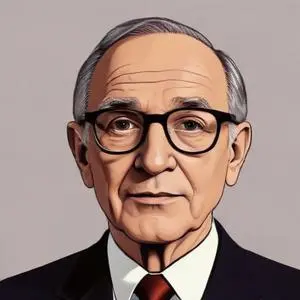
Theodore Schultz: A Trailblazing Agricultural Economist and Nobel Laureate
A Giant in the Field of Economics
Theodore Schultz, an American agricultural economist, is renowned for his groundbreaking contributions to the field of economics, earning him the prestigious Nobel Memorial Prize in Economic Sciences in 1979. Schultz's work revolutionized the understanding of human capital, turning the traditional economic perspective on its head, and cementing his position as one of the most influential economists of the 20th century.
Early Life and Education
Born on April 30, 1902, on a 560-acre farm in South Dakota, Schultz's early life was marked by a lack of formal education. His father, Henry, pulled him out of school in the eighth grade to work on the farm, fearing that further education would make him less inclined to continue the family business. However, Schultz's innate curiosity and thirst for knowledge led him to pursue higher education. He enrolled in a three-year program at South Dakota State College, earning his degree in agriculture and economics in 1927.
Academic Career and Contributions
Schultz's academic career spanned over four decades, with teaching stints at Iowa State College (1930-1943) and the University of Chicago (1946-1961), where he served as the chair of economics. His work focused on human capital, particularly in the context of agricultural economics. Schultz challenged the conventional view that economic growth was solely dependent on physical capital, arguing that human capital, such as education and health, played a crucial role in driving economic development.
Human Capital Theory
Schultz's most significant contribution lies in his human capital theory, which posits that investments in human capital, such as education and training, are essential for economic growth. This idea transformed the way economists viewed human resources, recognizing that people are not just passive recipients of economic benefits but active participants in the growth process.
Awards and Honors
Schultz's work did not go unnoticed. He was awarded the Nobel Memorial Prize in Economic Sciences in 1979, along with Sir Arthur Lewis, for their pioneering work on economic growth and human capital. He also received an honorary doctorate of science degree from South Dakota State College in 1959.
Personal Milestones and Key Life Events
- 1927: Earned his degree in agriculture and economics from South Dakota State College
- 1930: Completed his Ph.D. in Agricultural Economics from the University of Wisconsin-Madison
- 1946: Became the chair of economics at the University of Chicago
- 1960: Became president of the American Economic Association
- 1979: Awarded the Nobel Memorial Prize in Economic Sciences
Legacy and Impact
Theodore Schultz's work has had a profound impact on modern economic thought. His human capital theory has influenced policymakers, educators, and entrepreneurs, highlighting the importance of investing in human resources for sustainable economic growth. Schultz's legacy continues to inspire new generations of economists, ensuring that his groundbreaking work remains relevant and influential in shaping the world's economic future.
Quotes and Memorable Sayings
- "The economic process is not a simple matter of production and consumption, but rather a complex process of human effort and human ingenuity."
- "Investing in human capital is the key to unlocking economic growth and development."
Schultz's remarkable journey, from a rural South Dakota farm to the pinnacle of academic excellence, serves as a testament to the power of human capital. His work continues to inspire and inform, leaving an indelible mark on the field of economics.
FAQ
What is Theodore Schultzs most famous economic concept?
Theodore Schultzs most famous economic concept is the human capital theory, which posits that education and training are essential for economic growth and development.
What was Theodore Schultzs contribution to economics?
Theodore Schultzs contribution to economics was significant, as he developed the concept of human capital and demonstrated its importance for economic growth and development.
What awards did Theodore Schultz win?
Theodore Schultz won the Nobel Memorial Prize in Economic Sciences in 1979 for his work on human capital theory and its applications to economic growth and development.
What is Theodore Schultzs role in the development of modern economics?
Theodore Schultz played a significant role in the development of modern economics, helping to establish the field of human capital theory and paving the way for future generations of economists.
What is Theodore Schultzs legacy?
Theodore Schultzs legacy is that of a pioneering economist, who contributed to the growth and development of modern economics through his innovative ideas and methodologies.