


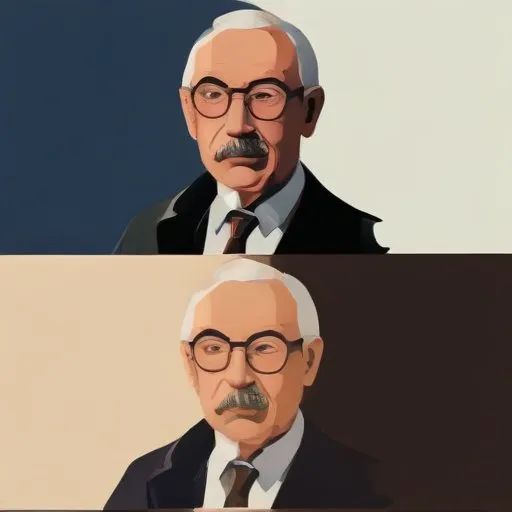
A renowned expert in the field of art history, particularly focused on medieval and Renaissance art, known for his insightful writings and teachings that have shaped the understanding of art's cultural significance.
Theodore Sizer was a distinguished American professor of the history of art at Yale University, revered for his exceptional knowledge of art, architecture, and heraldry. As the director of the Yale University Art Gallery, he played a pivotal role in shaping the institution's artistic landscape, earning him a reputation as a consummate curator and scholar.
Born on March 19, 1892, in New York City, Theodore Sizer was the first child of Robert Ryland Sizer, a lumber industry executive, and Mary T. Thomsen. Nicknamed "Tubby" in his early years, he went on to graduate cum laude with a B.S. degree in Fine Arts from Harvard University in 1915. His marriage to Caroline Wheelwright Foster in 1916 marked the beginning of a fulfilling personal life, which would complement his remarkable professional journey.
Sizer's life took a dramatic turn during World War I, when he enlisted as a private and was assigned to the 27th Infantry Division. Rising through the ranks to become a first lieutenant, he served in Philadelphia, loading transports. After his discharge in 1919, he embarked on several trips to South America for his employer, broadening his cultural horizons. The 1920s saw him take up the position of curator of prints and Asian art at the Cleveland Museum of Art, where he worked until 1927, solidifying his expertise in the field.
In 1927, Sizer joined Yale University as an associate professor of art history and associate director of the Yale University Art Gallery. He became a full professor in 1931, a position he held until his retirement as professor emeritus in 1957. As director of the gallery from 1940 to 1947, he oversaw the acquisition of numerous significant art pieces, enriching the institution's collections. During World War II, he served in the Monuments, Fine Arts, and Archives program as a lieutenant colonel, playing a crucial role in preserving cultural heritage.
Sizer's fascination with heraldry led to his appointment as the first Pursuivant of Arms for Yale University in 1963. This distinction was a testament to his extensive knowledge of coats of arms, a field in which he became an authority. He received the Order of the Crown of Italy with the rank of Commander in 1945, recognizing his contributions to the preservation of Italian cultural heritage. A Guggenheim Fellowship in 1947 and election to the American Antiquarian Society in 1948 further solidified his reputation as a scholar and cultural connoisseur.
Theodore Sizer's remarkable life and career left an indelible mark on the world of art, history, and heraldry. His dedication to the preservation and promotion of cultural heritage continues to inspire future generations of scholars, curators, and art enthusiasts. As a renowned expert in his field, Sizer's legacy serves as a testament to the power of human curiosity and the importance of cultural understanding.
Born in 1892
A renowned art historian and iconologist who interpreted artworks through a deep understanding of cultural and historical contexts, revealing hidden meanings and symbolism. 82
Born in 1866
An Italian philosopher and politician who developed the philosophical approach of absolute historicism, which emphasizes the individuality of historical events and the role of human consciousness in shaping history. He also served as Minister of Education in Italy from 1920 to 1921.
86 Years Old
A British politician who served as Lord High Chancellor of Great Britain, known for his conservative views and influential role in shaping the country's justice system. He's a prominent figure in UK politics, particularly during the 1990s and early 2000s.
