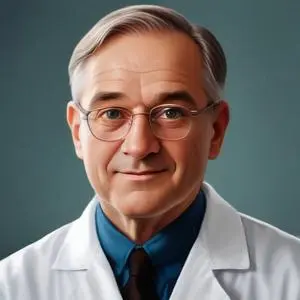
Thomas C. Südhof: Unraveling the Mysteries of Synaptic Transmission
The Nobel Laureate's Groundbreaking Research
Thomas C. Südhof is a German-American biochemist renowned for his pioneering work on synaptic transmission, a crucial process that enables neurons to communicate with each other. In 2013, Südhof, along with James Rothman and Randy Schekman, was awarded the Nobel Prize in Physiology or Medicine for his groundbreaking discoveries on vesicle trafficking, shedding light on the intricate mechanisms underlying neuronal communication.
Early Life and Education
Südhof was born on December 22, 1955, in Göttingen, Germany. During his childhood in Göttingen and Hannover, he developed a passion for music, particularly the bassoon, which he credits his instructor, Herbert Tauscher, for instilling in him. Südhof graduated from the Hannover Waldorf School in 1975 and went on to study medicine at RWTH Aachen University, Harvard University, and the University of Göttingen.
Academic Pursuits and Research
Südhof's doctoral thesis, conducted at the
Max Planck Institute for Biophysical Chemistry in Göttingen, focused on the structure and function of chromaffin cells. He received his MD in medical science (Dr. med.) from the University of Göttingen in 1982. After completing his postdoctoral fellowship in Victor P. Whittaker's lab, Südhof moved to the United States in 1983 to begin his postdoctoral training at the University of Texas Health Science Center (now the UT Southwestern Medical Center) in Dallas, Texas, under the supervision of
Michael Stuart Brown and
Joseph L. Goldstein.
Career Highlights and Major Works
Südhof's research has been instrumental in elucidating the mechanisms of synaptic transmission, including the discovery of the synaptic vesicle release mechanism and the characterization of the presynaptic active zone. His work has also shed light on the molecular machinery involved in neurotransmitter release, including the role of SNARE proteins and the regulation of synaptic plasticity.
Philosophical Contributions and Beliefs
Südhof's research is guided by a deep appreciation for the intricacies of biological systems and a commitment to understanding the fundamental mechanisms underlying life processes. He believes that a thorough understanding of synaptic transmission is crucial for the development of therapeutic strategies for neurological and psychiatric disorders.
Influence on Modern Society
Südhof's work has far-reaching implications for the development of treatments for neurological and psychiatric disorders, including Alzheimer's disease, Parkinson's disease, and depression. His research has also contributed to a deeper understanding of the neural basis of behavior and cognition.
Controversies and Public Perception
In 2023, Südhof retracted a research paper from his lab due to falsified data. Additionally, PubPeer commenters, including Elisabeth Bik, have flagged more than 35 of Südhof's papers for potential issues. These controversies have sparked discussions about the importance of scientific integrity and the need for rigorous quality control in research.
Awards and Honors
- 2013 Nobel Prize in Physiology or Medicine
- ForMemRS (Fellow of the Royal Society)
- Professorship at Stanford University School of Medicine, Department of Molecular and Cellular Physiology, and by courtesy in Neurology, and in Psychiatry and Behavioral Sciences
Visual Timeline and Milestones
| 1955 |
Born in Göttingen, Germany |
| 1975 |
Graduated from the Hannover Waldorf School |
| 1982 |
Received MD in medical science (Dr. med.) from the University of Göttingen |
| 1983 |
Moved to the United States for postdoctoral training |
| 2013 |
Awarded the Nobel Prize in Physiology or Medicine |
Trivia and Fun Facts
- Südhof's love for music, particularly the bassoon, has inspired him to draw parallels between the intricacies of music and the complexities of biological systems.
- He has been a professor at Stanford University since 2008.
Legacy and Impact on the Field
Thomas C. Südhof's groundbreaking research has revolutionized our understanding of synaptic transmission, paving the way for significant advances in the development of treatments for neurological and psychiatric disorders. His contributions to the field of biochemistry and neuroscience have cemented his position as one of the most influential scientists of our time.
FAQ
What is Thomas C. Südhofs most notable scientific contribution?
Thomas C. Südhof was awarded the Nobel Prize in Physiology or Medicine in 2013 for his work on the molecular machinery of neurotransmitter release. He discovered the neurotransmitter release mechanism, which is crucial for neuronal communication.
What is Thomas Südhofs research focus?
Thomas Südhofs research focuses on the molecular and cellular mechanisms of synaptic transmission and neuronal communication. He has made significant contributions to our understanding of neurotransmitter release, synaptic plasticity, and neuronal development.
What awards has Thomas Südhof won for his research?
In addition to the Nobel Prize, Thomas Südhof has won numerous awards, including the Lasker Award, the Louisa Gross Horwitz Prize, and the Albert Lasker Award for Basic Medical Research.
Where has Thomas Südhof conducted his research?
Thomas Südhof has conducted his research at various institutions, including the University of Texas Southwestern Medical Center, the University of California, San Diego, and Stanford University.
What is Thomas Südhofs current role?
Thomas Südhof is currently the Avram Goldstein Professor in the Department of Molecular and Cellular Physiology at Stanford University School of Medicine.