


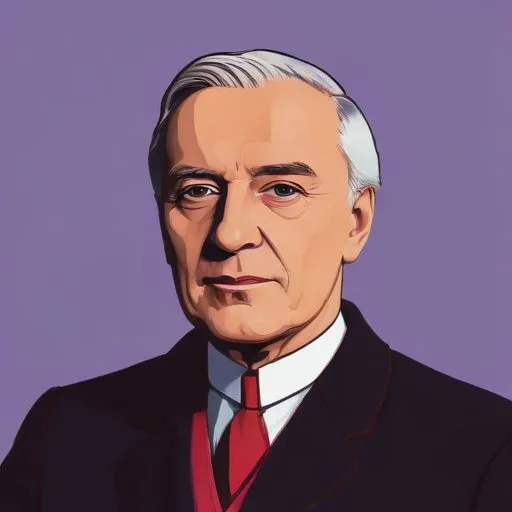
A 17th-century English politician who served as Lord High Treasurer, known for his significant role in shaping the country's financial policies during a tumultuous period. His legacy has had a lasting impact on British economic history.
Thomas Clifford, 1st Baron Clifford of Chudleigh, was a prominent English statesman who left an indelible mark on the political landscape of 17th century England. As one of the five leading politicians who formed the Cabal ministry between 1668 and 1674, Clifford played a pivotal role in shaping the reign of King Charles II.
Born on August 1, 1630, at Ugbrooke, Devon, Clifford was the son of Hugh Clifford and Mary Chudleigh, daughter of Sir George Chudleigh, 1st Baronet. He was baptized on August 4, 1630, at Ugbrooke. Clifford's educational pursuits took him to Exeter College, Oxford, where he matriculated in 1647, followed by his entry into Middle Temple in 1648.
In April 1660, Clifford's political career gained momentum when he was elected Member of Parliament for Totnes in the Convention Parliament. He was re-elected MP for Totnes in 1661 for the Cavalier Parliament, marking the beginning of his distinguished service in naval battles, for which he was knighted.
In August 1665, Clifford was appointed Ambassador Extraordinary to Sweden, a role that took him to Denmark in October of the same year. He returned to Britain in February 1666, after which he became Comptroller of the Household and a member of the Privy Council.
Clifford's involvement in the Cabal ministry, along with four other powerful politicians, sparked controversy as each member pursued their own interests. His nickname, "Bribe Master General," reflects the allegations of corruption and bribery that plagued his career. The Treaty of Dover in 1670, which Clifford was entrusted with by King Charles II, further fueled speculation about his motives.
Despite the controversies surrounding his career, Clifford's legacy as a skilled politician and diplomat remains. His influence on modern society can be seen in the realms of politics, international relations, and diplomacy. As a member of the Privy Council, he played a significant role in shaping the course of British history during a tumultuous period.
Through his remarkable journey, Thomas Clifford, 1st Baron Clifford of Chudleigh, left an indelible mark on the annals of English history, serving as a testament to his ingenuity, diplomatic prowess, and unwavering dedication to politics.
Born in 1676
The first Prime Minister of the United Kingdom, serving from 1721 to 1742, known for establishing the office of Prime Minister and setting important precedents for the role. He is also recognized for his skill in managing Parliament and his role in shaping British politics.
Born in 1694
The Prime Minister who led Britain through a period of relative peace and stability, and is often credited with being the first Prime Minister in the modern sense, holding office from 1743 to 1754.
Born in 1712
A skilled lawyer and politician who served as Prime Minister of Great Britain, known for implementing the Stamp Act, a taxation policy that sparked American colonial resistance.
Born in 1898
A Scottish-English actor who appeared in numerous film and television productions, including the iconic role of James Herriot in the BBC series "All Creatures Great and Small".
