


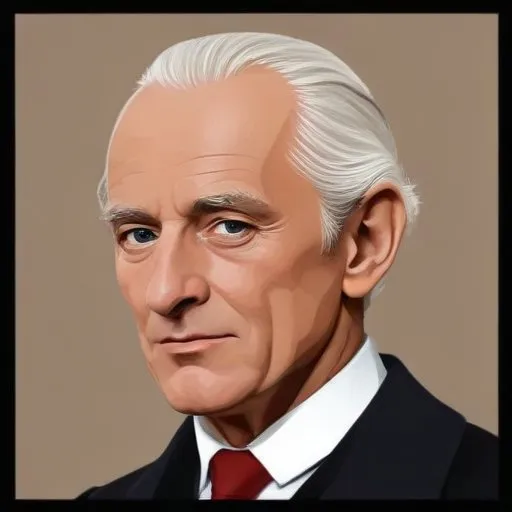
A skilled lawyer and politician who served as Prime Minister of Great Britain, known for implementing the Stamp Act, a taxation policy that sparked American colonial resistance.
George Grenville, a British Whig statesman, is infamous for imposing the Stamp Act on the American colonies, a decision that sparked widespread opposition and contributed to the American Revolution. As the Prime Minister of Great Britain from 1763 to 1765, Grenville's policies were marked by a desire to assert British authority and control over its colonies.
Born on October 14, 1712, at Wotton House, George Grenville was the second son of Richard Grenville and Hester Temple, later the 1st Countess Temple. He was one of five brothers, all of whom became Members of Parliament. His sister, Hester Grenville, married William Pitt, a prominent politician and future Prime Minister.
Grenville entered Parliament in 1741 as an MP for Buckingham and quickly gained recognition as one of "Cobham's Cubs," a group of young politicians associated with Lord Cobham. He went on to hold various positions, including Treasurer of the Navy, before becoming Leader of the Commons in 1761.
In 1763, Grenville assumed the position of Prime Minister, succeeding Lord Bute. His government focused on reducing public spending and pursuing an assertive foreign policy. The most notable aspect of his prime ministership, however, was the introduction of the Stamp Act, which extended a longstanding tax in Great Britain to the American colonies.
The Stamp Act, intended to raise revenue for Britain, was met with fierce resistance in the colonies. The act sparked widespread protests, boycotts, and eventually, the formation of the Sons of Liberty. The opposition was so strong that the act was eventually repealed in 1766.
Grenville's relationship with his colleagues and King George III deteriorated during his prime ministership, leading to his dismissal in 1765. He was replaced by Lord Rockingham and spent the remainder of his life leading a group of supporters in opposition. In the final years of his life, Grenville staged a public reconciliation with his brother-in-law, William Pitt.
Grenville married Elizabeth Wyndham, the granddaughter of Charles Seymour, 6th Duke of Somerset. Through his wife, he was connected to Lady Katherine Grey, a great-granddaughter of Henry VII and Elizabeth of York, and sister of Lady Jane Grey.
George Grenville's legacy is marked by controversy and a deep-seated impact on American history. While his policies were intended to assert British authority, they ultimately contributed to the growing rift between Britain and its colonies. Despite his flaws, Grenville remains an important figure in British history, serving as a prime example of the complexities and challenges of governance.
George Grenville's life and legacy serve as a reminder of the complexities of politics and governance, highlighting the delicate balance between assertion of authority and respect for individual rights.
Born in 1676
The first Prime Minister of the United Kingdom, serving from 1721 to 1742, known for establishing the office of Prime Minister and setting important precedents for the role. He is also recognized for his skill in managing Parliament and his role in shaping British politics.
Born in 1749
A prominent 18th-century politician who championed individual liberties and opposed British imperialism, known for his charismatic oratory skills and influential foreign policy decisions.
Born in 1729
An 18th-century thinker who shaped modern conservatism, advocating for gradual social change and warning against the dangers of radical revolution. He's also known for his philosophical writings on aesthetics and the sublime.
Born in 1759
Prime Minister of the United Kingdom from 1783 to 1801 and 1804 to 1806, known for leading the country through the French Revolutionary and Napoleonic Wars.
Born in 1725
A pioneering advocate for press freedom and a vocal critic of government corruption, known for his fearless journalism and radical politics.
