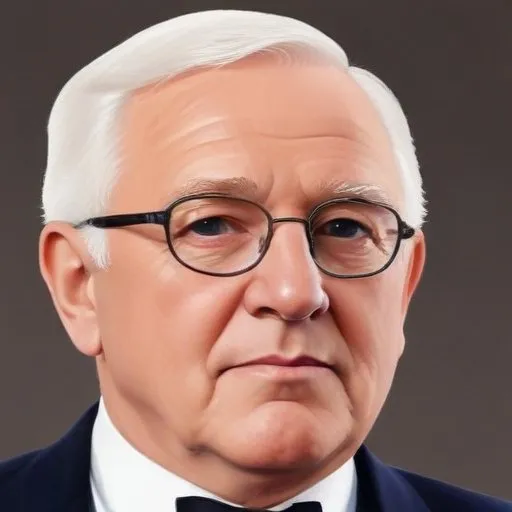
Thomas Eagleton: The Politician Who Brought Mental Health to the Forefront
A Life of Public Service and Personal Struggle
Thomas Eagleton is best known for his brief stint as the Democratic vice presidential nominee under
George McGovern in 1972, as well as his candid disclosure of his struggles with depression. This openness sparked a national conversation about mental health, paving the way for greater awareness and understanding.
Early Life and Education
Eagleton was born on September 4, 1929, in St. Louis, Missouri, to a family of politicians. His father, Mark David Eagleton, had run for mayor, and his paternal grandparents were Irish immigrants. He graduated from St. Louis Country Day School and served in the U.S. Navy for two years before attending Amherst College, where he was a member of the Delta Kappa Epsilon fraternity. He later attended Harvard Law School, graduating in 1953.
Rise to Prominence
Eagleton practiced law at his father's firm and later became associated with Anheuser-Busch's legal department. He was elected circuit attorney of the City of St. Louis in 1956, and during his tenure, he appeared on the TV show "What's My Line?" as District Attorney of St. Louis. He was elected Missouri Attorney General in 1960 at the age of 31, the youngest in the state's history. He was elected the 38th lieutenant governor of Missouri in 1964, and won a U.S. Senate seat in 1968, unseating incumbent Edward V. Long in the Democratic primary and narrowly defeating Congressman Thomas B. Curtis in the general election.
Mental Health and the McGovern Campaign
In 1972, Eagleton was chosen as the Democratic vice presidential nominee under George McGovern. However, it was soon revealed that Eagleton had been hospitalized for depression on multiple occasions, which was kept secret from the public. The revelation led to his withdrawal from the campaign, a decision that sparked controversy and debate about mental health in the political sphere.
Later Life and Legacy
After his withdrawal from the campaign, Eagleton returned to Missouri and resumed his duties as a senator. He continued to serve until 1987, when he chose not to run for re-election. He later became an adjunct professor of public affairs at Washington University in St. Louis. Eagleton's bravery in discussing his struggles with depression paved the way for greater awareness and understanding of mental health issues.
Personal Milestones
- Eagleton married Barbara Ann Smith of St. Louis on January 26, 1956.
- He had two children, Terence and Christin, born in 1959 and 1963, respectively.
Legacy and Impact
Thomas Eagleton's legacy extends beyond his political accomplishments to his courageous disclosure of his struggles with depression. His openness sparked a national conversation about mental health, encouraging others to speak out and seek help. His bravery has continued to inspire generations, promoting greater awareness and understanding of mental health issues.
FAQ
What was Thomas Eagletons role in politics?
Thomas Eagleton was the 38th Lieutenant Governor of Missouri, serving from 1965 to 1969. He was also a Democratic nominee for Vice President in 1972.
Why was Thomas Eagleton removed from the 1972 Democratic ticket?
Thomas Eagleton was removed from the 1972 Democratic ticket after it was revealed that he had undergone electroshock therapy for depression. He was replaced by Sargent Shriver.
What were some of Thomas Eagletons notable achievements in politics?
As Lieutenant Governor of Missouri, Thomas Eagleton worked to reform the states mental health system and establish a statewide community college system.
What was Thomas Eagletons early life like?
Thomas Eagleton was born in St. Louis, Missouri, and graduated from Amherst College. He went on to serve in the United States Navy during the Korean War.
How does Thomas Eagletons legacy impact modern politics?
Thomas Eagletons experiences with mental health issues helped to reduce stigma around mental illness and paved the way for greater transparency in political discourse.