


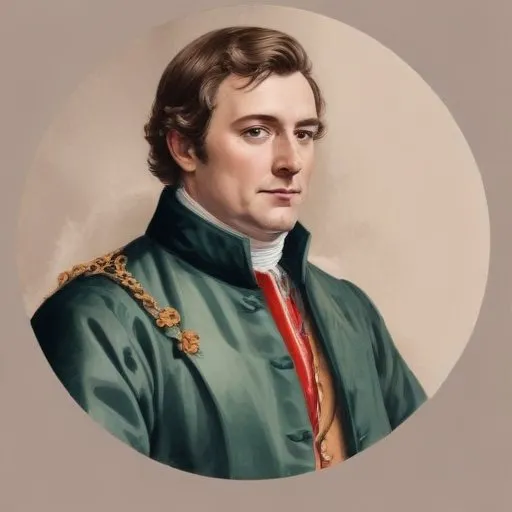
A powerful English politician who served as Lord High Treasurer of England, known for his influential role in shaping the country's finances and governance.
Thomas FitzAlan, 12th Earl of Arundel, is renowned for his instrumental role in shaping the tumultuous landscape of late medieval England, serving as a trusted advisor to no fewer than three monarchs and leveraging his immense wealth and influence to forge a dynasty that would endure for centuries.
As a scion of the powerful FitzAlan family, Thomas was destined for greatness, and his cunning, ambition, and unwavering loyalty to the crown propelled him to the forefront of English politics, earning him the coveted title of Marshall of England and cementing his position as one of the most powerful men of his time.
FitzAlan's ascent to power began in the early 15th century, when he aligned himself with King Henry IV, who rewarded his loyalty with the Earldom of Arundel in 1415. This strategic alliance allowed Thomas to consolidate his power and amass an impressive fortune, which he used to further his family's interests and bolster his position at court.
As a testament to his growing influence, Thomas was appointed to a succession of prominent roles, including Constable of Dover Castle, Lord Steward of the Household, and Treasurer of England. His remarkable ability to navigate the treacherous waters of royal politics earned him the trust and respect of successive monarchs, including Henry V and Henry VI, who relied heavily on his counsel and military prowess.
Beyond his political machinations, Thomas FitzAlan was a devoted patron of the arts and a committed philanthropist, commissioning several prominent architectural projects and supporting the work of esteemed scholars and writers. His love of learning and the arts led him to endow several educational institutions, including the University of Oxford, which benefited from his generosity and vision.
As a testament to his cultural legacy, Thomas also sponsored the esteemed poet and cleric, Thomas Hoccleve, whose works often reflected the Earl's own values and ideals. This enduring patronage secured FitzAlan's place in the annals of English literary history, solidifying his reputation as a champion of humanism and intellectual curiosity.
Thomas FitzAlan's remarkable life and achievements serve as a testament to the complexity and intrigue of late medieval England. His adeptness in navigating the treacherous landscape of royal politics, coupled with his cultural patronage and philanthropy, secured his position as one of the most influential figures of his era.
As a master strategist and power broker, Thomas FitzAlan, 12th Earl of Arundel, left an indelible mark on English history, his legacy continuing to inspire and fascinate scholars and enthusiasts alike. His remarkable story serves as a powerful reminder of the enduring influence of ambition, loyalty, and vision in shaping the course of human events.
Born in 1284
The king whose disastrous reign led to his eventual deposition and mysterious death, remembered for his alleged homosexual relationships and power struggles with nobles.
Born in 1284
The king whose disastrous reign led to his eventual deposition and mysterious death, remembered for his alleged homosexual relationships and power struggles with nobles.
Born in 1274
Led Scotland during the First War of Scottish Independence, ultimately securing a decisive victory at the Battle of Bannockburn and earning recognition as the country's rightful king. He's celebrated for his bravery, strategic thinking, and unwavering commitment to Scottish freedom.
Born in 1340
A powerful and wealthy medieval English nobleman, known for his immense influence on English politics and his role in the Hundred Years' War. He was also a patron of the arts and a founder of Trinity College, Cambridge.
Born in 1133
King of England from 1154 to 1189, known for establishing a strong centralized government, reforming the English church, and his tumultuous relationships with Thomas Becket and his sons.
