


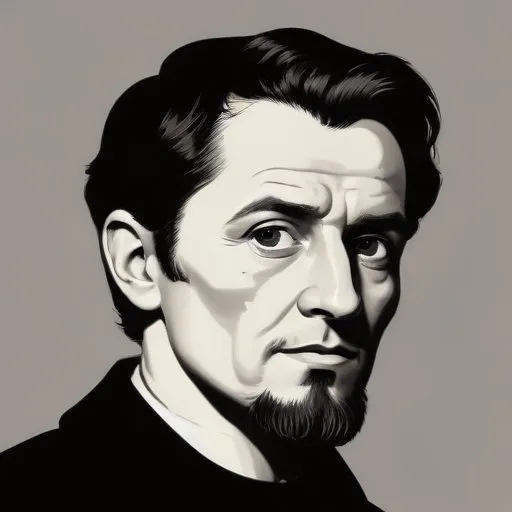
A prominent figure in the Scottish Enlightenment, he founded the Scottish School of Common Sense, arguing that common sense is the foundation of philosophy, and that knowledge is derived from experience and perception.
Thomas Reid, a Scottish philosopher, is best known for his groundbreaking philosophical method, his theory of perception, and its far-reaching implications on epistemology. As the developer and defender of an agent-causal theory of free will, Reid's work has had a profound impact on the fields of ethics, theory of action, language, and philosophy of mind.
Born on April 26, 1710, in the manse at Strachan, Aberdeenshire, Scotland, Reid was the son of Lewis Reid and Margaret Gregory. He received his early education at Kincardine Parish School and the O'Neil Grammar School in Kincardine. In 1723, he enrolled at the University of Aberdeen, where he graduated with an MA in 1726. After completing his studies, Reid was licensed to preach by the Church of Scotland in 1731.
In 1752, Reid became a professor at King's College, Aberdeen, marking the beginning of his academic career. During this period, he founded the Aberdeen Philosophical Society, popularly known as the Wise Club, a literary-philosophical association that attracted prominent intellectuals of the time. Reid's association with the Wise Club laid the foundation for his contributions to the Scottish Enlightenment.
Reid's most notable work, "An Inquiry into the Human Mind on the Principles of Common Sense," published in 1764, asserted the importance of common sense in understanding human knowledge and perception. He argued that our perceptions of the world are not mere constructs of our minds, but rather, they reflect an objective reality. This philosophical stance led to the development of the Scottish School of Common Sense, which emphasized the importance of empiricism and common sense in understanding the world.
Reid's academic career was marked by several milestones, including his appointment as Professor of Moral Philosophy at the University of Glasgow in 1764, a position he held until 1781. During this period, he published several influential works, including:
Thomas Reid's philosophical contributions have had a lasting impact on modern society, influencing thinkers such as Immanuel Kant, Thomas Brown, and Dugald Stewart. His ideas on common sense and perception continue to shape debates in epistemology, ethics, and philosophy of mind.
Reid's work has been compared to that of his contemporary, David Hume, with whom he engaged in a series of intellectual debates. While Hume's skepticism emphasized the limitations of human knowledge, Reid's common sense approach argued for the importance of empirical evidence and objective reality.
Today, Reid's philosophical legacy continues to inspire new generations of scholars, serving as a testament to the enduring power of his ideas and the significance of his contributions to the Scottish Enlightenment.
Born in 1711
A Scottish Enlightenment thinker who developed influential ideas on morality, ethics, and human nature, and is considered one of the most important figures in the history of Western philosophy.
61 Years Old
A lawyer and politician who served in the U.S. House of Representatives from 1987 to 1997, known for his moderate Republican views and advocacy for environmental issues.
Born in 1724
Developed influential philosophical frameworks, such as the Critique of Pure Reason, that shaped modern Western thought on ethics, morality, and human understanding.
Born in 1632
A 17th-century thinker who laid the groundwork for modern democracy, arguing that governments derive their power from the people and that individuals have inherent rights to life, liberty, and property.
Born in 1596
Developed influential philosophical and mathematical concepts, including the famous phrase "I think, therefore I am," and laid the foundation for modern Western philosophy.
Born in 1632
A 17th-century philosopher and scholar who developed a comprehensive philosophical system that emphasizes God, nature, and human freedom, influencing modern thought on ethics, politics, and religion.
Born in 1646
Developed calculus independently of Isaac Newton, and made major contributions to the fields of philosophy, politics, and history.
Born in 1712
A pioneering thinker who shaped modern democracy and education with his ideas on social contracts, general will, and the importance of early childhood education. His writings influenced the French Revolution and modern political thought.
