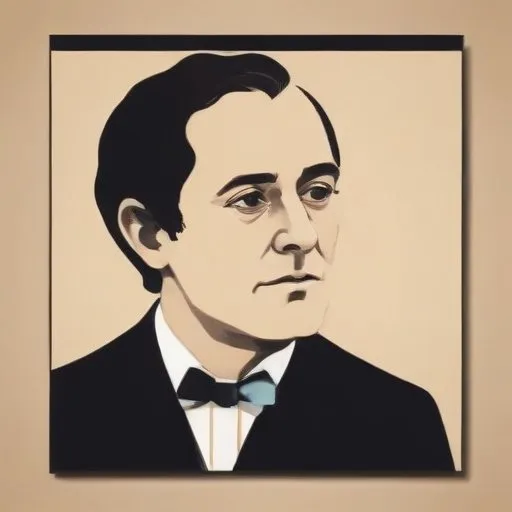
Thurston Dart

Thurston Dart

Thurston Dart was born on September 3rd, 1921

Full Name: Thurston Dart
Profession: English Pianist
Nationality: English
Occupation: Musicologist
Institution: Cambridge University
Born: September 3, 1921
Died: March 6, 1971
Notable Work: The Interpretation of Music

A renowned expert in early music performance, he revived interest in medieval and Renaissance music through his recordings and scholarship.

Written by: Liam O'Sullivan Liam O'Sullivan

Thurston Dart: The Renowned Musicologist and Conductor

A Legacy of Early Music Revival

Thurston Dart was a British musicologist, conductor, and keyboard player who played a pivotal role in the revival of early music in the post-World War II era. Alongside notable figures like Nigel Fortune, Oliver Neighbour, and Stanley Sadie, Dart was one of Britain's leading musicologists of his generation, leaving an indelible mark on the world of classical music.

Early Life and Education

Born on September 3, 1921, in Surbiton, Surrey, Dart's early life was marked by a strong connection to music. He attended Hampton Grammar School, where he sang in the choir at Hampton Court, and was encouraged by Edmund Fellowes. Dart went on to study at the Royal College of Music in London (1938-1939) and later pursued mathematics at University College, Exeter, earning an external BA degree from the University of London in 1942.

War Years and Formative Influences

During World War II, Dart served as a Junior Scientific Officer, statistician, and researcher in the RAF, where he worked on operational research until 1945. It was during this time that he encountered Charles Van den Borren, a Belgian musicologist, and later, Neville Marriner, with whom he would have a lasting friendship. After leaving the RAF, Dart spent a year studying with Van den Borren on a grant, which laid the foundation for his future work in musicology.

Academic Career and Contributions

Dart's academic career spanned several decades, with appointments at the University of Cambridge, where he was a research assistant to Henry Moule, and later, a lecturer in music. In 1962, he became a professor, and in 1964, he was appointed King Edward Professor of Music at the University of London, a position he held until his death in 1971. During this period, Dart was an ardent supporter of early music, and his work helped to establish the field as a legitimate area of study.

Major Works and Legacy

Dart's contributions to musicology are manifold, but some of his most notable works include his editions of Renaissance music, particularly the works of John Dowland and William Byrd. He also wrote extensively on the performance practices of early music, and his book, The Interpretation of Music, remains a seminal work in the field.

Personal Milestones and Relationships

Throughout his life, Dart formed close relationships with fellow musicians and scholars, including Neville Marriner, with whom he co-founded the Academy of St. Martin in the Fields. He was also an influential teacher, mentoring students who would go on to become prominent figures in their own right.

Influence on Modern Society

Dart's work had a profound impact on the classical music landscape, helping to popularize early music and pave the way for future generations of musicians and scholars. His legacy extends beyond the academic realm, influencing the broader cultural landscape and ensuring that the music of the past remains an integral part of our shared cultural heritage.

Awards and Honors

During his lifetime, Dart received several honors, including the prestigious Walter Willson Cobbett Medal, which he was awarded in 1963.

Conclusion

Thurston Dart's remarkable life and career serve as a testament to the power of dedication, scholarship, and passion. As a musicologist, conductor, and keyboard player, he left an indelible mark on the world of classical music, ensuring that the music of the past remains vibrant and relevant for generations to come.
Timeline
1921
Born in Kent, England
Thurston Dart was born on September 3, 1921, in Kent, England. He would go on to become a renowned pianist, conductor, and musicologist.
1947
Appointed as Lecturer
Dart was appointed as a lecturer at the University of Cambridge, where he would teach music and inspire a new generation of musicians.
1952
Founded the Philomusica Orchestra
Dart founded the Philomusica Orchestra, a chamber orchestra dedicated to performing early music.
1964
Became Director of Music
Dart became the Director of Music at the University of London, a position he held until 1972.
1971
Knighted for Services to Music
Dart was knighted for his services to music, a testament to his significant contributions to the field.
Thurston Dart

Thurston Dart Quiz

What was Thurston Dart's area of expertise?

Score: 0/5
FAQ
What is Thurston Darts most notable contribution to music?
Thurston Dart was a renowned English pianist, conductor, and musicologist, known for his work in promoting the revival of Baroque music in the mid-20th century. He edited and arranged many Baroque compositions for modern performance.
What was Thurston Darts role in the music world?
Thurston Dart held various positions, including professor of music at Cambridge University, director of the Chamber Orchestra of London, and harpsichordist with the Boyd Neel Orchestra.
What awards did Thurston Dart receive for his work?
Thurston Dart was awarded the Medal of the Royal Philharmonic Society in 1967 for his outstanding services to music.
Did Thurston Dart collaborate with other notable musicians?
Thurston Dart worked with esteemed musicians like Yehudi Menuhin, conducting and recording several albums together.
What is Thurston Darts legacy in the music world?
Thurston Darts efforts helped popularize Baroque music, influencing generations of musicians and musicologists. His recordings and editions remain essential references for scholars and performers today.

Related People:

George A. Malcolm

Born in 1881

Noted for serving as the first Chief Justice of the Supreme Court of the Philippines and playing a key role in shaping the country's judicial system.

Dennis Brain

Born in 1921

A renowned horn player celebrated for his virtuosic performances and recordings that set a new standard for the instrument, particularly in the classical music genre.

Herbert von Karajan

Born in 1908

A renowned maestro who led the Berlin Philharmonic for over three decades, elevating its reputation through precise and dramatic performances. He's also famous for his numerous recordings and charismatic stage presence.

Leonard Bernstein

Born in 1918

A renowned musician who blended jazz, classical, and Broadway styles, creating iconic works like West Side Story, and inspiring generations with his charismatic performances and innovative compositions.

Yehudi Menuhin

Born in 1916

A renowned violinist and conductor who mesmerized audiences with his virtuosic performances and collaborations with esteemed musicians, also a passionate advocate for music education.

Mstislav Rostropovich

99 Years Old

A renowned Russian cellist and conductor, celebrated for his virtuosic performances and advocacy for human rights and freedom of expression. He was a prominent figure in the classical music world, known for his collaborations with prominent composers and musicians.

Seiji Ozawa

91 Years Old

A renowned music director and conductor, leading world-class orchestras, including the Boston Symphony Orchestra, and known for his innovative and energetic performances.

Georg Solti

Born in 1912

A renowned maestro who led the Chicago Symphony Orchestra to international acclaim, known for his intense performances and numerous recordings of operas and symphonies.