


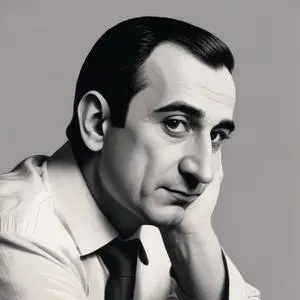
Armenian chess grandmaster who reigned as World Chess Champion from 1963 to 1969, known for his defensive playing style and ability to draw games from seemingly impossible positions.
Tigran Petrosian, a Soviet-Armenian chess grandmaster, is renowned for his exceptional defensive skills, earning him the nickname "Iron Tigran." As the ninth World Chess Champion from 1963 to 1969, Petrosian's strategic gameplay and emphasis on safety above all else left opponents and enthusiasts alike in awe.
Born on June 17, 1929, in Tbilisi, Georgian SSR (present-day Georgia), Petrosian's life was marked by adversity from an early age. Orphaned during World War II, he was forced to sweep streets to earn a living, a harsh reality that contrasted with his exceptional academic abilities and passion for learning.
Petrosian's introduction to chess at the age of 8 marked the beginning of an illustrious career. Despite his father's initial reservations about chess as a viable career path, Petrosian's dedication and natural talent propelled him to become a candidate for the World Chess Championship on eight occasions (1953, 1956, 1959, 1962, 1971, 1974, 1977, and 1980).
Petrosian's unique approach to chess, which prioritized safety and strategic defense, was influenced by his experiences during World War II. His emphasis on caution and prudence in chess mirrored his real-life struggles and the importance of adaptability in the face of adversity.
Petrosian's impact on chess extends beyond his impressive competitive record. He is often credited with popularizing chess in Armenia, inspiring generations of players and enthusiasts. His defensive style, though unorthodox, has influenced modern chess strategy and encouraged a more nuanced understanding of the game.
Tigran Petrosian's remarkable career, marked by perseverance and strategic genius, has left an indelible mark on the world of chess. As a testament to his enduring legacy, Petrosian's name remains synonymous with defensive mastery, inspiring chess enthusiasts and aspiring grandmasters alike.
Petrosian's unique playing style, characterized by caution and strategic defense, distinguished him from his contemporaries, including Mikhail Botvinnik and Boris Spassky. While his approach was often contrasted with the more aggressive styles of his peers, Petrosian's impressive competitive record and enduring legacy have cemented his position as one of the greatest chess players of all time.
Tigran Petrosian's remarkable life, marked by triumphs and tribulations, serves as a testament to the power of perseverance and dedication. As we reflect on his extraordinary career and enduring legacy, we honor the "Iron Tigran," a true giant in the world of chess.
63 Years Old
A Russian chess grandmaster and writer, renowned for being the world's top-ranked player for most of the 1980s and 1990s, and for his advocacy of democracy and human rights.
83 Years Old
A chess prodigy who became a grandmaster at 15 and won the World Chess Championship in 1972, known for his exceptional skill and rivalry with Boris Spassky.
75 Years Old
A Soviet chess grandmaster who dominated the game for over a decade, winning numerous championships and earning a reputation as one of the greatest players of all time.
56 Years Old
A world chess champion, holding the title five times, and known for his creative and attacking playing style. He's a global icon in the chess world, inspiring millions of players.
Born in 1911
A Soviet chess grandmaster and engineer who dominated the game from the 1940s to 1960s, winning six World Chess Championships and developing the first chess-playing computer program.
Born in 1921
A renowned chess grandmaster and seventh World Chess Champion, known for his strategic and positional playing style, which earned him the title of "Chess Philosopher".
89 Years Old
A legendary chess grandmaster and author, known for his creative and attacking playing style, which earned him the nickname "The Magician of Riga".
Born in 1837
A chess prodigy who dominated the game in the 19th century with his exceptional skill and innovative strategies, leaving a lasting impact on the sport.
