


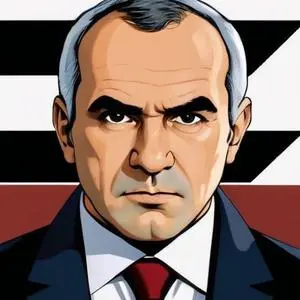
A Russian chess grandmaster and writer, renowned for being the world's top-ranked player for most of the 1980s and 1990s, and for his advocacy of democracy and human rights.
Garry Kasparov, widely regarded as one of the greatest chess players of all time, is a Russian grandmaster and former World Chess Champion who dominated the game for over two decades. With a record-breaking 255 months as the world's top-ranked player, Kasparov's impressive career has been marked by numerous records, milestones, and achievements that continue to inspire and influence the world of chess.
Kasparov's fascination with chess began at the age of six, and his natural talent was soon apparent. He became a grandmaster at just 17, and by 22, he was crowned the youngest-ever undisputed World Chess Champion, defeating Anatoly Karpov in 1985. This marked the beginning of his reign as the world's top-ranked player, a position he held for a record 20 years.
Kasparov's impressive career is filled with numerous awards and accolades, including:
In 1997, Kasparov made history by becoming the first world champion to lose a match to a computer under standard time controls. His defeat by the IBM supercomputer Deep Blue was a highly publicized event that marked a significant milestone in the development of artificial intelligence.
After retiring from professional chess in 2005, Kasparov turned his attention to writing and politics. His book series, My Great Predecessors, is a comprehensive history of the world champion chess players who preceded him. He has also become an active political activist, founding the United Civil Front movement and opposing the administration and policies of Vladimir Putin.
Kasparov's philosophical views are deeply rooted in his experiences as a chess player. He believes that chess teaches valuable life skills, such as critical thinking, problem-solving, and adaptability. He has also spoken out against authoritarianism, advocating for democracy and human rights.
Kasparov's life has been marked by several significant events, including:
Garry Kasparov's legacy extends far beyond his impressive chess career. He has inspired generations of chess players, and his influence can be seen in the development of artificial intelligence and computer science. As a political activist, he continues to advocate for democracy and human rights, leaving a lasting impact on modern society.
In conclusion, Garry Kasparov's remarkable life is a testament to his dedication, passion, and perseverance. As a chess legend, writer, and political activist, he continues to inspire and influence people around the world.
75 Years Old
A Soviet chess grandmaster who dominated the game for over a decade, winning numerous championships and earning a reputation as one of the greatest players of all time.
56 Years Old
A world chess champion, holding the title five times, and known for his creative and attacking playing style. He's a global icon in the chess world, inspiring millions of players.
51 Years Old
A Russian chess grandmaster who dominated the game for over a decade, becoming the undisputed World Chess Champion in 2006. He's renowned for his strategic and positional playing style.
83 Years Old
A chess prodigy who became a grandmaster at 15 and won the World Chess Championship in 1972, known for his exceptional skill and rivalry with Boris Spassky.
Born in 1906
A Soviet leader who ruled with an iron fist, implementing policies that stagnated the economy and suppressed dissent, while also being a key figure in the Cold War. He's infamous for his authoritarian regime and bureaucratic inefficiency.
95 Years Old
The last leader of the Soviet Union, who introduced reforms that led to the end of the Cold War and the collapse of communism, earning a Nobel Peace Prize. He's known for his policies of glasnost and perestroika, which transformed the Soviet Union and the world.
95 Years Old
First President of Russia, leading the country's transition from communism to democracy, and known for his bold reforms and iconic leadership style.
74 Years Old
A Russian politician who has dominated the country's politics for over two decades, known for his authoritarian leadership style and controversial foreign policy decisions.
