


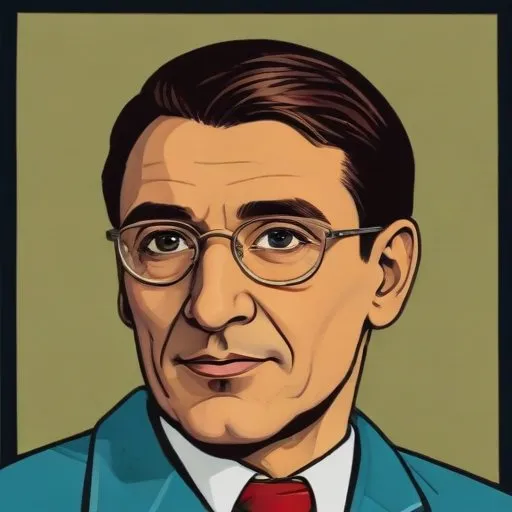
A renowned physicist who made significant contributions to the fields of atmospheric science and environmental physics, particularly in the study of aerosols and their impact on climate change.
Renowned physicist Tihomir Novakov is widely recognized for his groundbreaking research on black carbon, air quality, and climate change, earning him the esteemed title "godfather of black carbon" by James Hansen. His pioneering work has had a profound impact on our understanding of atmospheric aerosols and their effects on the environment.
Born on March 16, 1929, in Sombor, Serbia, Novakov was raised in a family of modest means. His father, a veterinarian, and his mother, a homemaker, encouraged his curiosity and love for science from an early age. During his high school years, Novakov developed a passion for building X-ray tubes and radios, laying the foundation for his future scientific pursuits.
Novakov's academic excellence led him to the University of Belgrade, where he earned his Ph.D. in nuclear physics. After completing his degree, he taught at the University of Belgrade and worked at the Vinča Nuclear Institute, honing his skills and expertise in the field of physics.
In 1963, Novakov migrated to the United States, where he began working as a research scientist at the Lawrence Berkeley National Laboratory. This marked the beginning of his dedicated research on atmospheric aerosols and climate change. He soon founded the Aerosol Research Group, which would become a beacon for innovative research in the field.
The Aerosol Research Group, comprising talented scientists such as Hal Rosen, Ted Chang, Anthony Hansen, Ray Dod, and Lara Gundel, traveled the world conducting research on climate change. Their work took them to remote locations, including the Arctic, where they collected valuable data on atmospheric aerosols.
In the late 1960s and early 1970s, Novakov's group made history by applying X-ray photoelectron and Raman spectroscopy to samples of atmospheric aerosols. This pioneering work established the existence of a large elemental or soot fraction and provided definitive identification of physical structures similar to graphite and activated carbon in urban and remote aerosols.
Novakov's research led to the coining of the term "black carbon," which refers to the sunlight-absorbing portion of ambient particulate matter. This discovery had far-reaching implications for our understanding of climate change and its effects on the environment.
Novakov's aerosol research group developed the aethalometer, an innovative instrument derived from the Greek word for "to blacken with soot." Today, the aethalometer is the most widely used instrument worldwide for measuring atmospheric concentrations of black carbon.
This groundbreaking device has enabled scientists to accurately measure black carbon levels, providing crucial data for climate change research and policy-making.
Tihomir Novakov's contributions to the field of physics have been profound and far-reaching. His work has inspired generations of scientists and continues to shape our understanding of climate change and atmospheric aerosols.
Novakov's legacy extends beyond his scientific achievements. He has left an indelible mark on the global community, inspiring a deeper appreciation for the importance of environmental research and its impact on human societies.
Tihomir Novakov's remarkable journey came full circle on January 2, 2015, when he passed away, leaving behind a legacy of groundbreaking research and a community of scientists inspired to continue his work.
As we reflect on Novakov's life and achievements, we are reminded of the power of human ingenuity and the importance of dedicating ourselves to the pursuit of knowledge and understanding. His work will continue to inspire and guide future generations of scientists, policymakers, and environmental stewards.
Born in 1913
Developed theories on quantum electrodynamics and the behavior of hydrogen atoms, earning a Nobel Prize in Physics in 1955.
Born in 1901
A pioneer in nuclear physics, known for leading the team that developed the first nuclear reactor and playing a crucial role in the development of the atomic bomb.
Born in 1904
Leading the development of the atomic bomb during World War II, this brilliant mind made groundbreaking contributions to theoretical physics, pushing the boundaries of human understanding.
Born in 1908
Developed the hydrogen bomb and was a key figure in the development of the US nuclear program, known for his advocacy of nuclear energy and his role in the Cold War.
Born in 1918
A brilliant physicist and engineer who pioneered quantum mechanics and famously explained complex concepts in simple terms, making science accessible to all.
97 Years Old
A pioneer in particle physics, discovering subatomic particles like quarks and gluons, and developing the theory of quantum chromodynamics.
Born in 1923
A renowned physicist and mathematician who made groundbreaking contributions to quantum electrodynamics and futurism, proposing innovative ideas like the Dyson sphere.
