


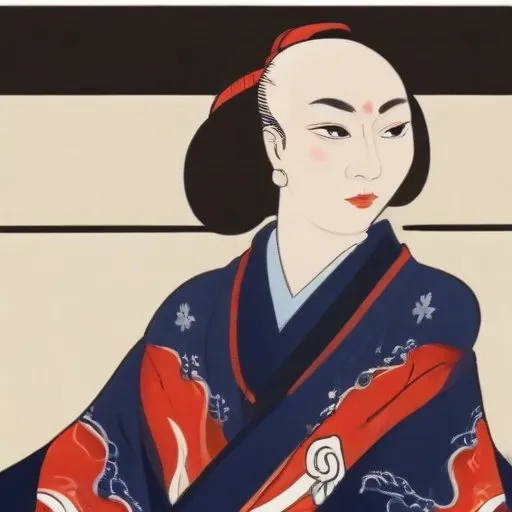
A Japanese feudal lord who ruled the Mito Domain and was a prominent historian, known for compiling the "Dai Nihonshi", a comprehensive history of Japan.
Tokugawa Mitsukuni, also known as Mito Kōmon, was a prominent Japanese daimyo who left an indelible mark on the country's history. He is renowned for compiling the monumental Japanese history, Dai Nihonshi, which fueled nationalism in the late shogunate and beyond.
Born on July 11, 1628, in Mito Domain, Hitachi Province, Mitsukuni was the third son of Tokugawa Yorifusa, the first daimyo of Mito Domain. His father was the eleventh son of Tokugawa Ieyasu, the founder and first shogun of the Tokugawa shogunate.
At the tender age of six, Mitsukuni's elder brother Yorishige fell ill, and he was chosen to succeed his father. At nine, he underwent the genpuku coming-of-age ceremony, marking the beginning of his journey as a leader.
In 1661, at the age of 34, Mitsukuni became the daimyo of the Mito Domain, a position he held for over three decades.
During his tenure, he implemented the "one village, one shrine" policy (isson issha), which led to the construction of at least one shrine per village and the destruction of a thousand Buddhist temples.
In 1691, he retired to his villa, Seizans, and continued to promote cultural and historical pursuits.
Mitsukuni's advocacy for Japanese nationalism and cultural identity was deeply rooted in his Confucian beliefs and his desire to strengthen the Tokugawa shogunate.
His sponsorship of the Dai Nihonshi project reflects his commitment to preserving and promoting Japan's rich cultural heritage.
Tokugawa Mitsukuni's legacy extends far beyond his lifetime, influencing the development of Japanese history, culture, and nationalism.
His contributions to the field of Japanese studies remain unparalleled, and his work continues to inspire scholars and historians to this day.
As a visionary leader, Mitsukuni's impact on modern Japanese society is a testament to his dedication to promoting national identity and cultural awareness.
Born in 1598
A powerful feudal lord who ruled the Matsudaira clan and played a crucial role in Japan's unification during the Sengoku period, known for his military prowess and strategic alliances.
