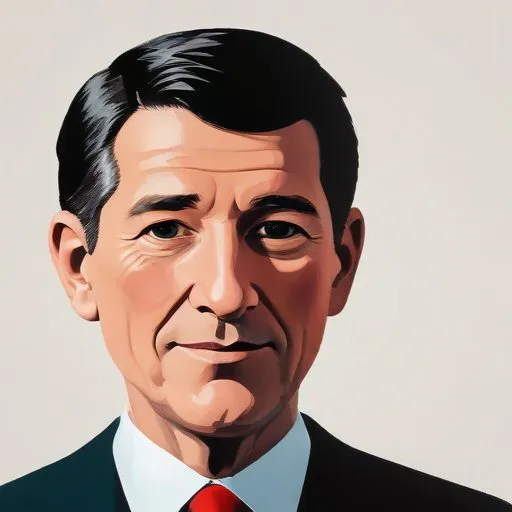
The Prolific Pen of Tom Wicker: A Legendary Journalist's Life and Legacy
A Reporter's Reporter: Wicker's Rise to Prominence
Tom Wicker, a stalwart of American journalism, was a political reporter and columnist for
The New York Times, renowned for his in-depth coverage of the nation's capital and his influential "In the Nation" column. With a career spanning over four decades, Wicker's byline became synonymous with incisive political analysis and insightful commentary.
Early Life and Education
Born on June 18, 1926, in Hamlet, North Carolina, Wicker was the son of Delancey David, a railroad freight conductor, and Esta Cameron Wicker. Following his World War II service in the Navy, Wicker graduated from the University of North Carolina in 1948. He later earned a Nieman Fellowship at Harvard University in 1957 and returned to Harvard in 1993 as a fellow at the Harvard Kennedy School.
A Journalist's Journey
Wicker's professional journalism career began in 1949 as editor of the
Sandhill Citizen in Aberdeen, North Carolina. He went on to work for
The Winston-Salem Journal and
The Nashville Tennessean before joining
The New York Times in the early 1960s. At the
Times, Wicker became a respected political reporter, covering major events such as the assassination of President Kennedy, which he chronicled in the paper's November 23, 1963, lead story.
"In the Nation": A Columnist's Insights
From 1966 to 1991, Wicker's column "In the Nation" ran in
The New York Times, offering readers a perceptive look at the Washington, D.C. scene. Known for his astute observations and balanced analysis, Wicker's column became a must-read for policymakers, politicians, and the general public alike.
Awards and Accolades
Throughout his career, Wicker received numerous awards and honors, including a
Pulitzer Prize nomination for his column. He was also recognized with the
American Society of Newspaper Editors' Distinguished Writing Award and the
National Press Club's Edwin M. Hood Award for his contributions to journalism.
Legacy and Impact
Tom Wicker's legacy extends far beyond his impressive journalistic credentials. He was a mentor to many young reporters and a fierce advocate for a free press. His commitment to fair and balanced reporting has inspired generations of journalists, shaping the way news is gathered, reported, and consumed. Today, Wicker's work remains a testament to the power of journalism to inform, educate, and shape public discourse.
Personal Milestones and Key Life Events
- June 18, 1926: Born in Hamlet, North Carolina
- 1948: Graduated from the University of North Carolina
- 1949: Began journalism career as editor of the Sandhill Citizen
- 1957: Received Nieman Fellowship at Harvard University
- 1963: Covered President Kennedy's assassination for The New York Times
- 1991: Retired from The New York Times after 30 years
- November 25, 2011: Passed away at the age of 85
Remembering Tom Wicker
Tom Wicker's remarkable life and career serve as a testament to the enduring power of journalism to shape our understanding of the world. Through his extraordinary body of work, Wicker leaves behind a rich legacy that continues to inspire and inform us today.
FAQ
What is Tom Wickers journalistic style?
Tom Wicker, an American journalist and author, was known for his in-depth reporting and analytical style, which often focused on the human impact of political and social issues. His writing was characterized by its clarity, nuance, and insight.
What are some of Tom Wickers notable books?
Tom Wicker wrote several notable books, including A Time to Die, which explored the 1971 Attica Prison riot, and One of Us, a biography of Richard Nixon. His literary works often combined journalism and historical analysis.
What is Tom Wickers connection to The New York Times?
Tom Wicker worked as a journalist and columnist for The New York Times, where he covered national and international news, including the civil rights movement and presidential politics. His columns often provided thought-provoking commentary on current events.
What awards did Tom Wicker receive for his writing?
Tom Wicker received several awards for his writing, including the Pulitzer Prize for his coverage of the 1963 Kennedy assassination. He was also a finalist for the National Book Award.
How did Tom Wickers journalism impact the public discourse?
Tom Wickers journalism had a significant impact on the public discourse, as his in-depth reporting and analysis helped shape public opinion on various issues, from civil rights to presidential politics. His work contributed to a more informed and engaged citizenry.