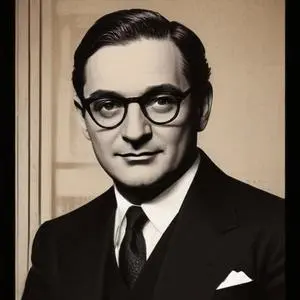
Walter Lippmann: The Trailblazing Journalist and Sage of American Democracy
A Pioneer in Journalism and Political Commentary
Walter Lippmann is renowned for being one of the first to introduce the concept of the Cold War and coining the term "stereotype" in its modern psychological meaning. Throughout his 60-year career, he critiqued media and democracy through his newspaper column and numerous books, earning him the title of "Father of Modern Journalism."
Early Life and Education
Born on September 23, 1889, on New York's Upper East Side, Lippmann was the only child of Jewish parents of German origin. His father, Jacob Lippmann, was a rentier who had accumulated wealth through his father's textile business and his father-in-law's real estate speculation. Lippmann's mother, Daisy Baum, maintained connections in the highest social circles, and the family regularly spent their summer holidays in Europe. This upbringing had a profound impact on Lippmann's worldview and eventual career path.
Philosophical Contributions and Beliefs
Lippmann's most influential work, "Public Opinion" (1922), is considered the founding book of modern journalism and American media studies. In it, he explored the role of the media in shaping public opinion and the consequences of a misinformed citizenry. He argued that the press had a responsibility to provide accurate and unbiased information to the public, rather than simply reflecting the opinions of the powerful.
The Lippmann-Dewey Debate
Lippmann's views on the role of journalism in a democracy were contrasted with those of
John Dewey, leading to the Lippmann-Dewey debate. While Dewey believed that democracy could be improved through greater public participation and education, Lippmann contended that the media had a crucial role to play in facilitating public understanding and informed decision-making.
Career Highlights and Major Works
- Research Director of Woodrow Wilson's post-World War I board of inquiry
- Author of numerous books, including "A Preface to Politics" (1913), "Drift and Mastery" (1914), and "The Phantom Public" (1925)
- Winner of two Pulitzer Prizes: one for his syndicated newspaper column "Today and Tomorrow" and one for his 1961 interview of Nikita Khrushchev
Influence on Modern Society
Lippmann's work has had a profound impact on modern society, shaping the way we think about journalism, democracy, and the role of the media in shaping public opinion. His ideas continue to influence contemporary debates about the media's responsibility to inform and educate the public.
Personal Milestones and Key Life Events
- Confirmed in the Reform Jewish tradition at the age of 14
- Developed close ties with his maternal grandmother
- Emotionally distanced from both parents, but maintained connections with high-society figures through his mother
Awards and Honors
- Two Pulitzer Prizes
- Considered the "most influential journalist of the 20th century" and the "Father of Modern Journalism"
Legacy
Walter Lippmann's contributions to journalism, political commentary, and American democracy continue to resonate today. His work serves as a testament to the power of informed journalism and the importance of a free press in maintaining a healthy democracy.
FAQ
What was Walter Lippmanns role in American journalism?
Walter Lippmann was a pioneering American journalist and commentator who played a significant role in shaping American journalism. He was a co-founder of The New Republic and a prominent columnist and author.
What were Walter Lippmanns most influential writings?
Walter Lippmanns most influential writings include his columns and editorials in The New Republic, as well as his books such as Public Opinion and The Phantom Public. His work helped to shape American public opinion and inform political debate.
How did Walter Lippmanns education and upbringing shape his journalism?
Walter Lippmanns education at Harvard University and his upbringing in a liberal Jewish family instilled in him a commitment to social justice and a passion for politics. His journalism reflected these values and shaped American public discourse.
What legacy did Walter Lippmann leave behind?
Walter Lippmann left behind a legacy of courageous journalism, incisive commentary, and dedicated public service. His work continues to inspire and inform American journalism and political debate today.
How did Walter Lippmanns journalism influence American politics?
Walter Lippmanns journalism had a profound impact on American politics, as he helped to shape public opinion and inform political debate. His columns and editorials influenced policymakers and politicians, and his work continues to be studied and revered by journalists and scholars today.