


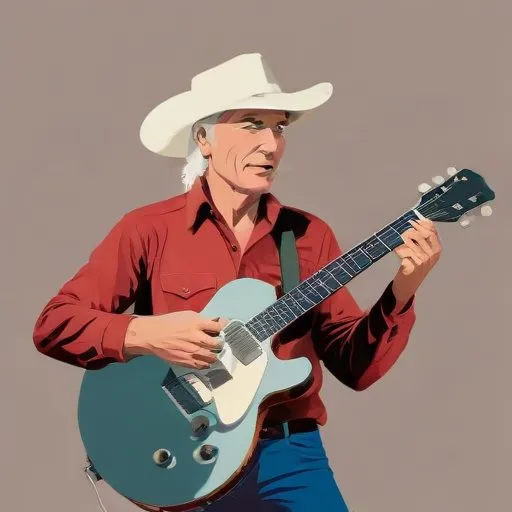
A guitarist who played with Buddy Holly and the Crickets, known for his rockabilly and country music contributions, and for being the man who avoided death by losing a coin toss to Ritchie Valens on the fateful night of the plane crash that killed Holly, Valens, and J.P. "The Big Bopper" Richardson.
Tommy Allsup, an American rockabilly and swing musician, is famously known for being the guitarist who narrowly escaped death by losing a coin toss to Ritchie Valens for a seat on the plane that crashed, killing Valens, Buddy Holly, and J.P. "The Big Bopper" Richardson on February 3, 1959. This fateful night would forever etch his name in music history, but Allsup's remarkable career went far beyond this tragic event.
Allsup was born on November 24, 1931, near Owasso, Oklahoma, and was an enrolled member of the Cherokee Nation. Growing up, he developed a passion for music, which led him to work with some of the biggest names in the industry, including Buddy Holly and Bob Wills and His Texas Playboys.
Allsup's guitar skills landed him a spot playing lead guitar on Buddy Holly's hits "It's So Easy" and "Lonesome Tears." He also played with Bob Wills and His Texas Playboys, cementing his connection to the rockabilly and swing genres. When Holly embarked on his ill-fated Winter Dance Party tour, Allsup joined him, along with Ritchie Valens and J.P. "The Big Bopper" Richardson.
On the fateful night of February 3, 1959, Allsup and Ritchie Valens tossed a coin to see who would get a seat on the chartered plane that was meant to take them to their next gig. Valens won the toss, and Allsup reluctantly gave up his seat. Tragically, the plane crashed, killing everyone on board. Investigators initially thought Allsup had perished in the crash because he had given Holly his wallet, which led to the mix-up.
The traumatic event didn't deter Allsup from pursuing his music career. He moved to Los Angeles, where he played with local bands, did session work, and even earned songwriting credits for The Ventures' "Bluer Than Blue," "Guitar Twist," and "Opus Twist." He also worked with Bobby Vee, playing lead guitar on his album Bobby Vee Meets The Crickets.
In the late 1960s, Allsup shifted his focus to producing, working with artists like Ronnie Smith and Roy Orbison. He also produced the hit single "In the Year 2525" by Zager and Evans. In the 1970s, he produced a pair of albums for Asleep at the Wheel and even worked on Bob Wills' 24 Great Hits album.
In 1979, Allsup opened his own club, Tom's Heads Up Saloon, in Fort Worth, Texas. He continued to perform and produce music until his passing on January 11, 2017. Throughout his remarkable career, Allsup left an indelible mark on rockabilly and swing music, earning a place in music history alongside his legendary friends and collaborators.
Allsup was a proud father to Austin, who followed in his footsteps as a musician. Austin even competed on The Voice in its 11th season. Allsup's legacy extends beyond his music, as he remained a devoted family man throughout his life.
Tommy Allsup's incredible story serves as a testament to the power of perseverance and passion. Despite witnessing one of the most tragic events in music history, he continued to rock on, leaving behind a rich legacy that will inspire generations to come.
90 Years Old
Pioneering rock 'n' roll musician and songwriter who blended country, rockabilly, and rhythm & blues to create a unique sound, influencing many famous bands.
89 Years Old
A country music outlaw and pioneer of the genre, known for his rebellious style and iconic hits like "Luckenbach, Texas" and "Mammas Don't Let Your Babies Grow Up to Be Cowboys".
83 Years Old
Teen idol of the 1960s, known for his smooth voice and hits like "Take Good Care of My Baby" and "Run to Him".
87 Years Old
A legendary drummer and songwriter behind Buddy Holly's biggest hits, including "That'll Be the Day" and "Peggy Sue", helping shape the sound of early rock 'n' roll.
89 Years Old
Original guitarist and songwriter for Buddy Holly and The Crickets, known for hits like "That'll Be the Day" and "Oh, Boy!".
