


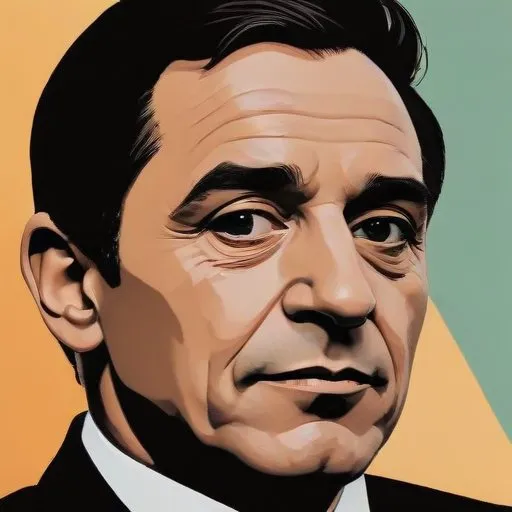
An Irish politician and activist who fought for social justice, particularly in the areas of housing and poverty, and was known for his tireless work in improving the lives of Dublin's inner-city communities.
Tony Gregory, a stalwart of Irish politics, remains an iconic figure in Dublin's Northside, revered for his unwavering commitment to the city's underprivileged and marginalized communities. As an independent politician, Gregory represented the Dublin Central constituency from 1982 until his passing in 2009, earning a reputation as a fierce advocate for social justice and equality.
Born on December 5, 1947, in Ballybough, Dublin, Gregory grew up in a humble one-room apartment on Charleville Street. His family's struggles to secure adequate housing had a profound impact on him, with a Dublin Corporation official's callous response – "come back when you have six children" – leaving a lasting impression. This personal experience fueled Gregory's future crusade against social inequality and poverty.
Gregory's academic prowess earned him a Dublin Corporation scholarship to the prestigious Christian Brothers O'Connell School. He later attended University College Dublin (UCD), where he earned a Bachelor of Arts degree and a Higher Diploma in Education. During his time at UCD, Gregory helped establish the UCD Republican Club, despite college authorities' disapproval. This early foray into republican politics marked the beginning of his lifelong commitment to social activism.
Gregory's involvement in republican politics began in 1964, when he joined Sinn Féin and the IRA. Within the party, he supported Wicklow Republican Seamus Costello, who emphasized the importance of local community engagement. This ideology shaped Gregory's approach to politics, as he worked tirelessly to address the social and economic disparities plaguing Dublin's Northside.
Before entering full-time politics, Gregory taught at Synge Street CBS and Coliste Eoin, where he inspired a generation of students, including future notables like John Crown, Colm Mac Eochaidh, Aengus Ó Snodaigh, and Liam Ó Maonla. His experiences as a teacher instilled in him a deep understanding of the challenges faced by Dublin's working-class communities, further galvanizing his commitment to social justice.
Tony Gregory's unwavering dedication to Dublin's underprivileged has left an indelible mark on the city's social and political landscape. His fearlessness in confronting entrenched power structures and his unrelenting advocacy for the rights of the marginalized have inspired generations of activists, politicians, and community leaders.
Today, Tony Gregory's legacy continues to inspire and empower those fighting for social justice and equality in Dublin and beyond. His unwavering commitment to the marginalized and his fearless advocacy for human rights serve as a beacon of hope for generations to come.
89 Years Old
A Northern Irish educator and politician who played a key role in the Northern Ireland peace process, earning him the Nobel Peace Prize in 1998. He is known for his tireless efforts to bring about reconciliation and peace in his homeland.
85 Years Old
The 9th President of Ireland is a sociologist and politician who has been a vocal advocate for human rights, social justice, and Irish culture, known for his poetic speeches and writings. He has also been a strong critic of neoliberalism and has worked to promote a more equitable society.
77 Years Old
Acclaimed author of concise, witty, and poignant short stories and novels that explore the complexities of human relationships and the American experience.
