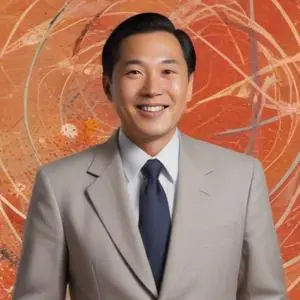
TsungDao Lee: The Maverick Physicist Who Redefined Parity
A Nobel Laureate and a Pioneer in Particle Physics
TsungDao Lee, a Chinese-American physicist, is renowned for his trailblazing work on parity violation and the Lee-Yang theorem, which revolutionized our understanding of the fundamental laws of physics. At the age of 30, Lee became the youngest Nobel laureate in the science fields since World War II, sharing the 1957 Nobel Prize in Physics with Chen Ning Yang.
Early Life and Education
Born on November 24, 1926, in Shanghai, China, Lee's ancestral roots can be traced back to Suzhou. His father, Chunkang Lee, was a chemical industrialist and merchant who played a significant role in China's early development of modern synthesized fertilizer. Lee's grandfather, Chongtan Lee, was a senior pastor of St. John's Church in Suzhou. Lee received his secondary education in Shanghai High School Affiliated to Soochow University and Jiangxi Jiangxi Joint High School.
The Path to Parity Violation
Lee's fascination with physics led him to pursue higher education in the United States. He earned his Ph.D. from the University of California, Berkeley in 1950. Lee's work with Chen Ning Yang at the Institute for Advanced Study in Princeton challenged the long-held assumption of parity conservation in weak interactions. Their groundbreaking paper, "Question of Parity Nonconservation in Weak Interactions," proposed that parity may not be conserved in certain interactions.
The Lee-Yang Theorem and Beyond
Lee and Yang's work led to the famous Lee-Yang theorem, which states that parity is not conserved in weak interactions. This fundamental concept has far-reaching implications in particle physics, leading to a deeper understanding of the strong and weak nuclear forces. Lee's contributions also include work on relativistic heavy-ion physics, non-topological solitons, and soliton stars.
Academic and Professional Life
Lee was a university professor emeritus at Columbia University in New York City, where he taught from 1953 until his retirement in 2012. He was a visiting professor at the Institute for Advanced Study and a member of the National Academy of Sciences. Lee's influence on modern physics is evident in his numerous published papers, which have been cited over 20,000 times.
Awards and Honors
Lee's achievements have been recognized with numerous awards and honors, including:
- 1957 Nobel Prize in Physics
- 1958 Ernest O. Lawrence Award
- 1962 Member, National Academy of Sciences
- 1993 Oskar Klein Memorial Lecture
Legacy and Impact
TsungDao Lee's work has had a profound impact on our understanding of the universe, inspiring generations of physicists and researchers. His pioneering spirit and commitment to advancing human knowledge have left an indelible mark on the scientific community. As we continue to push the boundaries of physics, Lee's contributions serve as a testament to the power of human curiosity and innovation.
FAQ
What is Tsung-Dao Lees Nobel Prize achievement?
Tsung-Dao Lee was awarded the Nobel Prize in Physics in 1957, along with Chen Ning Yang, for their work on the non-conservation of parity in weak interactions.
What is Tsung-Dao Lees contribution to theoretical physics?
Tsung-Dao Lee has made significant contributions to our understanding of particle physics, including his work on the theory of weak interactions and the Lee model.
What is Tsung-Dao Lees academic background?
Tsung-Dao Lee studied at the University of Nanking and later earned his Ph.D. from the University of California, Berkeley.
What awards did Tsung-Dao Lee receive?
Tsung-Dao Lee has received several awards, including the Nobel Prize in Physics, the Albert Einstein Award, and the Matteucci Medal.
What is Tsung-Dao Lees role in the development of the Standard Model?
Tsung-Dao Lees work on the non-conservation of parity in weak interactions has been instrumental in the development of the Standard Model of particle physics.