


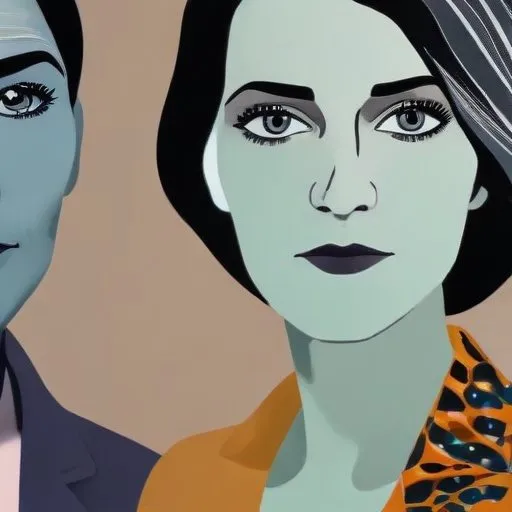
Renowned for her groundbreaking work on cellular biology and evolution, this biologist has written influential books on science and spirituality, making complex concepts accessible to a broad audience.
Ursula Goodenough is a renowned American biologist and professor emerita at Washington University in St. Louis, best known for her groundbreaking research on eukaryotic algae and her efforts to bridge the gap between science and spirituality.
Goodenough's academic career spans over four decades, during which she has made significant contributions to the field of biology. She is the author of the widely adopted textbook Genetics, which has been published in three editions. Her work has been recognized with numerous awards and honors, including her election to the National Academy of Sciences in 2023.
In her bestselling book The Sacred Depths of Nature, Goodenough explores the intersection of science and spirituality, arguing that evolution can be a profound source of spiritual insight. This work has been hailed as a landmark in the religious naturalist movement, which seeks to find meaning and purpose in the natural world.
Goodenough is a vocal advocate for science education and critical thinking. She has written extensively on the importance of science literacy and has spoken out against the erosion of science education in the United States. Her commitment to promoting science and reason has earned her a spot on the Advisory Council of the National Center for Science Education.
Goodenough has held various leadership positions in scientific organizations, including president of The American Society for Cell Biology and president of the Religious Naturalist Association. She has also served on the editorial board of Zygon Journal of Religion and Science and has presented papers and seminars on science and religion to numerous audiences.
Goodenough's own experiences as a woman balancing the demands of raising children and developing a career have informed her views on the importance of supporting women in science. She has written about the need for women to understand that they can pursue both their personal and professional goals, and has encouraged women to pursue careers in science.
Ursula Goodenough's work has had a profound impact on the scientific community and beyond. Her efforts to bridge the gap between science and spirituality have inspired a new generation of scientists and thinkers to explore the intersection of these two fields.
97 Years Old
A renowned biologist and author who has made groundbreaking contributions to our understanding of ecology, evolution, and conservation, and is known for his advocacy for biodiversity and the preservation of natural habitats.
98 Years Old
Discovered the structure of DNA, revolutionizing our understanding of genetics and earning a Nobel Prize. Pioneering work in molecular biology has far-reaching implications for medicine and beyond.
Born in 1916
Pioneering scientist who discovered the structure of DNA, revolutionizing our understanding of genetics and life itself.
Born in 1920
A British scientist who contributed significantly to the discovery of the structure of DNA, providing high-quality X-ray crystallography images that helped James Watson and Francis Crick develop their famous model.
Born in 1916
A Nobel Prize-winning physicist and biologist who contributed significantly to the discovery of the structure of DNA, using X-ray crystallography to produce the first clear images of the molecule.
Born in 1901
Pioneering chemist and peace activist who won two unshared Nobel Prizes, one for chemistry and one for peace, for his groundbreaking work on the nature of the chemical bond and his tireless efforts to promote nuclear disarmament.
Born in 1893
A pioneering scientist who discovered deuterium, a heavy isotope of hydrogen, and later contributed to the discovery of many other elements, revolutionizing our understanding of the universe.
Born in 1900
A pioneer in evolutionary biology, he integrated genetics and evolution, revolutionizing our understanding of species adaptation and diversity. His work laid the foundation for modern evolutionary theory.
