


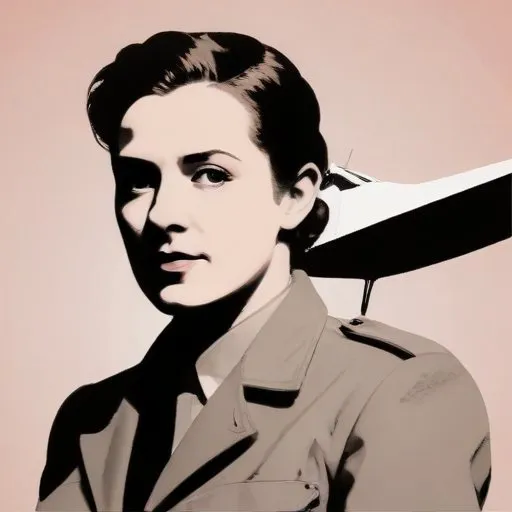
Co-founder of a pioneering ejection seat company, credited with saving countless lives through innovative aircraft safety technology.
Valentine Henry Baker, affectionately known as "Bake," was a British pilot, entrepreneur, and military officer who served in all three branches of the British Armed Forces during World War I. He is best known for his fearless exploits as a fighter pilot and his contributions to the development of aircraft technology through the Martin-Baker Aircraft Company.
Baker's military career began in 1914 when he joined the Royal Navy as a petty officer mechanic. He was assigned to the Royal Naval Air Service Armoured Car Section as a despatch rider, where he earned his first taste of combat. After being wounded in the Gallipoli campaign, Baker was discharged but soon returned to military service with the Royal Welch Fusiliers as a temporary second lieutenant.
In 1916, Baker graduated as a pilot from the School of Aero Flying and was appointed a flying officer in the Military Wing of the Royal Flying Corps. He spent his entire nine-month combat flying career with 41 Squadron, during which time he shot down several German aircraft and earned the Military Cross for his bravery.
After the war, Baker turned his attention to civilian aviation, becoming a flight instructor and co-founding the Martin-Baker Aircraft Company with James Martin. The company specialized in designing and manufacturing aircraft, including the MB 1, MB 2, and MB 3, which were used for training and aerobatic purposes.
Baker's entrepreneurial spirit and innovative approach to aircraft design earned him international recognition. He was a pioneer in the field of aerobatics, performing daring stunts and demonstrating the capabilities of his aircraft to audiences worldwide.
Baker married Dilys Eames in 1916, and the couple had one son, Denys Val Baker, who went on to become a notable novelist. Valentine Baker's life was marked by his daring exploits in the skies, but also by his quiet determination to live with a bullet lodged near his spinal column, which he sustained during the war.
Valentine Baker's legacy extends far beyond his impressive military record or entrepreneurial achievements. He inspired generations of pilots and engineers with his innovative approach to aircraft design and his fearless spirit. Today, Martin-Baker Aircraft Company continues to be a leading manufacturer of ejection seats and other safety equipment, a testament to Baker's pioneering work.
"There is no such thing as a bad pilot, only a bad aircraft." - Valentine Baker
Valentine Baker's remarkable life serves as a testament to the power of innovation, determination, and bravery. His contributions to the world of aviation continue to inspire and awe, cementing his place as one of the most exceptional pilots and entrepreneurs of his time.
Born in 1820
The 6th Premier of New South Wales, a pioneering leader who played a crucial role in shaping the Australian state's early development, particularly in education and infrastructure.
Born in 1706
A founding father of the United States, he was a leading figure in the Enlightenment, known for his groundbreaking inventions, scientific discoveries, and influential writings. He played a key role in shaping American history and politics.
Born in 1923
The first test pilot to break the sound barrier, achieving a historic milestone in aviation and paving the way for supersonic flight. This daring feat cemented his status as a legendary figure in the history of flight.
Born in 1897
Pioneering female aviator who broke records and pushed boundaries in flight, mysteriously disappearing during a attempted circumnavigation of the globe.
Born in 1905
A pioneer in aviation and film, known for pushing boundaries in both industries, and infamous for his eccentricities and reclusive nature.
96 Years Old
First person to walk on the Moon during the Apollo 11 mission, marking a historic milestone in space exploration.
97 Years Old
Co-founder of Intel Corporation, revolutionized the tech industry with his prediction that the number of transistors on a microchip would double about every two years, leading to exponential growth in computing power and reductions in cost.
