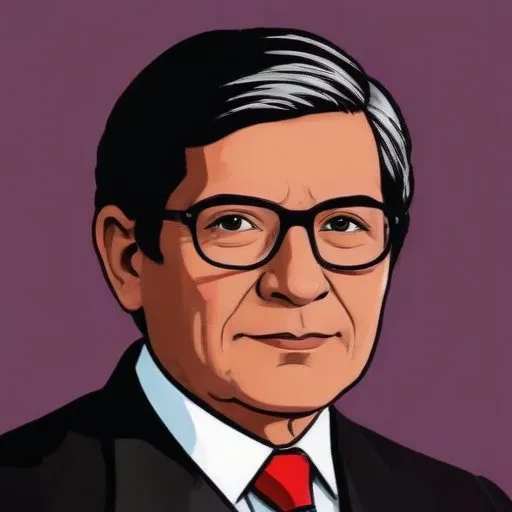
Valentín Paniagua: A Life of Public Service and Political Leadership
A Brief but Impactful Presidency
Valentín Paniagua is best known for his brief but pivotal tenure as the 55th President of Peru, serving from November 2000 to July 2001. During this period, he oversaw the country's transition to democratic rule, following the resignation of
Alberto Fujimori and his vice presidents.
Early Life and Education
Born on September 23, 1936, in Cusco, Peru, Paniagua's father was from Bolivia but lived most of his life in Peru. He attended high school at the Salesian School of Cusco and later pursued law studies at the Universidad Nacional San Antonio Abad in Cusco. He completed his law degree at the Universidad Mayor de San Marcos in Lima, where he also earned a master's degree in political science.
Foundation in Politics
In 1955, Paniagua co-founded the Frente Universitario Reformista Independiente, a social-Christian reform organization that opposed landowners' rights, communism, and the APRA. This experience laid the foundation for his political career, which would be marked by his commitment to democratic values and social justice.
Rise to Prominence
In 1963, Paniagua was elected to Congress as a representative for Cusco, running on a joint list of Acción Popular (AP) and the Christian Democrat Party (PDC). His youth and political acumen caught the attention of Fernando Belaúnde, who appointed him Minister of Justice and Cult in his first government.
Political Career Highlights
- In 1966, Paniagua served as Secretary General of the PDC.
- In 1980, he became Party President of Acción Popular.
- In 1985, he was re-elected to Congress, representing Lima.
- In 2000, he was elected President of Congress, a position that catapulted him to the presidency following Fujimori's resignation.
Legacy and Impact
Paniagua's presidency, though brief, was marked by his commitment to democratic stability and his role in overseeing the country's transition to free and fair elections. His leadership helped to restore faith in Peru's political institutions and paved the way for the country's future development.
Personal Milestones and Key Life Events
- In addition to his political career, Paniagua maintained a private law practice.
- He was a devout Roman Catholic and his faith influenced his political ideology.
- Paniagua passed away on October 16, 2006, leaving behind a legacy of public service and political leadership.
Influence on Modern Society
Paniagua's commitment to democratic values, social justice, and human rights has inspired generations of Peruvian politicians and citizens. His leadership during a time of political uncertainty helped to restore faith in the country's institutions and paved the way for future development.
Historical Context and Legacy
Valentín Paniagua's life and career are a testament to the power of democratic values and the importance of strong leadership during times of uncertainty. His legacy serves as a reminder of the critical role that politicians play in shaping the course of their country's history.
FAQ
What was Valentín Paniaguas presidency like?
Valentín Paniagua served as the 91st President of Peru from November 2000 to July 2001, during a period of political crisis, and focused on stabilizing the country and restoring democracy.
What were Valentín Paniaguas contributions to Peruvian politics?
Valentín Paniagua played a key role in the transition to democracy in Peru, serving as a senator and president of the Peruvian Congress, and was a prominent figure in the countrys political scene for over three decades.
What is Valentín Paniaguas background and education?
Valentín Paniagua was born on November 23, 1936, in Cusco, Peru, and studied law at the University of San Marcos, later earning a degree in economics from the University of Lima.
What were Valentín Paniaguas achievements as a lawyer?
Valentín Paniagua was a respected lawyer and professor, known for his expertise in constitutional law, and served as a member of the Peruvian Bar Association.
What is Valentín Paniaguas legacy in Peru?
Valentín Paniagua is remembered as a dedicated public servant and statesman who worked tirelessly to promote democracy and stability in Peru, and is respected for his integrity and commitment to the rule of law.