


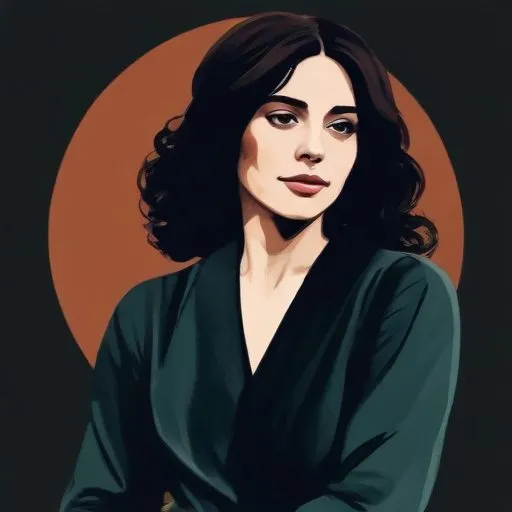
A 16th-century poet and politician who wrote sonnets and madrigals, and was a powerful leader in her region, known for her intelligence, courage, and strong will.
Veronica Gambara, a 16th-century Italian poet and politician, is renowned for her exceptional literary talents and her remarkable reign as the ruler of the County of Correggio from 1518 until 1550. As a woman of immense intellect and power, Gambara navigated the complexities of Renaissance politics, leaving an indelible mark on the cultural and literary landscape of her time.
Born in Pralboino, Lombardy, Italy, in 1485, Gambara hailed from a distinguished family of intellectuals. Her family tree boasted a number of accomplished women, including her great-aunts, the humanist poets Ginevre and Isotta Nogarola. This familial background instilled in Gambara a love for learning, which was further nurtured by her humanist education in Latin, Greek, philosophy, theology, and scripture.
In 1502, at the age of 17, Gambara began corresponding with the prominent neo-Petrarchan poet Pietro Bembo, who would become her poetic mentor two years later. This mentorship played a significant role in shaping Gambara's poetic style and cementing her position as a prominent female poet of the Renaissance. In 1509, she married her cousin, Giberto VII, Count of Correggio, a 50-year-old widower, with whom she had two sons, Ippolito and Girolamo.
Following Giberto's death in 1518, Gambara assumed control of the state, overseeing the management of Correggio's condottieri and the education of her two sons and stepdaughter, Costanza. Under her rule, the small court of Correggio flourished, attracting prominent figures such as Pietro Bembo, Gian Giorgio Trissino, Marcantonio Flaminio, Ludovico Ariosto, and Titian.
Gambara's poetry and political endeavors were deeply influenced by her humanist education and her connections with leading intellectuals of the time. Her writings often touched on themes of love, beauty, and virtue, reflecting her commitment to the principles of Renaissance humanism.
Gambara's remarkable achievements as a poet-politician have inspired generations of women to pursue careers in politics, literature, and the arts. Her legacy continues to resonate in modern society, serving as a testament to the power and potential of women in leadership positions.
Gambara's poetic oeuvre includes a collection of sonnets and other verses, many of which were published during her lifetime. One of her most celebrated quotes is: "La virtù sola è vera nobiltà" ("Virtue alone is true nobility"), which encapsulates her commitment to the values of humanism and intellectual pursuits.
Veronica Gambara's remarkable life and achievements have secured her a place in the annals of Renaissance history. Her legacy continues to inspire scholars, writers, and politicians alike, serving as a powerful reminder of the significant contributions women have made to the cultural and political landscape of Italy.
