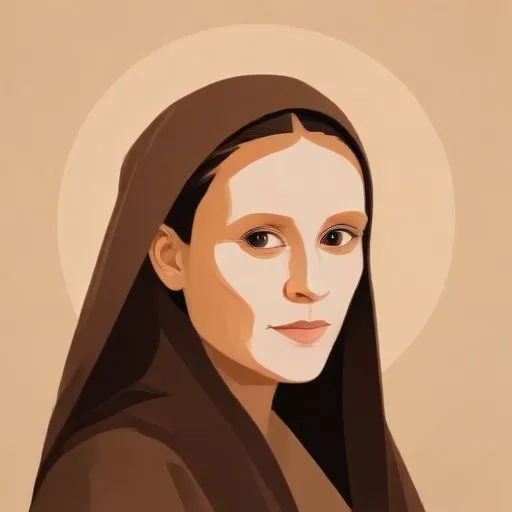
Veronica Giuliani: The Mystical Nun and Saint of Compassion
A Life of Devotion and Spiritual Trials
Veronica Giuliani is renowned for her extraordinary devotion, mysticism, and saintly virtues, earning her canonization by
Pope Gregory XVI in 1839. As a Capuchin Poor Clares nun, she dedicated her life to serving the poor and the afflicted, leaving an indelible mark on the Catholic Church and the world.
Early Life and Spiritual Awakening
Born Orsola or Ursula Giuliani on December 27, 1660, in Mercatello sul Metauro, Duchy of Urbino, Italy, Veronica was the youngest of seven sisters, three of whom chose the monastic life. Her compassion for the poor began at a tender age of three, when she would set aside food and clothes for those in need.
A Vision that Changed Her Life
At 16, Veronica had a vision that corrected her imperfection of character, revealing her heart as a heart of steel. This transformative experience led her to abandon her inclination to be dictatorial and instead embrace humility and obedience.
Life in the Monastery
In 1677, at the age of 17, Veronica joined the monastery of the Capuchin Poor Clares in Città di Castello, Umbria, Italy, taking the religious name of Veronica in memory of the Passion of Christ. Her bishop recognized her potential, saying, "I commend this new daughter to your special care, for she will one day be a great saint."
Spiritual Directors and Trials
Veronica became absolutely submissive to the will of her spiritual directors, despite facing extraordinary interior trials during her novitiate. Her unwavering faith and devotion ultimately led her to become a shining example of sanctity.
Philosophical Contributions and Beliefs
Veronica's philosophical contributions centered around the importance of compassion, humility, and obedience. She believed that true spirituality lies in serving others, particularly the poor and the afflicted. Her mystical experiences and visions deepened her understanding of Christ's passion and sacrifice.
Influence on Modern Society
Veronica Giuliani's saintly virtues and selfless devotion have inspired countless individuals to embark on a path of compassion and service. Her legacy continues to inspire charitable works, hospitals, and organizations dedicated to caring for the poor and the marginalized.
Personal Milestones and Key Life Events
- 1660: Born Orsola or Ursula Giuliani on December 27th in Mercatello sul Metauro, Duchy of Urbino, Italy
- 1677: Joined the monastery of the Capuchin Poor Clares in Città di Castello, Umbria, Italy
- 1839: Canonized by Pope Gregory XVI
Legacy and Canonization
Veronica Giuliani's extraordinary life and virtues led to her canonization in 1839. Today, she is revered as a saint, and her feast day is celebrated on July 9th. Her legacy continues to inspire generations to follow in her footsteps, serving the poor and the afflicted with compassion and love.
FAQ
Who was Veronica Giuliani, Italian Capuchin mystic?
Veronica Giuliani was an Italian Capuchin mystic and nun who lived in the 17th and 18th centuries. She is known for her intense spiritual experiences and wrote extensively on mysticism and spiritual growth.
What were Veronica Giulianis spiritual experiences?
Giuliani reported experiencing intense mystical visions, ecstasies, and stigmata. Her spiritual experiences were often accompanied by physical phenomena, such as wounds and levitation.
What is known about Veronica Giulianis education?
Giuliani received a traditional convent education, focusing on scripture, theology, and spirituality. She was also influenced by the mystical writings of St. Teresa of Ávila and St. John of the Cross.
What were Veronica Giulianis contributions to mysticism?
Giulianis writings on mysticism and spiritual growth are considered significant in the Catholic tradition. Her works emphasize the importance of prayer, self-mortification, and devotion to God.
What is Veronica Giulianis legacy in Catholic mysticism?
Veronica Giulianis legacy is marked by her intense spiritual experiences and her contributions to Catholic mysticism. She was canonized a saint in 1839 and remains an important figure in Catholic spiritual tradition.