


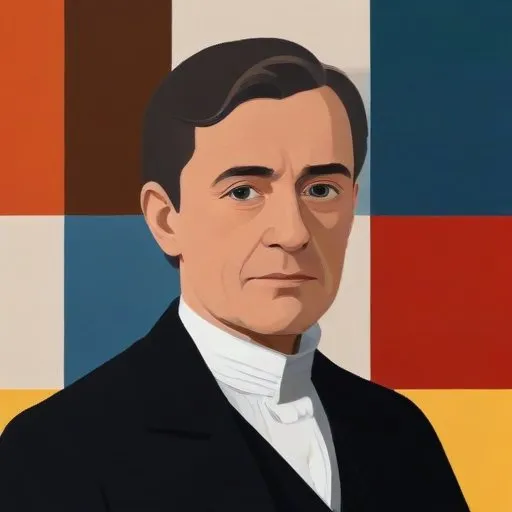
A renowned Marxist historian and literary critic, known for his works on British and European history, as well as his critiques of imperialism and capitalism.
VICTOR KIERNAN, a prominent British historian and member of the Communist Party Historians Group, is renowned for his groundbreaking work in Marxist historiography, analyzing historical events from a Marxist perspective. His seminal contributions to the field have had a lasting impact on British historiography, cementing his position as one of the most influential Marxist historians of the 20th century.
Born on September 4, 1913, in Ashton-on-Mersey, a southern district of Manchester, Kiernan was one of three children to Ella (née Young) and John Edward Kiernan, a translator of Spanish and Portuguese for the privately owned Manchester Ship Canal. His family's nonconformist religious tradition played a significant role in shaping his socialist ideologies and later involvement with the Communist Party.
Kiernan was a scholarship student at the Manchester Grammar School, where he developed a deep passion for the classics, adding ancient Greek and Latin to the modern European languages he had already learned at home. He went on to Trinity College, Cambridge, where he achieved a double-starred First in History, earning his B.A. in 1934 and M.A. in 1937.
While at Cambridge, Kiernan was recruited by Guy Burgess, a British diplomat and Soviet spy, into the Communist Party in 1934. This marked the beginning of his lifelong commitment to Marxist ideologies, which were reinforced by the perceived treachery of Britain's elites.
One of the most significant influences on Kiernan was Maurice Dobb, a lecturer in economics at Cambridge and a member of the Communist Party of Great Britain since 1920. Dobb's openness about his communist beliefs had a profound impact on Kiernan, who later wrote, "We had no time then to assimilate Marxist theory more than very roughly."
Kiernan's work was instrumental in shaping Marxist historiography in Britain, offering a fresh perspective on historical events through the lens of Marxist theory. His writings covered a wide range of topics, from the English Revolution to the rise of capitalism, and the British Empire's role in shaping global history.
As a member of the Communist Party Historians Group, Kiernan worked alongside other prominent Marxist historians, including Christopher Hill, Eric Hobsbawm, and E.P. Thompson. Together, they sought to challenge traditional historical narratives, offering a more nuanced understanding of the past and its relevance to contemporary society.
Kiernan's involvement with the Communist Party of Great Britain was not without controversy. He left the party in 1959, citing disagreement with the party's response to the Hungarian Revolution of 1956. This decision marked a significant turning point in his life, as he began to distance himself from the party's authoritarian tendencies.
In addition to his work as a historian, Kiernan was also involved in promoting Urdu poetry among Western audiences. His love for literature and poetry was a testament to his broader cultural interests, which extended far beyond the realm of historical scholarship.
VICTOR KIERNAN'S legacy as a Marxist historian continues to shape the contours of British historiography. His work has inspired generations of scholars, activists, and intellectuals, offering a unique perspective on the complexities of historical change.
Through his writings and activism, Kiernan challenged dominant narratives and power structures, advocating for a more nuanced understanding of the past and its relevance to contemporary society. His contributions to Marxist historiography have left an indelible mark on the field, ensuring his place as one of the most influential historians of the 20th century.
Kiernan's contributions to historical scholarship were recognized with numerous awards and honors, including the Deutscher Memorial Prize in 1984 for his book
VICTOR KIERNAN'S life and work serve as a testament to the power of intellectual curiosity, social commitment, and a passion for understanding the complexities of human history.
Born in 1917
A renowned historian and author who wrote extensively on the rise of industrial capitalism and the development of socialist and communist movements in the 19th and 20th centuries. His works provide insightful perspectives on modern history and its complexities.
Born in 1912
A 17th-century historian who wrote extensively on the English Civil War and its radical movements, offering a Marxist perspective on the era's social and political upheavals.
Born in 1924
A pioneering social historian and activist who reshaped the field of history with his groundbreaking works on the British working class, particularly "The Making of the English Working Class".
97 Years Old
Creator of iconic sci-fi TV shows like Thunderbirds, Captain Scarlet, and Stingray, known for pioneering supermarionation and inspiring generations of filmmakers.
83 Years Old
A prominent literary theorist and cultural critic, known for his influential works on Marxist theory, postmodernism, and literary criticism, offering provocative insights into the intersection of politics and culture.
