


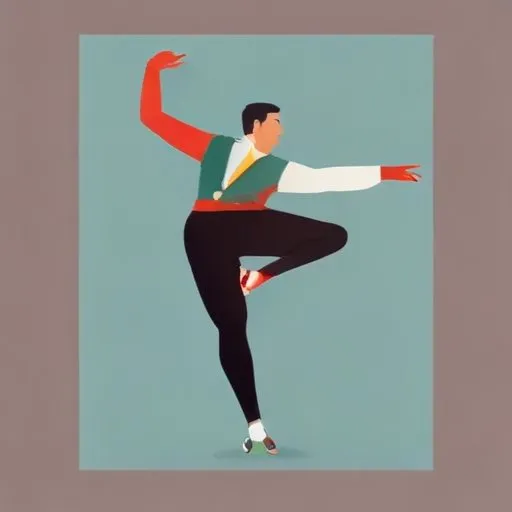
An Italian-Danish dancer and choreographer who revolutionized ballet with his expressive and dramatic style, creating iconic works that continue to inspire generations of dancers.
Vincenzo Galeotti was a renowned Italian-born Danish dancer, choreographer, and ballet master who left an indelible mark on the world of ballet. As the director of the Royal Danish Ballet from 1775 until his death in 1816, Galeotti was instrumental in shaping the company into one of the most prestigious institutions of its kind.
Born on March 5, 1733, in Florence, Italy, Galeotti's early life took a dramatic turn when he abandoned his medical studies to pursue a career in dance. Trained by the esteemed Gasparo Angiolini, Galeotti quickly made a name for himself in the dance world, performing with companies in Venice, Milan, and London.
In 1763, he married Antonia Guidi, a principal dancer trained by Jean-Georges Noverre, and together they formed a dynamic duo, performing and choreographing numerous productions throughout Europe.
In 1775, Galeotti was summoned to Copenhagen to assume the directorship of the Royal Danish Ballet, a position he would hold for over four decades. During his tenure, he revolutionized the company, introducing innovative choreography and launching the careers of notable dancers, including the celebrated Anine Frlich.
Frlich, who became not only his pupil but also his romantic partner, was catapulted to stardom under Galeotti's guidance, becoming the embodiment of his artistic vision.
In recognition of his contributions to the world of ballet, Galeotti was appointed a Knight of the Order of the Dannebrog in 1812, a rare honor bestowed upon a performing artist. Two years later, he was awarded a titulary professorship, cementing his status as a master of his craft.
Galeotti's legacy extends far beyond his own lifetime. As a pioneering figure in Danish ballet, he laid the groundwork for future generations of dancers, choreographers, and ballet masters. His influence can still be felt in the Royal Danish Ballet's productions, a testament to his enduring impact on the world of dance.
Galeotti's remarkable journey, spanning over four decades, is a testament to his unwavering dedication to the art of ballet. As a dancer, choreographer, and ballet master, he left an indelible mark on the world of dance, inspiring generations to come.
Born in 1805
A Danish master of fairy tales, crafting whimsical stories like "The Little Mermaid" and "The Ugly Duckling" that have captivated readers for generations. His works have become an integral part of Western cultural heritage.
Born in 1813
A Danish philosopher and author who is considered the father of existentialism, known for his philosophical and theological writings that emphasized individualism and subjective experience.
