


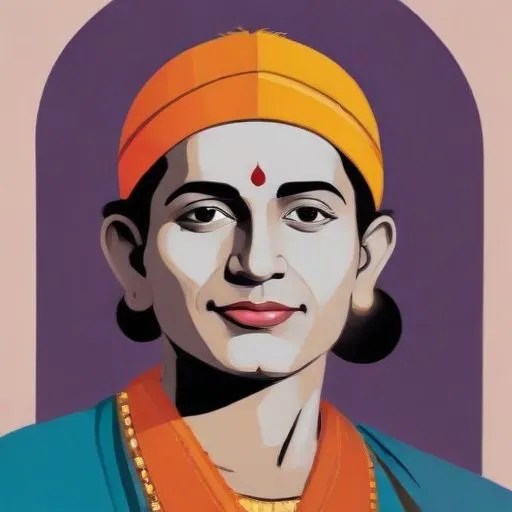
A renowned Indian author and playwright, known for his contributions to Hindi literature, particularly in the genres of drama and fiction, exploring themes of social change and human relationships.
Vishnu Prabhakar was a renowned Hindi writer, known for his thought-provoking novels, plays, and travelogues that propagated patriotism, nationalism, and social upliftment. He was the first Sahitya Akademi Award winner from Haryana, a feat that cemented his position as a literary giant in India.
Prabhakar was born on June 21, 1912, in a small village in Haryana. His early life was marked by a keen interest in literature, which led him to join a Natak company in Hissar. His literary journey began with the publication of his first story, "Diwali," in the Hindi Milap in 1931. He wrote his first play, "Hatya Ke Baad," in 1939, which marked the beginning of his full-time writing career.
Prabhakar's works are a testament to his patriotism and commitment to social upliftment. His writings often explored themes of national pride, social issues, and the struggle for Indian independence. His novels, plays, and travelogues were widely acclaimed for their thought-provoking content and literary merit.
Prabhakar married Sushila Prabhakar in 1938, who remained a constant source of inspiration for his literature until her passing in 1980. He worked as a drama director at Akashvani, All India Radio, New Delhi, from 1955 to 1957. In 2005, he made headlines when he threatened to return his Padma Bhushan award after allegedly facing misconduct at Rashtrapati Bhavan.
Vishnu Prabhakar's life and works have left an indelible mark on Indian literature and society. His commitment to patriotism, nationalism, and social upliftment has inspired generations of writers and thinkers. His literary contributions have enriched the Hindi language and have been recognized with numerous awards and honors.
Prabhakar's writings reflect his deep commitment to social service and the upliftment of marginalized communities. His philosophy was rooted in the principles of patriotism, nationalism, and social justice, which he advocated through his writings.
Vishnu Prabhakar's life is a testament to the power of passion, dedication, and hard work. His journey from a small village in Haryana to becoming a renowned writer and patriot is an inspiration to millions. His commitment to social upliftment and patriotism serves as a beacon of hope for future generations.
Prabhakar's philanthropic spirit was evident in his decision to donate his body to the All India Institute of Medical Sciences, New Delhi, after his passing. This selfless act has inspired many to follow in his footsteps, perpetuating his legacy of service and generosity.
Born in 1893
A renowned Indian polyglot and travel writer who explored and documented numerous languages, cultures, and philosophies, leaving behind a treasure trove of literary works.
Born in 1919
A pioneering female voice in Punjabi literature, known for her bold and emotive poetry and novels that explored themes of love, feminism, and social justice.
Born in 1915
A renowned journalist and author who penned numerous novels and essays, including the iconic "Train to Pakistan", which vividly captured India's Partition era. He's celebrated for his witty humor, satire, and poignant storytelling.
