


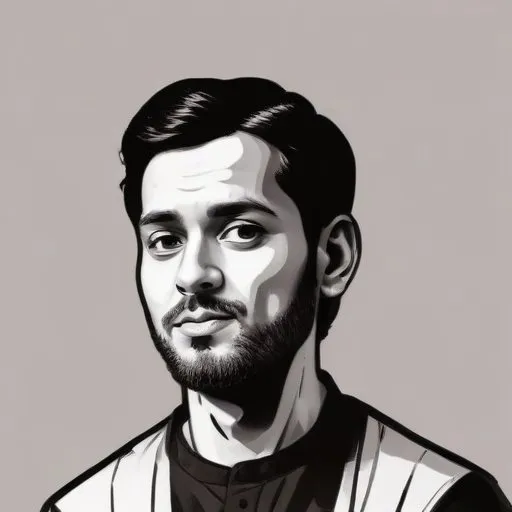
A renowned Indian polyglot and travel writer who explored and documented numerous languages, cultures, and philosophies, leaving behind a treasure trove of literary works.
Rahul Sankrityayan is revered as the father of Hindi travel literature, leaving an indelible mark on Indian literary circles. With his extensive travels across the globe, he brought forth a unique blend of cultural exploration and literary expertise, earning him the title of Mahapandit or great scholar.
Born as Kedarnath Pandey on April 9, 1893, in Pandaha village, Eastern Uttar Pradesh, Rahul Sankrityayan belonged to a Brahmin family. He later adopted the name Rahul Sankrityayan after taking diksha in Sri Lanka, signifying his spiritual connection to Buddhism.
Rahul Sankrityayan's insatiable thirst for knowledge and exploration led him to embark on a journey spanning 45 years, traversing across Russia, Tibet, China, Central Asia, and other distant lands. His travels not only enriched his understanding of diverse cultures but also enabled him to master over 30 languages, including English, Hindi, Bhojpuri, Tibetan, Sanskrit, Pali, Russian, and Arabic.
Sankrityayan's literary prowess is evident in his extensive collection of over 100 books, encompassing subjects such as Indology, Communism, Buddhism, philology, short stories, novels, and plays. His masterpiece, Madhya Asia ka Itihaas (History of Central Asia), earned him the prestigious Sahitya Akademi Award in 1958.
In recognition of his immense contributions to Indian literature and culture, the Government of India bestowed upon him the Padma Bhushan, the country's third-highest civilian award, in 1963.
Rahul Sankrityayan's philosophical perspectives underwent a significant transformation after his initiation into Buddhism. He rejected the concepts of reincarnation and the afterlife, adopting a socialist ideology instead. His work, Darshan Digdarshan, is a testament to his philosophical convictions, with the second volume paying tribute to Dharmakirti's Pramana Vartika.
Rahul Sankrityayan's remarkable life and works have left an indelible mark on Indian literature and culture. His contributions to Hindi travel literature have inspired generations of writers and scholars, solidifying his position as one of India's most celebrated intellectuals.
Rahul Sankrityayan's legacy continues to inspire and educate, encouraging readers to embark on their own journeys of discovery and exploration.
| 1893 | Born as Kedarnath Pandey in Pandaha village, Eastern Uttar Pradesh |
| 1958 | Awarded the Sahitya Akademi Award for Madhya Asia ka Itihaas |
| 1963 | Awarded the Padma Bhushan, India's third-highest civilian award |
| 1963 | Passed away at the age of 70 |
Born in 1861
A Bengali polymath who wrote extensively on love, nature, and humanity, creating a unique blend of Indian and Western literary styles, and was the first non-European to win the Nobel Prize in Literature.
Born in 1869
Indian freedom fighter, activist, and philosopher who led India to independence from British rule through non-violent civil disobedience, inspiring civil rights movements worldwide.
Born in 1889
India's first Prime Minister, a key figure in the country's struggle for independence from British rule, and a champion of democracy and secularism. He played a crucial role in shaping modern India's government and economy.
Born in 1897
Indian freedom fighter and politician who led the Indian National Army against British rule and was a key figure in the country's struggle for independence. He is also known for his mysterious disappearance in 1945.
Born in 1888
An Indian philosopher and politician who served as the 2nd President of India, known for his influential writings on Indian philosophy and his role in shaping India's education system.
Born in 1878
The first Indian Governor-General of India, serving from 1948 to 1950, and a key figure in the country's struggle for independence from British rule. He was a strong advocate for non-violent resistance and played a crucial role in shaping India's early years.
