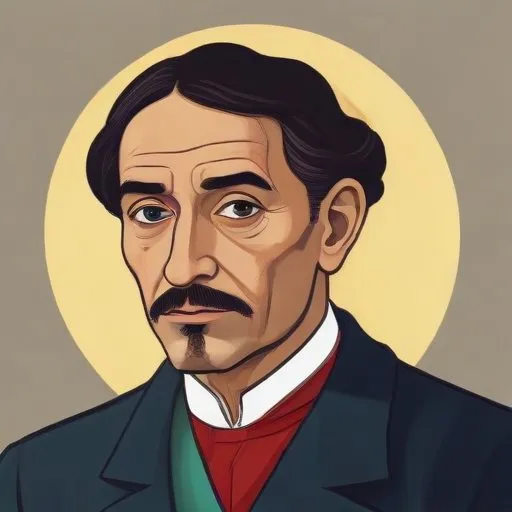
Vitomil Zupan: The Slovene Hemingway
A Life of Turmoil and Creative Expression
Vitomil Zupan is best known for his vivid descriptions of sex and violence, earning him the nickname "The Slovene Hemingway". His most famous work, "Menuet za kitaro" (A Minuet for Guitar), published in 1975, is a testament to his experiences as a member of the Slovene Partisans during World War II.
Early Life and Turbulent Years
Born on January 18, 1914, in Ljubljana, then part of Austria-Hungary, Zupan's life was marked by turmoil and adventure. His father, a soldier, was killed in World War I, leaving his mother, a teacher, to raise him alone. At the age of 18, Zupan played Russian roulette, killing his friend, and was subsequently prohibited from graduating from secondary school in Yugoslavia.
In the following years, he traveled extensively, earning a living as a sailor, ships stoker, house painter in France, ski instructor, and professional boxer, traversing the Mediterranean, Middle East, and North Africa.
World War II and the Slovene Partisans
After the Axis invasion of Yugoslavia in April 1941, Zupan joined the Liberation Front and participated in underground activities until he was sent to the Gonars concentration camp in 1942. Following the capitulation of Italy in 1943, he joined the Slovene Partisans, where he wrote resistance propaganda theater plays and later became a part of the cultural unit.
Post-War and Writing Career
After the war, Zupan worked at Radio Ljubljana until 1947, when he fully dedicated himself to writing. However, his literary career was marred by controversy. In Titoist Yugoslavia, he was sentenced to 18 years in a show trial and was only allowed to publish his works under the pseudonym Langus after his release in 1955.
Philosophical Contributions and Beliefs
Zupan's writing is characterized by his unwavering commitment to telling the truth, no matter how brutal or uncomfortable. His philosophy was centered around the idea that literature should be a reflection of life, with all its brutality and beauty.
Major Works and Career Highlights
- Menuet za kitaro (A Minuet for Guitar) - 1975
- Življenje reke (The Life of a River) - 1964
- Kurent (The Scourge) - 1961
Influence on Modern Slovene Literature
Vitomil Zupan is considered one of the most important Slovene writers of the 20th century. His work has had a significant impact on modern Slovene literature, paving the way for future generations of writers.
Legacy and Impact
Zupan's legacy extends beyond his literary contributions. He is a testament to the power of human resilience, having lived through some of the most turbulent times in history. His work continues to inspire and challenge readers to this day.
Trivia and Fun Facts
- Zupan was known for his love of boxing and was a professional boxer in his youth.
- He read medical textbooks in an attempt to better understand his emotional condition.
Vitomil Zupan's life was a testament to his unwavering commitment to creative expression and his ability to find beauty in the darkest of times. His legacy continues to inspire and challenge readers, earning him a place as one of the most important Slovene writers of the 20th century.
FAQ
What type of writing did Vitomil Zupan specialize in?
Vitomil Zupan specialized in fiction, poetry, and drama, often exploring themes of love, death, and the human condition. His work often featured elements of surrealism and magic realism.
What is Vitomil Zupans most famous work?
One of Vitomil Zupans most famous works is his novel, The Leyden Jar. This novel is a complex, experimental work that explores themes of love, identity, and history.
How did Vitomil Zupans writing reflect his Slovenian heritage?
Vitomil Zupans writing often reflected his Slovenian heritage through its use of Slovenian mythology, folklore, and cultural themes. His work helped to promote Slovenian literature and culture around the world.
Did Vitomil Zupans writing address social issues?
Yes, Vitomil Zupans writing often addressed social issues, such as totalitarianism, war, and social inequality. His work often criticized regimes and promoted individual freedom and creativity.
What awards did Vitomil Zupan receive for his writing?
Vitomil Zupan received several awards for his writing, including the Prešeren Award and the Slovenian Writers Association Award.