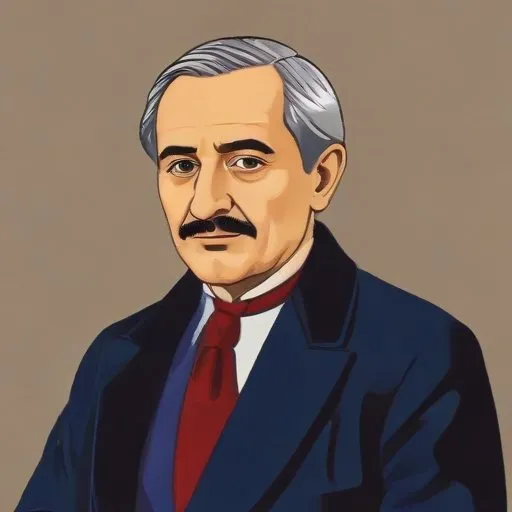
Ivan Cankar: The Pillar of Slovene Literature
The Father of Modernism in Slovene Literature
Ivan Cankar, pronounced 'tsanka', is renowned as one of the most influential Slovene writers, playwrights, essayists, poets, and political activists of all time. He is hailed as the greatest writer in Slovene, and his works are often likened to those of
Franz Kafka and
James Joyce, giants of modernist literature.
Early Life and Influences
Born on May 10, 1876, in the Carniolan town of Vrhnika, near Ljubljana, Cankar's life was marked by poverty and hardship. His father, a poor artisan, emigrated to Bosnia shortly after his birth, leaving his mother, Neža Cankar née Pivk, to raise him alone. This complex, ambivalent relationship with his mother would later become a recurring theme in his works.
During his grammar school days in Vrhnika, Cankar began writing literature, mostly poetry, under the influence of Romantic and post-Romantic poets such as France Prešeren, Heinrich Heine, Simon Jenko, and Simon Gregorčič.
The Formative Years
In 1893, Cankar discovered the epic poetry of
Anton Aškerc, which had a profound impact on his style and ideals. Under Aškerc's influence, he rejected sentimental post-Romantic poetry and embraced literary realism and national liberalism. This shift in perspective marked a turning point in his writing career.
Vienna and the Bohemian Lifestyle
In 1896, Cankar enrolled at the University of Vienna, where he initially studied engineering but later switched to Slavic philology. During his time in Vienna, he became enamored with the works of contemporary European writers, especially decadentism, symbolism, and naturalism. He befriended Fran Govekar, a young Slovene writer and intellectual, who introduced him to positivism and naturalism.
Core Ideas and Philosophical Contributions
Between 1897 and 1899, Cankar's core ideas were essentially positivistic. He believed in the power of reason and the importance of scientific inquiry in understanding the human experience. His philosophical contributions lie in his ability to merge Slovene nationalism with European modernism, creating a unique literary voice that resonated with the Slovene people.
Major Works and Career Highlights
Cankar's notable works include:
- The Scavenger (1901), a novella that explores the themes of poverty, morality, and social justice.
- The King of Betajnova (1902), a play that critiques the Slovene patriotic movement.
- Ecce Homo (1903), a collection of short stories that delve into the human condition.
- The Bailiff Yerney and His Righteous Court (1907), a novella that satirizes the Slovene judicial system.
Legacy and Impact on Slovene Literature
Ivan Cankar's works have had a profound impact on Slovene literature, shaping the country's cultural identity and literary landscape. He is regarded as the greatest writer in Slovene, and his influence can be seen in generations of Slovene writers who followed in his footsteps. Today, Cankar's legacy continues to inspire writers, scholars, and readers worldwide.
Personal Life and Relationships
Cankar's personal life was marked by turmoil and tragedy. He struggled with poverty, illness, and personal relationships throughout his life. Despite these challenges, he remained committed to his art, leaving behind a body of work that continues to captivate readers.
Final Years and Legacy
Ivan Cankar passed away on December 11, 1918, at the age of 42. His untimely death was a tragedy, but his legacy lives on. Today, he is celebrated as a national hero in Slovenia, and his works continue to be translated and studied around the world.