


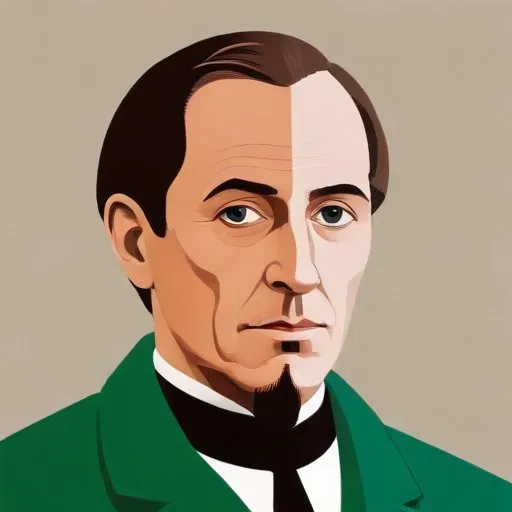
Italian-Slovene author and playwright, best known for his novel "Alamut", a classic of 20th-century Slovenian literature, which explores the complexities of human nature and the power of ideology.
Vladimir Bartol is renowned for his 1938 novel Alamut, which has become the most popular work of Slovene literature around the world, translated into numerous languages. This literary masterpiece catapulted him to fame, earning him a spot as one of the most influential Slovenian writers of the 20th century.
Born on February 24, 1903, in San Giovanni (Sveti Ivan), a suburb of Trieste (Trst), Italy, Bartol grew up in a middle-class Slovene minority family. His parents, Gregor Bartol and Marica Bartol Nadliek, instilled in him a love for education, which would later shape his interests in philosophy, psychology, biology, art, theatre, and literature.
Bartol's encounter with the works of Friedrich Nietzsche, introduced to him by philosopher Klement Jug, had a profound impact on his writing. He was also drawn to the ideas of Sigmund Freud, which further enriched his understanding of human psychology.
After graduating in biology and philosophy from the University of Ljubljana in 1925, Bartol continued his studies at the Sorbonne in Paris from 1926 to 1927. During this period, he developed a keen interest in writing, which eventually became his calling.
His most notable work, Alamut, published in 1938, is a testament to his mastery of storytelling. This novel has become a cultural phenomenon, exploring themes of love, power, and philosophy.
In 1928, Bartol served in the army in Petrovaradin (now in Serbia). He later edited the Slovenian Belgrade Weekly in Belgrade from 1933 to 1934. During World War II, he joined the Slovene partisans and actively participated in the resistance movement.
Bartol's contributions to Slovenian literature have been immense. He was elected an associate of the Slovenian Academy of Sciences and Arts in recognition of his outstanding work. His writing has inspired generations of Slovenian writers, and his legacy continues to influence the country's literary landscape.
Bartol's impact extends beyond Slovenia, with Alamut being translated into numerous languages, making him a household name in many countries. His writing has been praised for its unique blend of philosophy, psychology, and literature, making him a standout figure in 20th-century literature.
"The most important thing in life is to find your own way, and then to follow it."
"Literature is not just a reflection of reality, but a way to shape it."
Bartol's life and work are a testament to the complexities of 20th-century Europe. His experiences during World War II and his involvement in the resistance movement have made him a symbol of Slovenian resilience and determination.
Today, Vladimir Bartol is remembered as a literary icon, whose work continues to inspire and influence writers, philosophers, and thinkers around the world. His legacy serves as a reminder of the power of literature to shape our understanding of ourselves and the world around us.
Born in 1856
Pioneering psychoanalyst who developed theories on the subconscious mind, childhood experiences, and the structure of personality, revolutionizing our understanding of human behavior and psychology.
Born in 1861
A pioneering figure in modernist literature, known for his influential novels of psychological insight, particularly "The Confessions of Zeno".
Born in 1888
An Italian writer and literary critic, known for his influential essays and novels that explored the complexities of human nature and the Italian identity.
Born in 1895
An Italian literary figure, celebrated for his lyrical and introspective writings that explored the human condition, love, and the search for meaning. His works are characterized by a unique blend of poetry and prose.
Born in 1908
An Italian poet and novelist who explored themes of existentialism, morality, and the human condition through his lyrical and introspective writing, leaving a lasting impact on 20th-century literature.
